In an unusual confluence of voices, spanning the political spectrum from progressive Democrats to far-right commentators and even the Vatican, then-President Donald Trump faced widespread condemnation for his escalated rhetoric concerning Iran. His specific threat to target 52 Iranian sites, including cultural heritage locations, following the U.S. drone strike that killed Iranian General Qassem Soleimani in early 2020, provoked an immediate and forceful backlash. This unprecedented alignment of critics highlighted profound concerns about presidential judgment, the potential for international law violations, and the escalating risk of a devastating conflict.
The Provocation: A Threat Against a "Whole Civilization"
The genesis of the controversy was a series of tweets from President Trump in January 2020. Responding to Iranian threats of retaliation for Soleimani's killing, Trump warned that the U.S. had identified 52 Iranian sites, symbolic of the 52 American hostages held in Iran during the 1979 crisis, that would be struck "very fast and very hard" if Iran attacked any American personnel or assets. Crucially, he specified that some of these targets were "at a very high level & important to Iran & the Iranian culture." This particular inclusion of cultural sites drew immediate international opprobrium, as intentionally targeting cultural heritage is widely considered a war crime under international law, including the 1954 Hague Convention for the Protection of Cultural Property in the Event of Armed Conflict, to which the U.S. is a signatory.
The administration initially defended the president's statements, with officials suggesting that all options were on the table. However, the international outcry, coupled with domestic legal and ethical challenges, eventually led to a softening of this stance, with the Pentagon clarifying that the U.S. would abide by the laws of armed conflict. Despite this clarification, the initial threat sent shockwaves globally, exacerbating an already tense situation in the Middle East and raising serious questions about the nature of American foreign policy and the commander-in-chief's understanding of international legal norms.
A Diverse and Unprecedented Backlash
The condemnation that followed Trump's threat was remarkable not only for its intensity but also for the unusual coalition of voices it brought together. Typically disparate figures found common ground in their alarm over the president's rhetoric.
Alexandria Ocasio-Cortez and Democratic Outrage
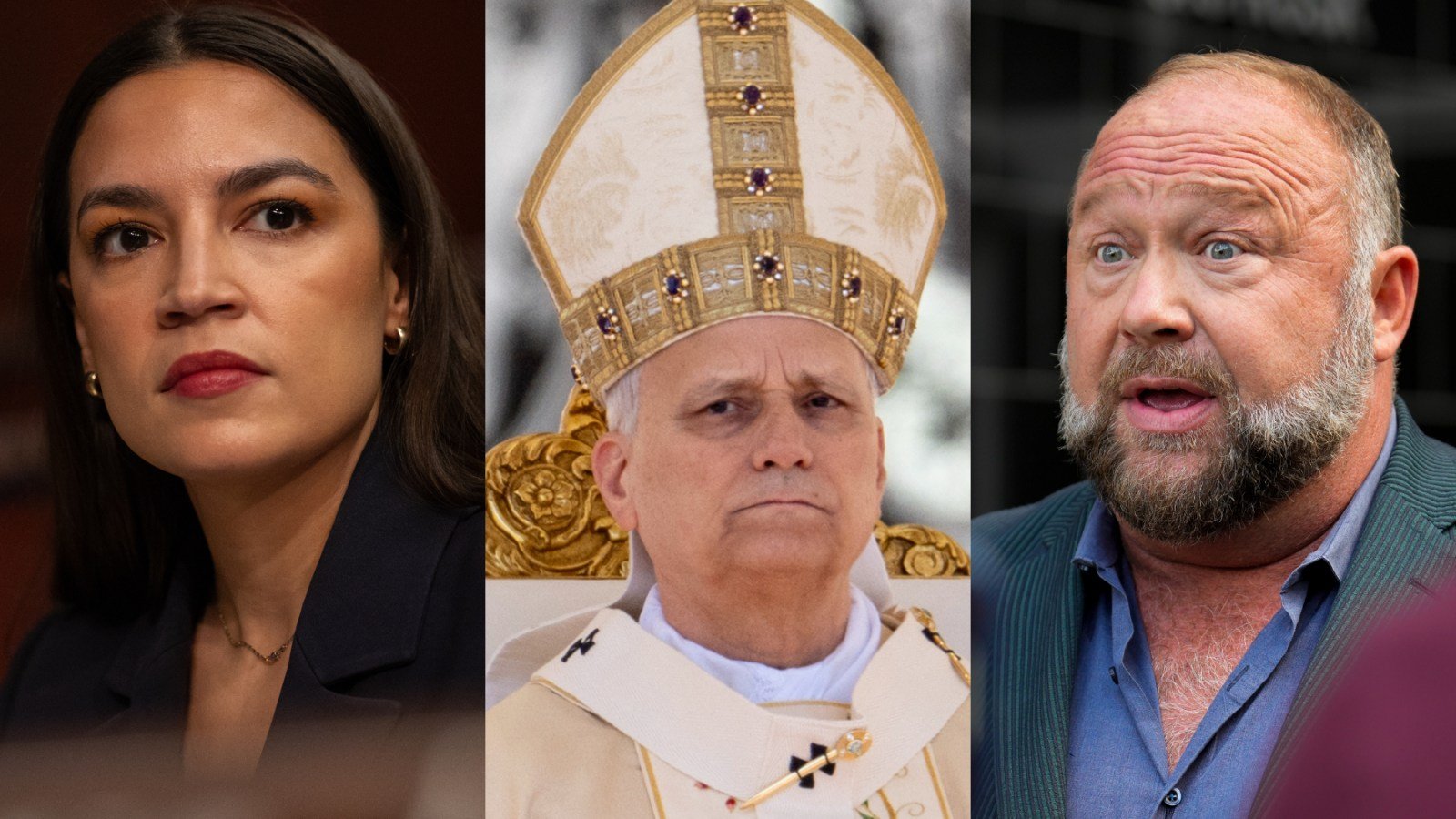
Representative Alexandria Ocasio-Cortez, a leading progressive Democrat from New York, was among the most vocal critics. She swiftly condemned Trump's threats, particularly the targeting of cultural sites, calling them indicative of a president unfit for office and a flagrant disregard for international law. Her criticism resonated with many within the Democratic Party, who viewed Trump's actions as reckless, destabilizing, and potentially leading the U.S. into an avoidable conflict. The sentiment among Democrats often extended to renewed calls for checks on presidential power, with some openly discussing the invocation of the 25th Amendment or further impeachment proceedings based on concerns about Trump's judgment and temperament.
Alex Jones: An Unlikely Critic from the Far Right
Perhaps one of the most surprising voices to join the chorus of condemnation was Alex Jones, the controversial far-right radio host and conspiracy theorist known for his staunch support of Donald Trump. Jones, whose InfoWars platform frequently echoed pro-Trump narratives, publicly broke ranks on this issue. He expressed his dismay at the idea of attacking cultural sites, framing it as an act that would alienate global allies and undermine American moral authority. This rare moment of dissent from such a fervent Trump loyalist underscored the extreme and deeply troubling nature of the president's threat, signaling that even some of his most ardent supporters found the rhetoric beyond the pale.
Pope Francis's Call for Peace and Restraint
From a moral and humanitarian perspective, Pope Francis, the head of the Catholic Church, also weighed in. While the Vatican typically avoids direct political condemnation, the Pope's messages consistently advocate for peace, dialogue, and respect for international law, especially in times of escalating tension. His statements and those from Vatican officials urged de-escalation, called for diplomatic solutions to international disputes, and implicitly condemned any actions that would cause disproportionate suffering or target civilian and cultural heritage. The Pope's intervention served as a powerful reminder of the broader ethical responsibilities of world leaders and the devastating human cost of conflict, reinforcing the international community's widespread plea for restraint.
The 25th Amendment: A Constitutional Safety Valve Under Scrutiny
Amidst the escalating rhetoric and growing concerns about the president's conduct, calls for invoking the 25th Amendment gained renewed traction. This amendment, ratified in 1967, primarily addresses presidential disability and succession. Section 4, in particular, outlines a process by which the Vice President and a majority of the Cabinet can declare the President unable to discharge the powers and duties of his office, leading to his temporary removal. Such calls during Trump's presidency often stemmed from perceptions of erratic behavior, a perceived disregard for norms, and actions deemed to endanger national security or international stability.
However, invoking the 25th Amendment is an extremely high bar, designed for severe cases of incapacitation rather than policy disagreements or political unpopularity. It requires significant political will and consensus within the executive branch, making its practical application complex and controversial. While the calls for its use highlighted the profound level of concern about Trump's leadership, especially in moments of crisis, the amendment ultimately remained an unexercised constitutional mechanism throughout his term, underscoring the political and legal difficulties associated with its implementation.
Broader Implications for U.S. Foreign Policy and International Law
Trump's threat against Iran, and the subsequent widespread condemnation, had significant implications for U.S. foreign policy and its standing on the global stage. Such rhetoric can undermine diplomatic efforts, erode trust among allies, and embolden adversaries. Threatening cultural sites, in particular, risks isolating the United States internationally by placing it in violation of established international humanitarian law. This incident underscored the delicate balance required in international relations and the immense power of presidential rhetoric to shape perceptions and outcomes.
The episode served as a stark reminder that even in an era of heightened geopolitical tensions, adherence to international law and diplomatic norms remains crucial. For laypeople, understanding these conventions is vital to appreciating the gravity of leaders' statements and their potential real-world consequences, from escalating conflicts to damaging a nation's long-term reputation and influence.
The chorus of condemnation from such diverse figures following President Trump's aggressive rhetoric toward Iran represented a rare moment of broad consensus against a presidential action. It highlighted the serious implications of leaders' statements on international law, human rights, and global stability. From the halls of Congress to conservative media and the Vatican, the message was clear: presidential power, especially in matters of war and peace, must be wielded with caution, adherence to law, and a deep understanding of its profound global impact. To delve deeper into the intricate dynamics of international relations, presidential decision-making, and constitutional checks and balances, continue exploring the in-depth analyses and expert commentary available on NAME OF SITE.
Fonte: https://www.rollingstone.com