When an iconic literary masterpiece like George Orwell's 'Animal Farm' is slated for a new cinematic adaptation, especially with a creative force like Andy Serkis at the helm and a star-studded voice cast, expectations naturally soar. The promise of fresh interpretations of timeless narratives often ignites excitement among both devoted fans and a new generation of potential viewers. However, initial reactions to Serkis' animated rendition of 'Animal Farm' have painted a starkly different picture, one riddled with profound disappointment and accusations of fundamentally misrepresenting its revered source material. From its earliest trailers, particularly the one released last December, red flags emerged, signaling a potential departure from Orwell’s biting political allegory. While initial concerns revolved around the animation's perceived AI-generated aesthetic—a critique that speaks to broader anxieties in the digital age—a far more critical and damaging complaint has centered on the film's narrative direction and thematic integrity, suggesting a complete betrayal of the very message Orwell meticulously crafted in 1945.
The Unwavering Legacy of George Orwell's 'Animal Farm'
Published in 1945, George Orwell's 'Animal Farm' is far more than a simple fable about talking animals; it is a scathing satirical allegorical novella that meticulously dissects the mechanisms of totalitarianism and the insidious corruption of revolutionary ideals. Drawing direct parallels to the Russian Revolution and the subsequent rise of Stalinism, Orwell crafted a narrative that, on its surface, appears deceptively straightforward: farm animals overthrow their human oppressor, Mr. Jones, aspiring to create a society founded on equality and freedom. However, this utopian vision quickly devolves into a brutal dictatorship under the pigs, led by the ruthless Napoleon, whose manipulative propaganda and violent suppression mirror historical autocratic regimes. The novella serves as a cautionary tale, highlighting the dangers of unchecked power, the manipulation of language, and the vulnerability of the populace to charismatic, yet tyrannical, leaders.
Orwell's genius lies in his ability to articulate complex political theories and historical events through accessible, yet deeply impactful, symbolism. Themes such as the abuse of power, the erosion of truth, the exploitation of the working class, and the cyclical nature of oppression resonate with universal relevance, making 'Animal Farm' an enduring classic taught in schools and studied by scholars worldwide. Its cynical and unflinching portrayal of political corruption is not merely a historical commentary but a timeless warning against the seductive allure of absolute power and the ease with which revolutionary fervor can be perverted into tyranny. To understand 'Animal Farm' is to grasp a fundamental critique of systems that promise liberation but deliver subjugation, a message that demands an earnest and sophisticated interpretation rather than a simplified retelling.
The Alarming Shift: A 'Made-for-Kids' Adaptation
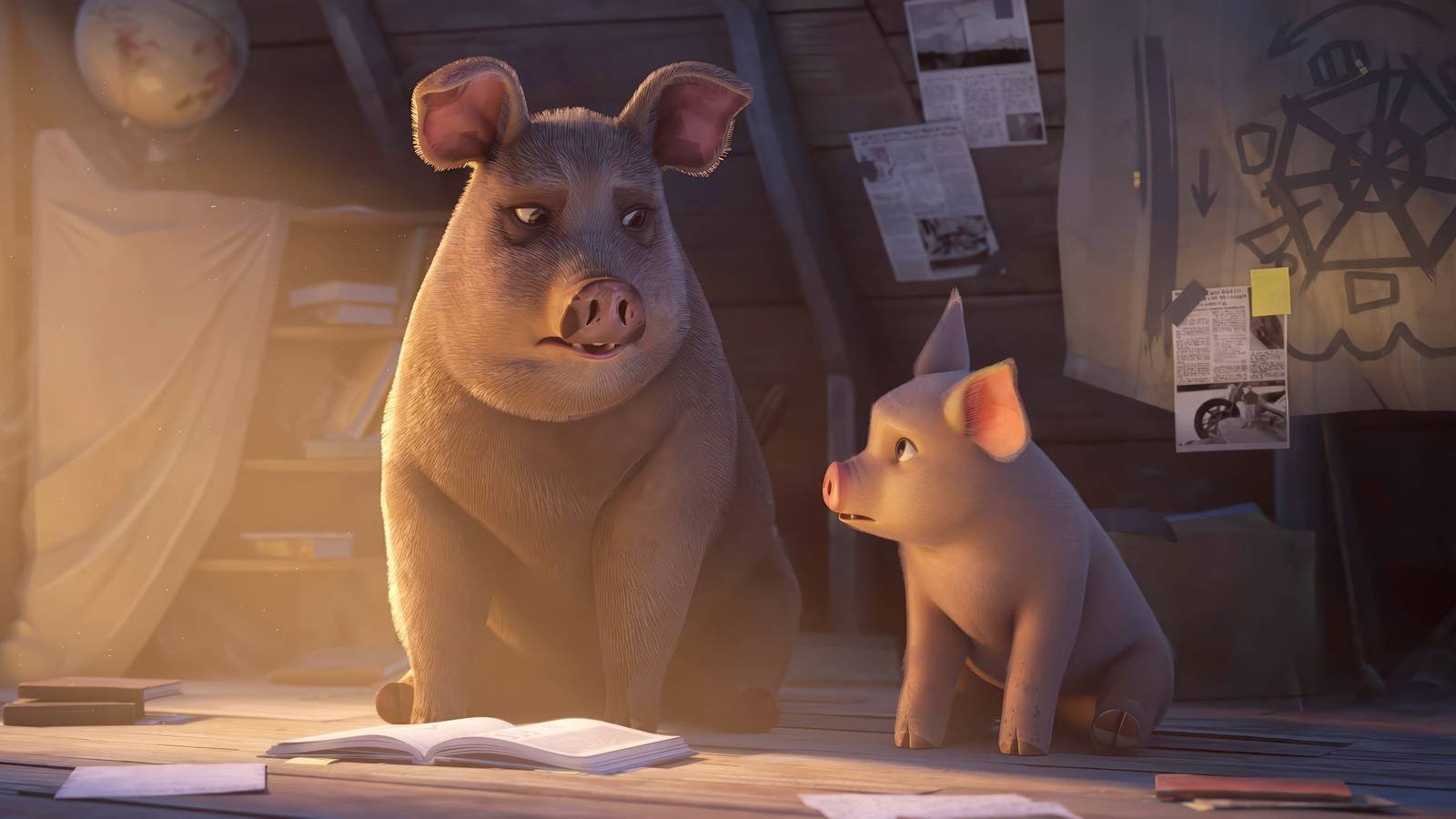
The most significant point of contention surrounding Andy Serkis's adaptation is the widespread perception that it has been crafted as a "made-for-kids" movie. In the context of 'Animal Farm,' this implies a deliberate softening of its harsh edges, a sanitization of its violent undertones, and a likely simplification of its nuanced political commentary to appeal to a younger demographic. Such an approach inherently necessitates glossing over the brutal realities of the animals' oppression, the pigs' ruthless power consolidation, and the tragic, often bloody, consequences of their regime. A children's adaptation would almost certainly shy away from depicting the starvation, executions, and psychological torment that are central to the book's narrative power, opting instead for a diluted, perhaps even optimistic, conclusion that fundamentally undermines Orwell's bleak yet crucial message.
This alleged narrative pivot directly contradicts Orwell's original intent. 'Animal Farm' was not written to entertain children with talking animals; it was penned as a profound and often disturbing critique of political systems meant to provoke thought, foster critical analysis, and serve as a stark warning to adults. By recasting it as a children's film, the adaptation risks trivializing the grave subject matter of totalitarianism, propaganda, and revolution gone awry. It potentially strips the story of its allegorical weight, transforming a cautionary tale about human nature and political power into a superficial morality play. The danger here is not just a misrepresentation of a classic text, but a missed opportunity—or worse, an active disservice—in presenting complex historical and political lessons to an audience that deserves an honest engagement with challenging truths, not a simplified, palatable version.
High Expectations and the Serkis Enigma
The involvement of Andy Serkis initially generated considerable anticipation. Known globally as a pioneer in motion-capture performance, Serkis has a celebrated track record of bringing complex, non-human characters to life with remarkable depth and emotional nuance, from Gollum in 'The Lord of the Rings' to Caesar in the 'Planet of the Apes' saga. His expertise in conveying intricate character psychologies through animation and performance capture seemed perfectly suited for 'Animal Farm,' where animal characters embody human-like flaws and political ideologies. Many envisioned a visually stunning and emotionally resonant adaptation that leveraged his unique skills to elevate Orwell's allegory for a modern audience, emphasizing the nuanced behaviors and expressions of the animal cast to heighten the dramatic impact of the narrative. This expectation made the subsequent criticism even more bewildering, as it suggested a fundamental disconnect between Serkis's known strengths and the reported direction of the film.
Adding to the early consternation was the controversy surrounding the animation style itself. Upon the release of the initial trailer, numerous viewers expressed concerns that the animation appeared to be generated by artificial intelligence, even if it wasn't. This perception, whether accurate or not, highlighted a potential disconnect in visual aesthetics. Beyond the animation quality, the broader production values, despite a purportedly 'star-studded' voice cast, seem to have failed in capturing the gravitas and dark atmosphere essential to 'Animal Farm.' The talent involved, while individually formidable, appears to have been marshaled in a direction that fundamentally misunderstands the core essence of the novel, resulting in a product that feels at odds with its prestigious source material and the high caliber of its creative team. The sheer investment in terms of talent and resources only underscores the baffling nature of the film's apparent misdirection.
Prior Adaptations: Lessons Learned or Ignored?
This isn't the first time 'Animal Farm' has been brought to the screen, and previous adaptations offer valuable context. The 1954 British animated film, while critically acclaimed for its artistry, notably altered Orwell's famously bleak ending for commercial reasons, opting for a slightly more optimistic, albeit still ambiguous, conclusion. This decision itself sparked debate among purists who felt it diluted Orwell's uncompromising vision. Later, the 1999 live-action television film, using animatronic and live animals, aimed for a more faithful, though still somewhat sanitized, portrayal. These historical attempts demonstrate the inherent challenge in translating 'Animal Farm' to a visual medium while preserving its profound political cynicism. The critical reception of these past efforts, particularly regarding their handling of the ending, serves as a testament to the delicate balance required to respect Orwell's narrative integrity. The current adaptation's apparent lean towards child-friendliness suggests that these historical lessons regarding thematic faithfulness may have been overlooked or intentionally disregarded.
The Peril of Diluted Narratives in Modern Cinema
The alleged approach to Serkis's 'Animal Farm' speaks to a broader, concerning trend in modern cinema: the 'softening' of classic, challenging literary works for mass appeal, often targeting younger audiences. In an era driven by market pressures and the pursuit of broad commercial success, there's a temptation to sand down the sharp edges of narratives that are inherently complex, disturbing, or politically charged. While accessibility is valuable, there's a critical ethical consideration for filmmakers adapting works with strong, often uncomfortable, political and social messages. When such stories are stripped of their provocative elements, their original impact—their ability to challenge, to make audiences uncomfortable, and to foster critical thought—is significantly diminished. This raises fundamental questions about the responsibility of creators to the source material and its original intent, blurring the line between respectful interpretation and outright narrative betrayal.
The distinction between interpreting a classic for a new generation and fundamentally altering its message is crucial. An adaptation can certainly explore new facets or perspectives, but it must remain tethered to the core thematic truth of the original work. To take 'Animal Farm,' a stark warning against totalitarianism and the corruption of revolutionary ideals, and reshape it into a 'made-for-kids' adventure, risks creating a product that is not just a poor adaptation but a misleading one. Such an approach suggests a lack of faith in the audience's capacity to engage with difficult truths, particularly when the very purpose of Orwell's work was to equip readers with the critical tools to recognize and resist authoritarian tendencies. It underscores a broader debate within the film industry about artistic integrity versus commercial viability, and the potential cost to the cultural legacy of seminal works.
Why 'Animal Farm' Demands an Unflinching Portrayal
'Animal Farm' is not a story that benefits from compromise or simplification. Its power lies precisely in its unflinching portrayal of darkness, despair, and the corruptibility of ideals. It is a narrative that demands to be uncomfortable, to challenge its audience to confront uncomfortable truths about power, human nature, and political systems. When these essential elements are diluted, the story loses its educational and critical value. The purpose of reading or watching 'Animal Farm' is to understand how easily revolutionary fervor can be twisted into totalitarian control, how propaganda can distort reality, and how unchecked power inevitably leads to tyranny. These are not lessons that can be effectively conveyed through a sanitized, child-friendly lens. They require the stark, often brutal, realism that Orwell so masterfully employed.
A truly impactful adaptation of 'Animal Farm' would embrace its gritty, cynical tone, daring to confront the very issues that make the novel so vital. It would trust its audience to grapple with complex themes and uncomfortable realities, rather than shielding them. When the sharp edges of such a potent allegory are blunted, its ability to provoke critical thinking and foster political awareness is severely compromised. The film, in its current reported form, appears to be a missed opportunity to introduce Orwell's powerful, enduring message to a new generation with the gravitas and intellectual integrity it deserves. Instead, it risks becoming another example of how an iconic work can be reduced to a shadow of its former self in the pursuit of a broader, yet ultimately less meaningful, appeal. The true strength of 'Animal Farm' lies in its ability to challenge, and any adaptation that shies away from that challenge fails to truly capture its essence.
The discourse surrounding Andy Serkis's 'Animal Farm' adaptation serves as a crucial reminder of the responsibility filmmakers bear when adapting literary classics, especially those with such profound socio-political messages. The film's apparent misstep highlights a fundamental misunderstanding or intentional subversion of Orwell's timeless work, turning what should have been a powerful, contemporary retelling into a potential disservice to its legacy. It underscores the importance of upholding artistic integrity and thematic faithfulness, particularly when dealing with narratives designed to challenge and enlighten. When art shies away from difficult truths, society loses an invaluable tool for critical reflection.
For more in-depth analyses of cinematic adaptations, literary critiques, and discussions on the intersection of art and social commentary, continue browsing NAME OF SITE. We are committed to providing comprehensive, thought-provoking content that delves beyond the surface, offering our readers insights into the cultural landscape and the enduring power of storytelling. Explore our extensive archives for reviews, features, and expert opinions that will deepen your understanding and appreciation of the world's most impactful narratives.
Fonte: https://screenrant.com