
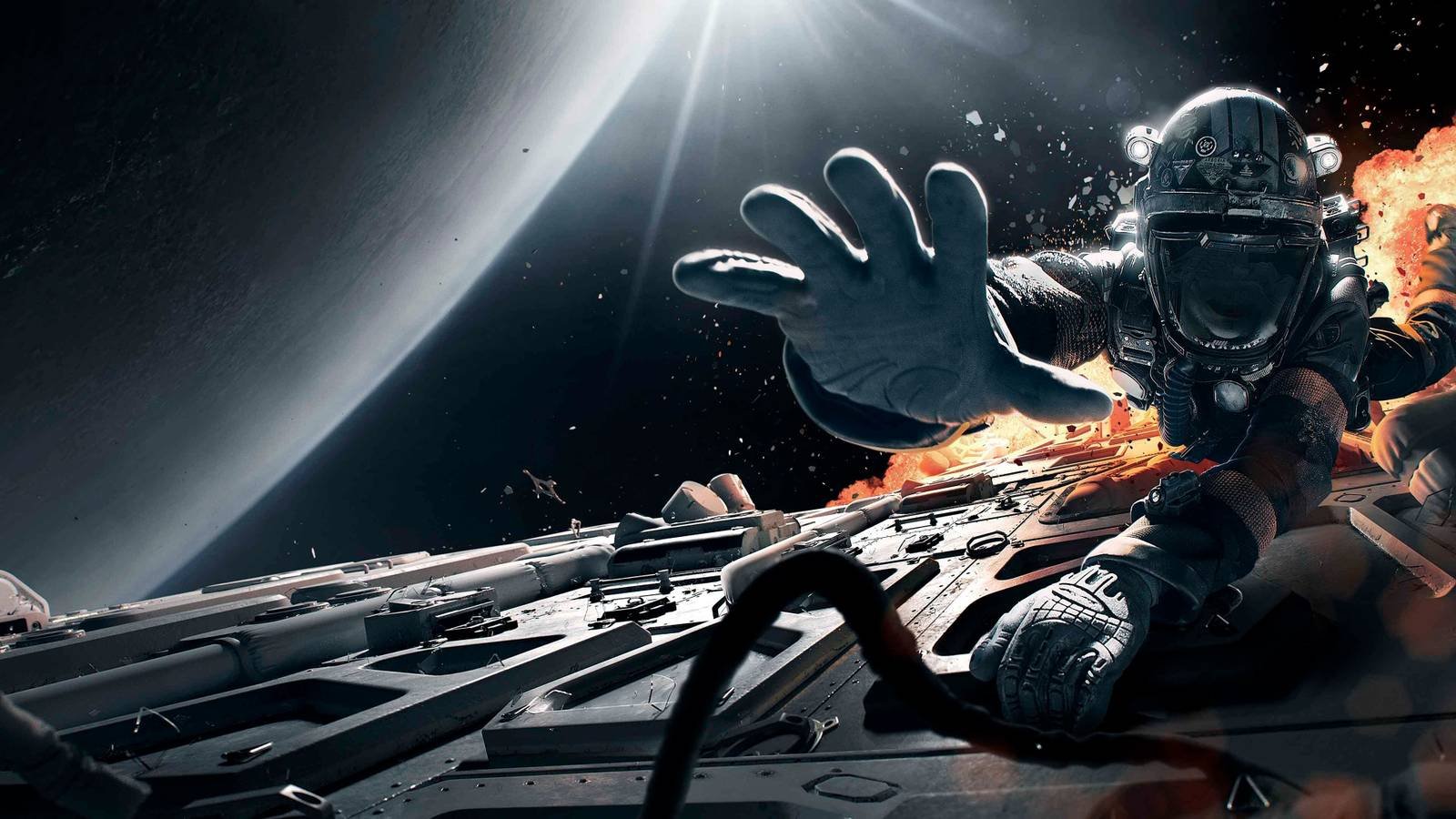
Hard science fiction, a cornerstone of speculative literature, is built upon a fundamental promise: that the future, no matter how distant or technologically advanced, will remain anchored in the immutable laws of science and physics, not magic or unexplained phenomena. It is a genre that demands rigorous plausibility, where every fantastical element or seemingly impossible innovation must earn its place through a foundation of scientific principles, however theoretical. This commitment to realism is precisely what enthralls its dedicated readership, offering a window into futures that feel tangible and within reach, albeit sometimes daunting. The genre challenges authors to envision worlds where technological progress, societal evolution, and human endeavor are constrained and shaped by the very fabric of the universe.
In the contemporary landscape of speculative fiction, James S.A. Corey's 'The Expanse' series stands as a towering achievement and a prime example of modern hard science fiction done exceptionally well. It masterfully blends intricate political machinations with groundbreaking scientific realism, depicting a solar system grappling with resource scarcity, ideological divides, and humanity's inherent drive for expansion. Its depiction of realistic orbital mechanics, the physics of space combat, and the sociological ramifications of life in varying gravities redefined expectations for space opera. 'The Expanse' successfully brought a level of scientific credibility and geopolitical complexity to the forefront, proving that spectacular narratives could thrive within strict scientific parameters. Yet, the vast and ever-evolving library of hard science fiction encompasses works that, in their distinct approaches to scientific depth, narrative scope, or philosophical inquiry, offer experiences that push the boundaries even further, inviting readers to explore different pinnacles of the genre.
The Enduring Allure of Rigorous Speculation
The enduring appeal of hard science fiction lies in its intellectual honesty and its capacity to engage readers on multiple levels. It is not merely about predicting the future but about exploring the *how* and *why* of potential futures. Authors in this genre often act as intellectual guides, taking readers on journeys through highly probable scientific advancements, potential societal shifts, and the ethical dilemmas that emerge from pushing the boundaries of human knowledge and capability. This demands meticulous research and a deep understanding of subjects ranging from astrophysics and engineering to psychology and economics. Readers are not simply passive recipients of a story; they are invited to intellectually participate, to consider the implications of presented technologies, and to grapple with the logical extensions of current scientific understanding.
The genre's commitment to plausibility fosters a unique sense of immersion. When a story's mechanisms – be they advanced propulsion systems, terraforming projects, or artificial intelligences – feel grounded in reality, the stakes become more immediate and the imaginative leaps more profound. This authenticity allows for a deeper exploration of human resilience, ingenuity, and fallibility against a backdrop of cosmic indifference or technological marvel. Hard sci-fi, at its best, isn't just about spaceships and distant planets; it's about the human condition placed under the magnifying glass of scientific possibility, offering both awe-inspiring visions and cautionary tales that resonate with our present-day scientific and ethical considerations.
The Expanse: A Modern Benchmark for Space Opera
Before delving into works that might offer an even deeper dive into certain facets of hard sci-fi, it is crucial to acknowledge the monumental contribution of 'The Expanse.' Its narrative brilliance stems from a multi-layered approach to world-building. The series meticulously details the socio-political tensions between Earth, Mars, and the asteroid belt, each culture shaped by its unique environment and technological dependencies. The portrayal of the Epstein Drive, a highly efficient fusion drive, serves as a cornerstone of its realism, enabling plausible interplanetary travel while still adhering to the vastness and logistical challenges of space. Combat sequences are rendered with a stark understanding of Newtonian physics, emphasizing the brutal realities of zero-G warfare and the significant time delays in communication across the solar system.
Beyond its scientific grounding, 'The Expanse' distinguished itself through its complex character arcs and its astute commentary on class struggle, colonialism, and resource management. It elevated the space opera genre by shedding many of its fantastical elements, replacing them with a gritty, believable future where political intrigue and personal survival are inextricably linked to scientific realities. The series demonstrated that grand, sweeping narratives could be constructed without sacrificing scientific integrity, thereby setting a high bar for what modern hard science fiction could achieve in terms of both entertainment value and intellectual rigor. Its widespread success, transitioning from novels to a critically acclaimed television series, testifies to its ability to captivate a broad audience with intelligent, scientifically informed storytelling.
Transcending the Expanse: Dimensions of Excellence
While 'The Expanse' excels in its comprehensive solar system-spanning narrative and its blend of realism with compelling character drama, the hard science fiction genre is incredibly diverse. Other works often push specific dimensions of this realism or speculative inquiry to even greater extremes, offering different kinds of profound experiences. These comparisons are not meant to diminish 'The Expanse' but rather to highlight the incredible breadth and depth of a genre where excellence manifests in myriad forms. The pursuit of scientific fidelity and narrative ambition can lead authors down divergent paths, resulting in stories that explore theoretical physics with an almost academic precision, or project humanity's future on timescales that dwarf the concerns of a single solar system, or probe the very nature of consciousness and existence through the lens of emerging technologies.
Unparalleled Scientific Depth and Speculation
Some hard sci-fi narratives delve into specific scientific fields with a degree of detail and conceptual bravery that can surpass even 'The Expanse.' These books might explore the nuances of relativistic effects on interstellar journeys, presenting challenges and paradoxes that go far beyond interplanetary travel. They might intricately detail the engineering marvels required for megastructures like Dyson spheres or ringworlds, meticulously calculating energy budgets, material stresses, and the social structures necessary to maintain such colossal endeavors. Others might focus on exoplanetary science, envisioning truly alien biospheres and ecologies based on cutting-edge astrobiological theories, complete with detailed chemical compositions, evolutionary paths, and the profound challenges of communication and understanding. This level of scientific granularity transforms the narrative into a thought experiment, inviting readers to contemplate the very frontiers of human knowledge and technological capability.
Grandiosity of Scope and Conceptual Innovation
Beyond the solar system, other hard sci-fi works venture into scales of space and time that fundamentally reshape our understanding of humanity's place in the cosmos. These stories might span eons, following the evolution of civilizations across galactic empires, charting humanity's metamorphosis into post-biological entities, or contemplating the heat death of the universe itself. The 'scope' here refers not just to physical distance but to the conceptual ambition – exploring the implications of truly advanced artificial intelligences that rival or surpass biological sentience, the manipulation of spacetime, or the discovery of fundamental physics that revolutionize our entire perception of reality. Such narratives often grapple with existential questions on a grander scale, where human concerns in a single solar system seem but a fleeting moment in the vast tapestry of cosmic existence.
Nuances of Human and Post-Human Storytelling
While 'The Expanse' certainly offers compelling character studies, some hard sci-fi literature utilizes its scientific backdrop to explore the human condition, consciousness, and identity with a different kind of intensity. These works often focus on the psychological and philosophical impacts of extreme isolation in space, the ethical quandaries of genetic engineering or neural interfaces, or the profound challenges of adapting to environments fundamentally hostile to human life. They might delve into the concept of 'mind uploading' or the creation of truly autonomous AIs, forcing readers to confront what it means to be human in a technologically augmented or post-biological future. The focus shifts from the external geopolitical struggle to the internal, exploring the evolution of intelligence, emotion, and morality under the pressure of scientific advancement, often leading to deeply personal and thought-provoking narratives that resonate on an emotional as well as intellectual level.
The Diverse Landscape of Hard Science Fiction
Ultimately, the notion of one book being 'better' than another is often subjective, particularly in a genre as rich and varied as hard science fiction. 'The Expanse' rightfully earns its accolades for its synthesis of compelling narrative, intricate character development, and rigorous scientific grounding within a traditional space opera framework. However, the true strength of the hard sci-fi genre lies in its diversity. There are stories that push the boundaries of scientific accuracy to almost textbook levels, others that conceptualize futures on truly cosmic scales, and still others that use the backdrop of scientific possibility to dissect the very essence of human experience. Each offers a unique lens through which to contemplate plausible futures, challenging readers to expand their understanding of science, society, and themselves.
This expansive landscape of hard science fiction ensures that there is always something new and profound to discover, whether one seeks meticulous scientific detail, breathtaking conceptual scope, or deep philosophical introspection. The ongoing dialogue between scientific possibility and narrative imagination continues to yield narratives that are not only entertaining but also intellectually stimulating, acting as critical reflections of our present and visionary blueprints for our potential futures. The genre thrives on authors who dare to ask 'what if?' while meticulously adhering to 'how,' thereby continuously redefining the limits of what is plausible and compelling.
The world of hard science fiction is a boundless frontier, constantly expanding with new ideas and rigorously imagined futures. If you've enjoyed the grounded realism and intricate storytelling of 'The Expanse,' a whole universe of equally compelling and perhaps even more intellectually challenging narratives awaits. Dive deeper into the genre with our extensive reviews, critical analyses, and curated lists of the best speculative fiction has to offer. Continue your journey through the cosmos of compelling ideas and plausible wonders right here at [NAME OF SITE], where we bring you the sharpest insights into the literary universes that shape our imaginations.
Fonte: https://screenrant.com