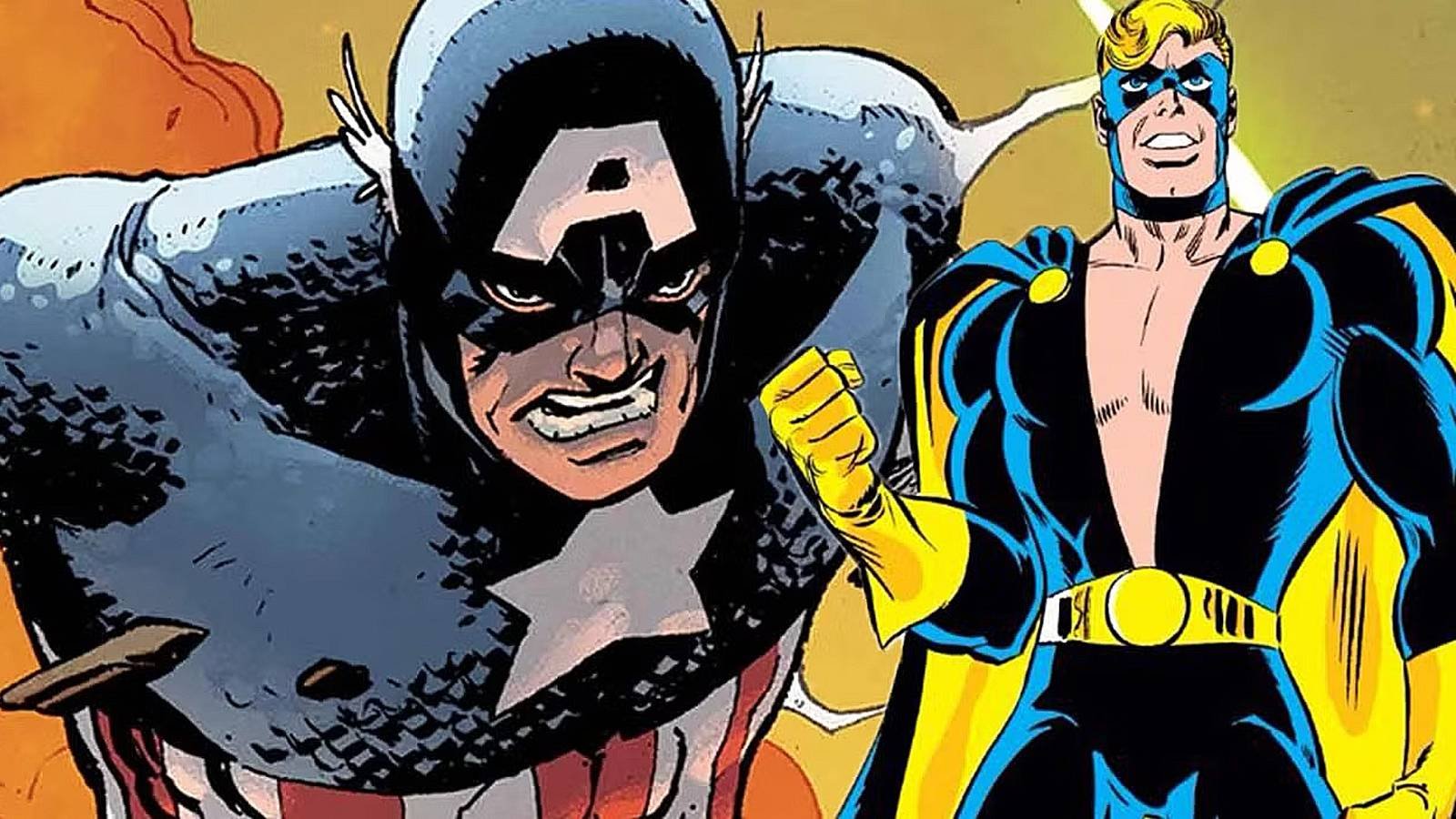
For avid followers of the Marvel Universe, certain moments stand out as pivotal, not just for their immediate impact but for their long-term reverberations. One such instance, often dismissed as a curious historical footnote, is Captain America's brief abandonment of his iconic identity in 1974. Faced with disillusionment regarding the American government, Steve Rogers shed the stars and stripes to become "Nomad." While this rebranding proved short-lived, lasting only a handful of issues, its implications for the trajectory of Marvel's storytelling, character development, and thematic depth were profound. Decades later, understanding this pivotal, if visually polarizing, period remains crucial for grasping the complex evolution of the Marvel narrative.
The Crisis of Identity: America in the 1970s
To fully appreciate the significance of Steve Rogers' transformation into Nomad, one must first contextualize the era in which it occurred. The early 1970s in the United States were a period of immense social and political upheaval. The Vietnam War had deeply fractured the nation, leading to widespread anti-war protests and a growing distrust of government institutions. The Watergate scandal, which unfolded publicly between 1972 and 1974, further eroded public faith in political leadership, exposing corruption at the highest levels of power. This climate of disillusionment directly influenced popular culture, including comic books.
Captain America, as a living symbol of American ideals, found himself at the epicenter of this national identity crisis. For decades, he had embodied patriotism, justice, and the American dream. However, as the nation grappled with its own moral failings, the very concept of a hero who unequivocally served the government became problematic. Marvel Comics, known for its ability to reflect contemporary societal issues, recognized the imperative to address this dissonance within its flagship character. The traditional, unambiguous heroics of Captain America seemed increasingly out of step with the complex realities faced by its readership, paving the way for a radical reinterpretation of his role.
The Birth of Nomad: A Symbol of Disillusionment
In *Captain America* #180 (December 1974), written by Steve Englehart and penciled by Sal Buscema, Steve Rogers reached his breaking point. Discovering a high-level government conspiracy involving a corrupt organization known as the Secret Empire, Rogers felt betrayed by the very nation he had sworn to protect. He concluded that he could no longer serve a government that had strayed so far from its founding principles, nor could he continue to be a symbol for a system he no longer trusted. This moral quandary led him to renounce his identity as Captain America, discarding his iconic shield and star-spangled uniform.
His new moniker, "Nomad," meaning "man without a country," was a deliberate and poignant choice. The costume itself – a dark, almost somber ensemble with no nationalistic insignia – was a stark visual representation of his detachment from any single allegiance. It comprised a deep blue tunic with an open collar, red gloves and boots, and a distinctive deep V-shaped cowl. This uniform, which has since been derided by some as Captain America's "worst costume ever," was not merely a fashion misstep; it was a powerful, albeit short-lived, visual metaphor for his profound personal and ideological crisis. It represented a hero stripped bare of his traditional iconography, forced to confront his ideals outside the framework of national identity. This move initiated a crucial conversation about what Captain America truly represented: the nation, or the ideals of freedom and justice themselves, regardless of who was in power.
The Brief Tenure and Its Practical Challenges
The Nomad identity lasted for just five issues, from *Captain America* #180 to #184. While conceptually rich, its practical execution faced immediate challenges, particularly concerning the costume. The most commonly cited issue was the difficulty Sal Buscema had in consistently drawing the distinctive cowl. The deep V-neck, intended to evoke a nomadic or mysterious aesthetic, frequently resulted in drawings where Nomad appeared to have no head or to be perpetually looking down. This visual awkwardness undoubtedly contributed to its swift abandonment. Within the narrative, the return to Captain America was facilitated by the emergence of a new villain, the Red Skull, requiring Rogers to reclaim his symbol to inspire hope and leadership against such an existential threat.
Nomad's Enduring Legacy in the Marvel Universe
Despite its brief duration and the infamous costume, the Nomad storyline was far from inconsequential. It established several foundational precedents that would shape the Marvel Universe for decades to come, proving to be a key to understanding the publisher’s evolving approach to heroism. This period solidified the idea that Steve Rogers' ideals were paramount, even above the U.S. government, allowing for future conflicts where Captain America might stand against official policy for the sake of higher principles.
Firstly, Nomad served as an early precursor to the deconstruction of the superhero archetype. Marvel began exploring the psychological toll of heroism and the moral complexities that heroes faced in a world far more nuanced than the Golden Age's clear-cut battles of good versus evil. This narrative thread would be picked up and expanded upon in countless future storylines, influencing characters like the Punisher, Cable, and even later iterations of Captain America himself, particularly during arcs such as *Civil War*, where he famously opposed government registration of heroes.
Secondly, the Nomad saga cemented the notion that the mantle of Captain America could be passed on. While Rogers eventually reclaimed the shield, his brief absence paved the way for others to don the costume, such as 'The Captain' (a temporary identity for Rogers) and later, Bucky Barnes and Sam Wilson. This demonstrated that Captain America was not merely Steve Rogers, but an enduring symbol and an ideal that could be embodied by various individuals, each bringing their own perspective to the role while upholding the core values of justice and freedom. This fluidity in identity adds a profound layer to Marvel's exploration of legacy and responsibility.
Finally, the themes explored during the Nomad period – government corruption, disillusionment with institutions, and the search for a purer form of justice – resonate powerfully even in contemporary society. In a world still grappling with political scandals, global conflicts, and questions of national identity, Captain America's struggle in the 1970s remains remarkably relevant. It underscores Marvel's capacity to use its characters as a mirror to reflect and comment on real-world issues, solidifying its position as more than just escapist fantasy. The 'worst costume ever' might have been aesthetically challenging, but it was intrinsically linked to a narrative turning point that allowed Marvel to mature, embracing deeper moral ambiguities and making its heroes more relatable and enduring.
The Nomad identity, while a fleeting experiment, undeniably helped redefine what a Marvel hero could be. It demonstrated that even the most iconic figures could face profound crises of conscience, leading them to question their very purpose. This willingness to challenge established norms and delve into complex moral landscapes ultimately enriched the Marvel Universe, laying groundwork for sophisticated storytelling that continues to captivate audiences today. To dismiss Nomad as merely a sartorial misstep is to overlook its profound and lasting impact on the evolution of Captain America and the broader Marvel narrative.
Conclusion: The Enduring Echo of a Brief Rebirth
The tale of Captain America's metamorphosis into Nomad in the mid-1970s serves as a powerful reminder that even the most seemingly minor detours in a hero's journey can leave indelible marks on their legacy and the universe they inhabit. It taught us that even a symbol as potent as Captain America could falter, question, and evolve, reflecting the societal anxieties of its time while simultaneously shaping the future direction of comic book narratives. The much-maligned Nomad costume, far from being a simple footnote, represented a courageous editorial decision to push boundaries, to explore the fragility of identity, and to ground the fantastical world of superheroes in tangible human struggles. It was a vital step in Marvel's journey towards more nuanced and impactful storytelling, proving that sometimes, the key to understanding a vast, interconnected universe lies in its most unconventional moments.
Dive deeper into the fascinating history and complex character developments that have shaped the Marvel Universe. From iconic transformations to groundbreaking storylines, there's always more to explore. Visit The Comic Nexus to uncover exclusive analyses, character profiles, and in-depth articles that expand your understanding of your favorite heroes and villains. Don't miss out on our extensive archives and latest features!
Fonte: https://screenrant.com