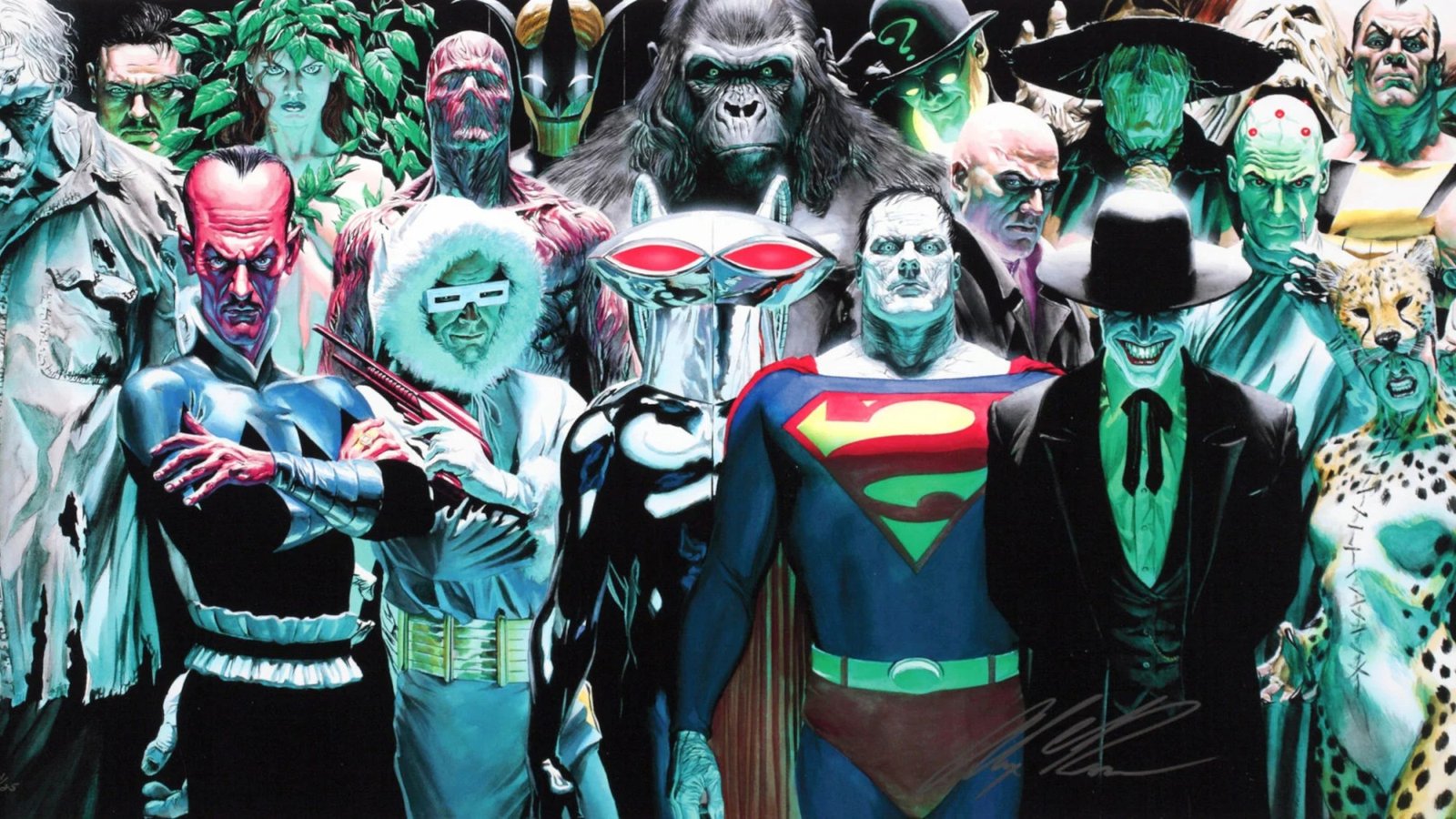
DC Comics, a venerable institution in the realm of sequential art, has for nearly nine decades captivated readers with an unparalleled pantheon of characters. While its heroes like Superman and Batman stand as paragons of virtue, it is often the compelling complexity of its villains that truly defines the narrative landscape. These antagonists, from the Joker's chaotic nihilism to Lex Luthor's intellectual malevolence, have inspired countless imitations and solidified their place as pop culture icons. Yet, one of the most intriguing evolutions in comic book storytelling over the decades has been the exploration of villainous redemption, offering a fresh lens through which to view even the most hardened adversaries. This narrative device allows creators to infuse long-standing characters with new life, revealing hidden depths and challenging readers' perceptions of good and evil.
The concept of a villain turning hero is more than just a plot twist; it is a profound exploration of morality, choice, and the potential for change inherent in the human (or superhuman) condition. For a publishing house with such a rich history, keeping characters relevant and engaging often necessitates radical shifts in their established roles. Redemption arcs provide this vital freshness, transforming antagonists into protagonists or complex anti-heroes. This not only breathes new life into characters but also opens up avenues for compelling storytelling, allowing readers to witness their favorites in unexpected lights and fostering a deeper understanding of their motivations. While not every attempt at villainous rehabilitation resonates with audiences, the stories that succeed often elevate the character beyond their original, often one-dimensional, villainous personas, making them more relatable, complex, and ultimately, more interesting.
Bane: From Batman's Destroyer to Secret Six Strategist
Introduced as the man who famously broke the Bat, <b>Bane</b> carved his niche as one of Batman's most formidable physical and intellectual adversaries. His origins in the penal colony of Peña Duro, where he honed his mind and body through sheer will and the use of the super-steroid Venom, established him as a force to be reckoned with. However, despite his strategic brilliance and unparalleled combat skills, his character often risked becoming a repetitive 'evil Batman' trope, with many stories reiterating his initial destructive impact. It was in the mid to late 2000s that Bane underwent a significant transformation, not necessarily into a traditional hero, but into a complex anti-hero within the pages of Gail Simone's critically acclaimed <i>Secret Six</i> series. Joining a team of morally ambiguous characters, Bane's intellect and a surprisingly nuanced code of honor were brought to the forefront. He developed a protective, almost paternal, bond with certain team members, particularly Scandal Savage's daughter, and demonstrated a surprising vulnerability and desire for purpose beyond mere conquest. This era allowed readers to see him as more than just a brute, revealing a character capable of loyalty and even a twisted form of affection, making him profoundly more engaging than his earlier, more straightforward villainous portrayals.
Two-Face: Harvey Dent's Enduring Struggle for Redemption
<b>Two-Face</b>, the tragic figure of Harvey Dent, embodies the ultimate struggle with duality. Once Gotham City's incorruptible District Attorney, Dent's horrific scarring and subsequent psychological break transformed him into a villain obsessed with chance and binary choices. His inherent nature as a good man corrupted by trauma has always made him a prime candidate for redemption arcs, offering a tantalizing glimpse into the hero he once was. Throughout his history, various storylines have explored the possibility of Dent reclaiming his former self. A notable example is the 'Face the Face' storyline, where, in Batman's absence, Harvey Dent temporarily resumed his role as Gotham's protector alongside Dick Grayson and Tim Drake. This period showcased Dent's unwavering commitment to justice, even as he grappled with his internal demons. Seeing Harvey Dent in charge, battling crime not as Two-Face but as a reformed figure, resonated deeply with readers. It illuminated the enduring hope that even the most damaged individuals can find their way back, highlighting the inherent goodness that was shattered but never entirely extinguished. These moments reveal that the true villainy often lies in the circumstances that twisted him, rather than an innate evil.
Major Disaster: The Unlikely Hero of the JLA
Before his surprising turn, <b>Major Disaster</b>, real name Paul Booker, was largely considered a forgettable D-list villain, primarily known as a minor antagonist for Green Lantern. His ability to manipulate natural forces—creating earthquakes, tornadoes, and other cataclysms—held immense potential, but consistently failed to elevate him beyond a recurring nuisance. He was often depicted as a small-time crook with grand aspirations, lacking the depth or compelling motivation of more iconic DC villains. However, his fortunes dramatically shifted during Joe Kelly and Doug Mahnke's acclaimed run on <i>JLA</i>. Here, Major Disaster was given a chance at genuine redemption, joining the Justice League of America. Kelly reimagined him with an 'everyman' sensibility, portraying him as a person genuinely trying to atone for past misdeeds and contribute positively. His experiences within the JLA, particularly his interactions with established heroes, humanized him considerably, showcasing his internal conflict and desire for acceptance. This portrayal offered a fresh perspective on a character previously relegated to obscurity, proving that even the most minor villains could possess a compelling narrative arc when given the opportunity. Unfortunately, this nuanced take was not consistently maintained by subsequent creators, leading him to fade back into relative obscurity, a testament to the missed potential of his heroic iteration.
Deathstroke: The Mercenary's Moral Quandaries
<b>Deathstroke the Terminator</b>, Slade Wilson, rose to prominence as a formidable mercenary and the arch-nemesis of the Teen Titans. His strategic genius, enhanced physical abilities, and ruthless efficiency made him one of DC's most popular and dangerous villains. Given his complex motivations and often professional, rather than purely malicious, approach to his work, it was almost inevitable that he would eventually occupy the morally gray space of an anti-hero. Deathstroke frequently oscillates on the morality spectrum, sometimes leading his own series as a reluctant protagonist driven by a personal code, and at other times reverting to his villainous roots, often clashing with the Teen Titans once more. This constant flux allows creators to highlight the inherent contradictions within his character: his capacity for loyalty and paternal affection clashing with his cold, calculated brutality. As an anti-hero, Deathstroke becomes a vehicle for exploring themes of personal responsibility, the nature of war, and the blurred lines between right and wrong. This dynamic range makes him significantly more interesting than a straightforward villain, as readers are continually challenged to understand his ever-shifting ethical compass and the complex web of relationships and past traumas that inform his choices.
Catman: The Anti-Hero Who Roared
Initially conceived as a rather unremarkable Batman villain, Thomas Blake, also known as <b>Catman</b>, began his career as a wealthy big-game hunter who turned to crime, often utilizing a costume and gadgets that mirrored the Dark Knight's feline counterpart, Catwoman, albeit without her enduring popularity. For decades, he remained a largely obscure figure, a perennial punchline in the rogues' gallery. His fortunes began to change with a cameo in Kevin Smith's 'The Archer's Quest' storyline for Green Arrow, which re-introduced him with a slightly more imposing physique. However, it was Gail Simone's <i>Villains United</i> and subsequent <i>Secret Six</i> series where Catman truly found his footing as a compelling anti-hero. He was depicted as a rugged, morally complex individual disillusioned with mainstream villainy, possessing a strong sense of loyalty to his chosen family within the Secret Six. His transformation saw him become a more formidable combatant, reconnecting with his primal instincts and embracing a leadership role. Readers embraced this tougher, more nuanced Catman, who often demonstrated surprising compassion and a clear ethical code within his anti-heroic framework. His newfound popularity during this period unequivocally proved that his character was significantly enhanced when allowed to operate outside the traditional villain role, making his frequent reverts to generic villainy a puzzling choice for many fans.
Sinestro: A Lantern's Fall and Resurgence
Thaal Sinestro of Korugar is arguably the most complex and iconic foe of the Green Lantern Corps. Once Hal Jordan's revered mentor and considered the greatest Green Lantern of all, Sinestro's rigid belief in order led him to enforce peace in his sector through tyrannical means, establishing a fascist dictatorship. This abuse of power resulted in his expulsion from the Corps and his subsequent embrace of the yellow light of fear, establishing his own Sinestro Corps and becoming Hal Jordan's personal arch-nemesis. Despite his villainous acts, Sinestro often views himself as a necessary evil, believing his methods are the only true path to universal order. This ideological conviction laid the groundwork for his moments of heroism. During the apocalyptic 'Blackest Night' event, Sinestro was forced into an uneasy alliance with the Green Lanterns and other light-wielders to combat the encroaching Black Lantern Corps, which threatened all life. He reluctantly fought alongside his former student, demonstrating his immense power and tactical brilliance in defense of existence itself. His prominence continued into the New 52 era, where he sometimes operated as a reluctant hero, even briefly rejoining the Green Lantern Corps, proving that even a character defined by fear can be motivated by a greater good, albeit on his own terms. These turns provided a deeper look into his philosophy, revealing a character driven by a genuine, albeit twisted, desire for order.
Harley Quinn: The Joker's Ex-Sidekick Finds Her Own Path
Dr. Harleen Quinzel began her storied career as a psychiatrist at Arkham Asylum, tasked with treating the Joker. Instead, she fell prey to his manipulative charm, transforming into <b>Harley Quinn</b>, his devoted and dangerously unpredictable sidekick. For years, her character was defined by her abusive relationship with the Clown Prince of Crime, her villainy often a reflection of his madness. However, as her popularity exploded, creators began to explore Harley's identity independent of the Joker, allowing her to break free from his toxic influence. This journey into anti-heroism has seen her align with various groups, notably the Suicide Squad and the Birds of Prey, where she uses her unique blend of acrobatic prowess, surprising intelligence, and unhinged charisma for chaotic good. Her redemption isn't about becoming a traditional hero but about forging her own moral compass, often driven by a sense of loyalty to friends, a desire for fun, and an idiosyncratic sense of justice. This evolution has made her a deeply sympathetic and entertaining character, allowing for stories that delve into themes of self-worth, toxic relationships, and finding one's authentic self amidst the chaos, cementing her status as one of DC's most beloved and complex figures.
Red Hood: The Dark Knight's Prodigal Son
Jason Todd's journey is perhaps one of the most tragic and compelling in the Batman mythos. As the second Robin, his impulsive nature led to his brutal murder at the hands of the Joker, an event that haunted Batman for years. Resurrected through a Lazarus Pit, Jason returned as the vengeful and nihilistic vigilante, <b>Red Hood</b>, adopting the Joker's old moniker. Initially, his methods were far more brutal than Batman's, often involving lethal force against criminals, driven by a deep-seated anger and a desire for retribution against those he felt had failed him. However, over time, Red Hood evolved from a clear-cut villain targeting Batman into a morally ambiguous anti-hero. While still employing extreme measures, his focus shifted from mere vengeance to protecting the innocent, particularly those disenfranchised by Gotham's systemic failures. He often operates in the darker corners of the city, tackling threats Batman cannot or will not, blurring the lines between hero and vigilante. This complex character arc, marked by his internal conflict between his anger and his underlying desire for justice, has allowed readers to explore the consequences of trauma, the failures of the justice system, and the enduring bond of the Bat-Family, making him a richer and more fascinating character than he ever was as Robin or a purely antagonistic force.
Captain Cold: The Rogue with a Code
Leonard Snart, aka <b>Captain Cold</b>, stands as the cunning and often honorable leader of the Rogues, Flash's collective of super-villains. With his signature cold gun, Snart has consistently challenged the Scarlet Speedster, but unlike many villains, he operates with a surprisingly strict code of ethics: no drugs, no killing women or children, and no unnecessary violence. This professional approach to villainy always hinted at a deeper moral core. His transition to a more anti-heroic role became particularly prominent during the <i>Forever Evil</i> storyline, where he and the Rogues famously refused to align with the Crime Syndicate of Earth-3, choosing instead to protect their home, Central City, from the invading force. This act of unexpected heroism cemented his reputation as a villain who, despite his criminal inclinations, possessed a strong sense of loyalty to his city and his crew. Furthermore, during his tenure on the Justice League, Snart demonstrated his tactical brilliance and surprising courage, proving himself a valuable asset. His journey highlights that even career criminals can possess a strong moral compass and a capacity for genuine heroism, driven by their own unique principles rather than a traditional sense of justice. This makes Captain Cold one of DC's most endearing and paradoxically principled antagonists-turned-allies.
Poison Ivy: Protector of the Green
Dr. Pamela Isley, better known as <b>Poison Ivy</b>, began her career as a misanthropic ecoterrorist, using her botanical powers and pheromones to lash out at humanity for its perceived crimes against the natural world. Her initial portrayals often depicted her as a straightforward villain, driven by an extreme, albeit understandable, environmental agenda. However, over the years, her character has been recontextualized, particularly in her relationship with nature and her burgeoning romance with Harley Quinn. This evolution has seen her shift from pure villainy to a complex anti-hero whose actions, while still often extreme, are rooted in a genuine desire to protect the planet. She views herself as the Earth's avenging angel, and while her methods frequently clash with those of traditional heroes, her ultimate goal is often aligned with a greater good: the survival of the planet. Recent interpretations have further explored her symbiotic connection to the Green, the elemental force of plant life, elevating her beyond a simple eco-terrorist to a powerful, albeit morally ambiguous, force of nature. Her journey illustrates the nuanced line between villainy and heroism, where radical beliefs can sometimes lead to unexpected alliances and a unique form of environmental guardianship, making her one of DC's most relevant and evolving characters in the modern era.
The narratives of these ten DC villains-turned-heroes underscore a fundamental truth in long-form storytelling: characters, like people, are rarely static. The capacity for change, redemption, and the exploration of moral gray areas adds immeasurable depth and longevity to beloved figures in pop culture. By allowing these antagonists to transcend their villainous archetypes, DC Comics has not only refreshed its roster but also delivered some of its most profound and resonant stories. These transformations challenge readers to look beyond initial impressions, inviting them to consider the complex motivations and inherent potential within every individual, whether they wear a cape or wield a cold gun. For more in-depth analyses of character evolution and the rich tapestry of the DC Universe, continue exploring the extensive archives at NAME OF SITE, where every story offers a new perspective.
Fonte: https://comicbook.com