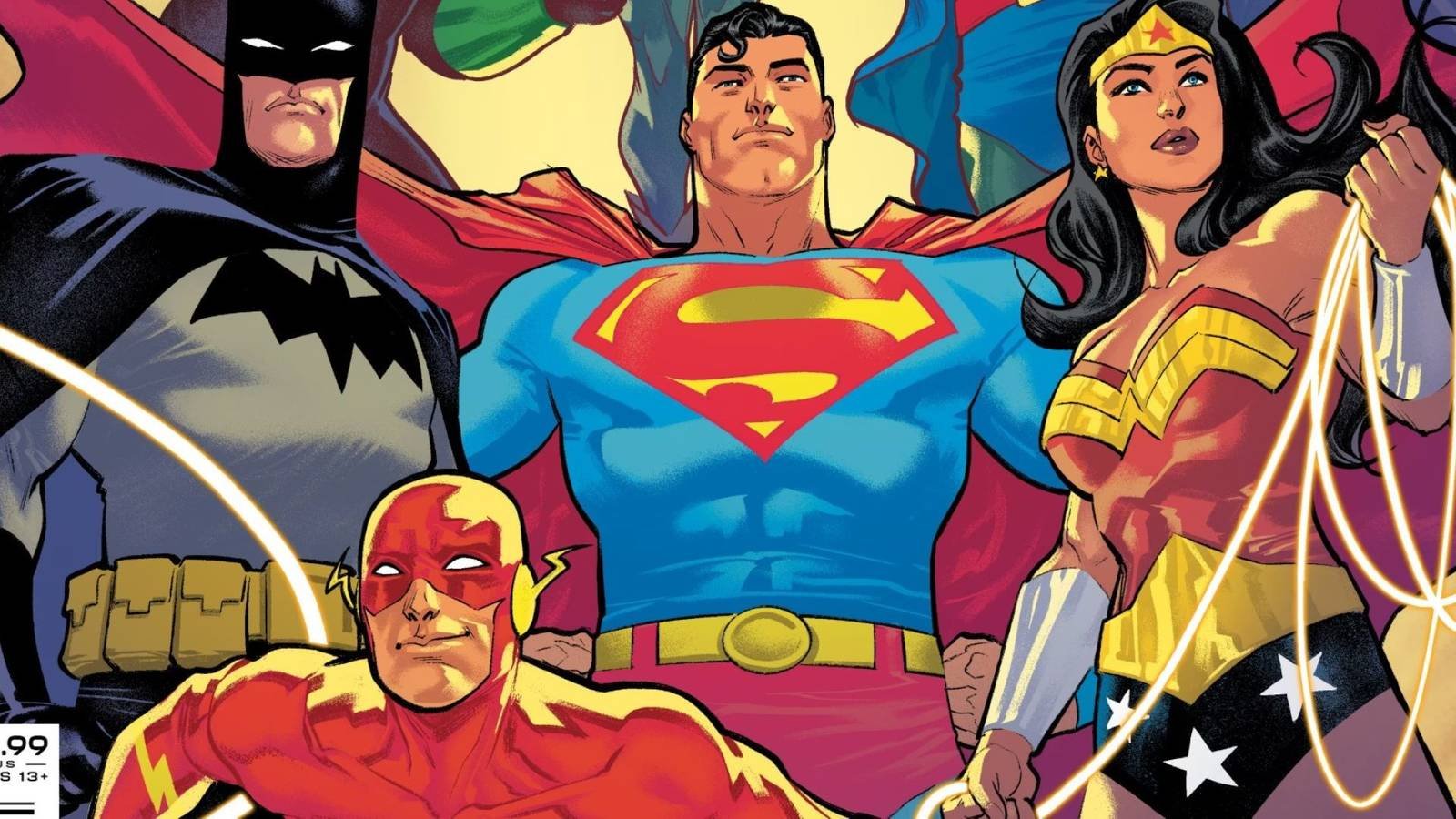
The 1990s represented a pivotal and often tumultuous period in the annals of American comic books, a dynamic era characterized by both unprecedented innovation and significant challenges. This transformative decade left an indelible mark on flagship titles and beloved characters, and the Justice League, DC Comics' premier superhero team, was no exception. Far from being a static entity, the League's narrative through the nineties mirrored the broader industry trends, experiencing extreme highs of creative reinvention and the sobering lows of market speculation and shifting reader tastes. Throughout this period of flux, the team's roster underwent substantial changes, introducing a host of new members who would define its trajectory for years to come. These additions were not merely ancillary figures; many became integral to the League’s identity, reflecting the changing landscape of heroism and the evolving storytelling sensibilities of the era.
The Dynamic Landscape of 90s Comics and the Justice League
The 1990s were a fascinating, if sometimes bewildering, time for comic books. It was a decade marked by a speculator boom, where comics were often bought as investments rather than for pure enjoyment, leading to a proliferation of variant covers, foil-stamped issues, and highly publicized character deaths or transformations. This period also saw the rise of Image Comics, founded by a group of superstar artists who left Marvel, emphasizing creator-owned properties and a more 'extreme' aesthetic. The overarching tone often shifted towards 'grim and gritty' narratives, with anti-heroes gaining prominence and traditional heroes undergoing radical changes, such as the 'Death of Superman,' the 'Knightfall' saga for Batman, and the transformation of Hal Jordan into Parallax.
For the Justice League, these industry-wide shifts translated into multiple iterations and a continuous evolution of its core philosophy. The decade began with the comedic and globally-focused Justice League International (JLI) still in vogue, but gradually transitioned into more serious and traditional superheroics. By the mid-90s, the League's prominence had waned, with various spin-off teams like Justice League Task Force and Justice League America struggling to capture widespread attention. However, a significant turning point arrived in 1997 with Grant Morrison and Howard Porter's relaunch of 'JLA,' which brought the 'big seven' iconic heroes (Superman, Batman, Wonder Woman, Flash, Green Lantern, Aquaman, Martian Manhunter) back to the forefront. This critically acclaimed run not only revitalized the team but also masterfully integrated a diverse array of new recruits, many of whom joined during the decade's latter half, cementing their place in the League's illustrious history.
Defining the 'Best': Criteria for Justice League Membership in the 90s
When evaluating the 'best' Justice League members who joined in the 1990s, several factors come into play beyond mere power levels. The most impactful recruits were those who brought unique skill sets, compelling character development, and contributed significantly to the team's dynamics and narrative arcs. Some redefined legacy roles, while others introduced entirely new archetypes or broadened the League's scope. We consider their relevance to the major storylines of the era, their lasting influence on the DC Universe, and their ability to resonate with readers during a period of intense change. Their contributions helped keep the Justice League relevant, diverse, and capable of tackling threats ranging from cosmic invasions to nuanced character-driven conflicts. The 90s saw a deliberate effort to diversify the League, moving beyond the traditional archetypes to embrace new generations and more complex personalities.
Ranking the 10 Most Impactful Justice League Recruits of the 1990s
10. Aztek (Curt Falconer)
Aztek was a compelling addition to the Justice League in 1997, a new hero created by Grant Morrison and Mark Millar. Curt Falconer was trained from birth by a secret society known as the Q Society to be the champion of the sun god, Tezcatlipoca. He wielded an advanced, technologically augmented suit of armor powered by an artificial sun. Aztek brought a unique blend of mystical prophecy and cutting-edge technology to the League, operating as a moral counterpoint and a powerful, albeit sometimes naive, force for good. His internal conflict between his destined role and his personal ethics provided a rich narrative layer, and his ultimate sacrifice highlighted the often-overlooked heroism of lesser-known figures within the DC Universe.
9. Zauriel
Joining the Justice League during the monumental 'JLA' run in 1997, Zauriel was a former guardian angel who fell from Heaven after falling in love with a human. His presence instantly injected a new dimension of cosmic and mystical lore into the team. As a literal angel, Zauriel possessed incredible powers, including flight, a sonic scream, and spiritual awareness, making him a formidable combatant. More importantly, he offered a unique theological and philosophical perspective within the League, often grappling with his angelic past and his newfound mortality. His inclusion broadened the types of threats the League could realistically face and provided a spiritual anchor, differentiating him from other powerhouses.
8. Huntress (Helena Bertinelli)
Helena Bertinelli, the gritty, uncompromising vigilante known as Huntress, officially joined the Justice League in 1997, though her tenure was notably brief. Representing a darker, more street-level approach to justice, Huntress often clashed with the League's more idealistic members, particularly Batman. She brought a raw, sometimes brutal, effectiveness to the team, unafraid to bend rules or employ more aggressive tactics. Her inclusion highlighted the moral complexities faced by superheroes and the varying methods employed to combat crime. Though not a long-standing member of that specific roster, her presence served as a crucial character study, demonstrating how the League could attempt to integrate heroes with vastly different ethical codes.
7. Orion
The formidable New God, Orion, son of Darkseid, joined the Justice League in 1997, bringing with him the immense power and intricate mythology of Jack Kirby's Fourth World. Orion's presence dramatically elevated the cosmic stakes for the League, as he was a warrior born into conflict with a fierce, barely contained rage. His inclusion meant the team was prepared for universe-threatening adversaries, directly connecting them to the ongoing war between New Genesis and Apokolips. Orion's internal struggle between his inherent rage and his commitment to heroism provided compelling character drama, and his sheer destructive power offered a definitive answer to many of the League's most devastating threats.
6. Big Barda
Another powerful New God to join the Justice League in 1997, Big Barda brought unparalleled strength, combat experience, and a unique background as a former Female Fury of Apokolips. Her strength rivaled that of Superman, and her proficiency in warfare made her an invaluable asset in direct confrontations. Barda's presence introduced a different kind of female power to the League, one that was unapologetically tough and battle-hardened, yet also capable of deep loyalty and love, particularly for her husband, Mister Miracle. She provided a distinct cosmic perspective and a no-nonsense attitude that often served as a refreshing contrast to the more traditional heroes, reinforcing the League's ability to tackle intergalactic threats.
5. Plastic Man
Plastic Man, a character known for his elastic powers and irreverent humor, became a key member of the revitalized Justice League in 1997. Often serving as the team's comedic relief, Plastic Man’s seemingly goofy demeanor belied a surprising level of power and an intuitive, street-smart intellect. His shapeshifting abilities made him incredibly versatile in combat and infiltration, capable of feats none of his teammates could replicate. More importantly, he added an essential lightness and unpredictability to the otherwise serious tone of the 'JLA' roster, proving that even a world-saving team could benefit from a sense of humor and a hero who didn't take himself too seriously. His character evolution throughout the run also proved his depth.
4. Steel (John Henry Irons)
John Henry Irons, known as Steel, joined the Justice League in 1997, having already established himself as a heroic figure in the wake of Superman's 'death.' A brilliant engineer, Steel created his own armored suit and wielded a powerful hammer, embodying the spirit of human ingenuity and resilience. His inclusion provided the League with a hero who relied on intellect and technology, offering a different dynamic from the team's more super-powered members. Steel brought a strong moral compass, a commitment to protecting the innocent, and a grounded perspective that resonated with readers. He demonstrated that heroism wasn't solely about innate abilities but also about conviction and the power of human spirit and innovation.
3. Oracle (Barbara Gordon)
While not a field operative in the traditional sense, Barbara Gordon as Oracle became an absolutely indispensable member of the Justice League throughout the 1990s, particularly during the Grant Morrison run. After being paralyzed by the Joker, Barbara reinvented herself as the DC Universe's preeminent information broker and master hacker. She provided crucial tactical support, intelligence gathering, and technological expertise that few others could match. Oracle acted as the League's eyes and ears, coordinating missions, dissecting enemy plans, and linking them to a vast network of information. Her profound impact redefined what it meant to be a hero on a premier team, showcasing that intellect and strategic prowess could be just as vital as brute strength.
2. Connor Hawke (Green Arrow)
Connor Hawke, the son of Oliver Queen, stepped into the role of Green Arrow and joined the Justice League in 1997. He represented the next generation of legacy heroes, bringing a distinct personality and skill set to a storied mantle. Unlike his often-hotheaded father, Connor was a pacifist and a deeply spiritual martial artist, offering a calmer, more reflective presence. His archery skills were exceptional, arguably surpassing even Oliver's at times, but it was his philosophical approach to heroism that truly set him apart. Connor’s addition allowed the League to explore themes of inherited legacy and personal identity, while also providing a crucial ranged combatant and an ethical voice within the team.
1. Kyle Rayner (Green Lantern)
Kyle Rayner, the last Green Lantern of the 20th century, joined the Justice League in 1997 and stands as arguably the most significant 90s recruit. Introduced in 1994 after Hal Jordan's fall, Kyle was a struggling artist who unexpectedly received the last Green Lantern power ring. His journey from an ordinary human to a cosmic protector, often burdened by immense responsibility, perfectly encapsulated the 'everyman hero' trope that resonated deeply in the 90s. As the sole Green Lantern for much of the decade, he held a vital position in the League, representing the cosmic arm of the DC Universe and demonstrating incredible creativity and willpower with his constructs. Kyle’s growth, self-doubt, and eventual mastery of the ring made him a profoundly relatable and pivotal figure, not just for the Justice League but for the entire Green Lantern mythos.
The 1990s were undeniably a crucible for the Justice League, a period of trial and transformation that ultimately forged a stronger, more diverse, and more resonant team. The introduction of these ten remarkable individuals, alongside many others, allowed the League to adapt to the shifting tides of the comic book industry and the evolving expectations of readers. From legacy heroes taking up famous mantles to entirely new creations who brought fresh perspectives and powers, these recruits ensured the Justice League remained a relevant and compelling force for justice in a dynamic era. They represent a testament to the enduring appeal of collective heroism and the ability of new blood to revitalize even the most iconic of super-teams, setting the stage for future decades of adventure.
Dive deeper into the fascinating history of the Justice League and explore more iconic characters and pivotal storylines by continuing to browse ComicVerse Chronicles. Our site is packed with in-depth articles, analyses, and exclusive content that will keep you informed and entertained. Don't miss out on discovering more about your favorite heroes and the universe they inhabit!
Fonte: https://screenrant.com