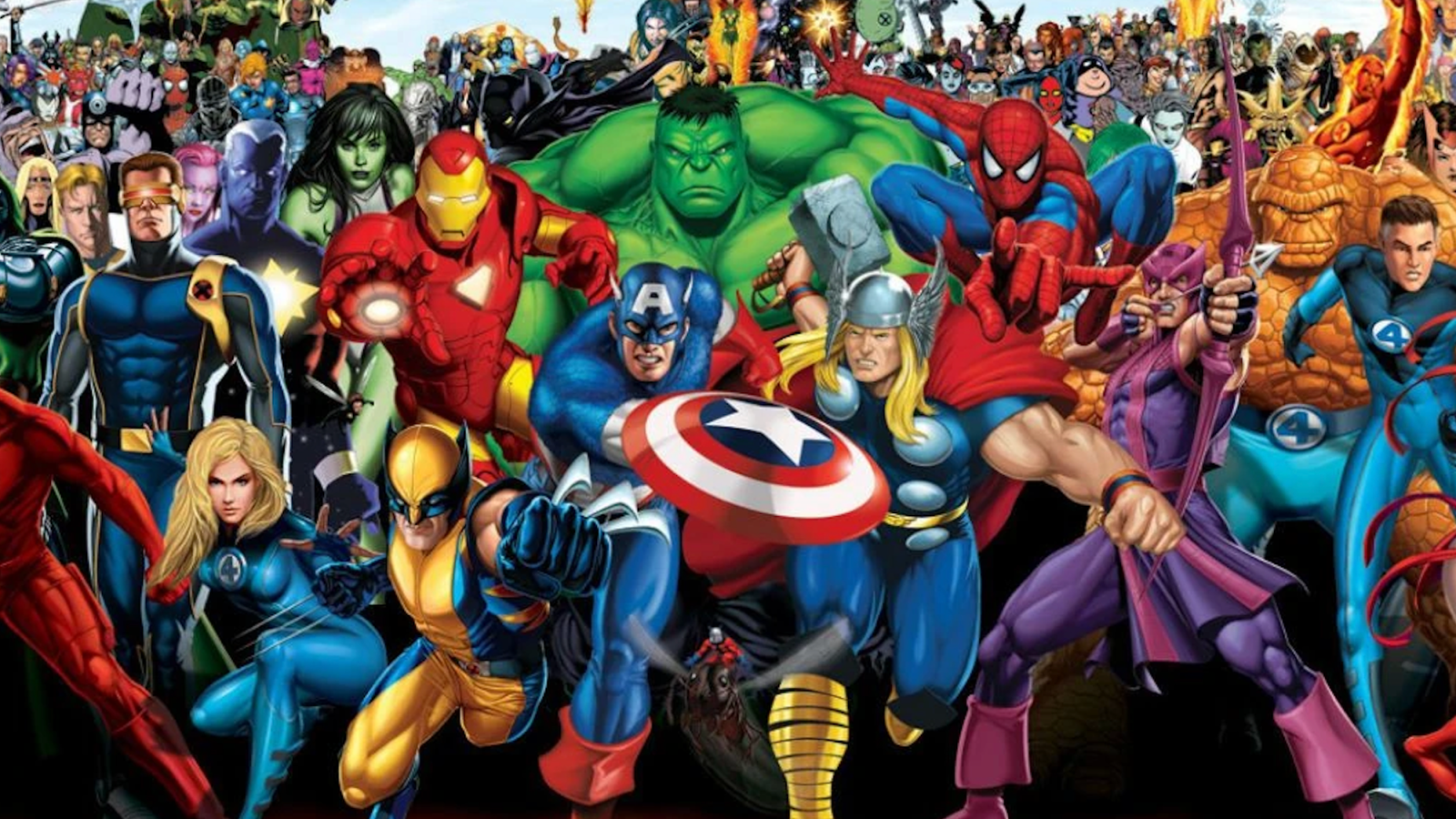
The 1980s marked a pivotal turning point for the comic book industry, officially ushering in what scholars and fans now refer to as the Modern Age. This transformative decade was characterized by a shift towards more complex narratives, mature themes, and a deeper exploration of character psychology, moving beyond the often simpler, more clear-cut morality of previous eras. For Marvel Comics, in particular, the '80s were a period of immense creative ferment and commercial success. It was during this time that some of the company's most influential and enduring storylines were published, pushing beloved heroes to their limits and challenging established norms. Simultaneously, the decade saw the introduction of a new generation of fascinating and intricate characters – a blend of traditional heroes, nuanced anti-heroes, and figures who started on the fringes but quickly ascended to iconic status. These new faces, through their distinctive designs, groundbreaking abilities, and compelling personalities, immediately captivated audiences and redefined what a superhero could be, fundamentally shaping the trajectory of the Marvel Universe for decades to come.
The Modern Age and Marvel's '80s Renaissance
Before the 1980s, comic books had largely cycled through the Golden Age (1930s-1950s) and the Silver Age (1950s-1970s), each defined by distinct narrative styles and character archetypes. The Bronze Age, bridging the late 1970s and early 1980s, began to introduce darker themes and socio-political commentary. However, it was the '80s that solidified this shift, fueled by groundbreaking works like Alan Moore's *Watchmen* and Frank Miller's *The Dark Knight Returns*, which, while primarily impacting DC Comics, had a ripple effect across the entire industry. Marvel responded with its own wave of innovation, exploring anti-hero narratives, grappling with real-world issues like drug abuse and discrimination, and delving into the psychological toll of super-heroism. This era saw Marvel deepen its commitment to character development, creating a more sophisticated tapestry where heroes were flawed, their struggles were relatable, and the consequences of their actions felt more tangible. The characters introduced or significantly developed during this decade didn't just fight villains; they grappled with their own identities, their pasts, and their places in an increasingly complex world, setting a new standard for narrative depth.
Architects of Change: Marvel's Defining Heroes of the 1980s
Photon (Monica Rambeau): A Shining Legacy of Leadership
In 1982, the Marvel Universe faced a significant void with the passing of Mar-Vell, the original Kree Captain Marvel, an event chronicled in the landmark *The Death of Captain Marvel* graphic novel. From this somber moment, a new beacon of heroism emerged in *Amazing Spider-Man Annual #16*: Monica Rambeau. A dedicated harbor patrol officer from New Orleans, Monica gained her extraordinary abilities after being exposed to a surge of extra-dimensional energy from an experimental device designed by a criminal scientist. This exposure granted her the power to transform into any form of energy within the electromagnetic spectrum, from visible light to gamma rays, allowing her to fly, generate energy blasts, become intangible, and move at the speed of light. As the second Captain Marvel, Monica quickly joined the Avengers, where her formidable powers were matched only by her strategic mind and innate leadership qualities. Her ascent to lead the team was historic, making her the first and only Black woman to hold such a position, a testament to her capabilities and an impactful moment for representation in comics. Over the years, Monica has adopted several aliases—Spectrum, Pulsar, and finally Photon—each reflecting a period of personal growth and a desire to forge her own identity, distinct from the legacy she initially inherited. Her journey is one of resilience, constant evolution, and unwavering commitment to justice, making her an enduring and inspirational figure in the Marvel pantheon.
Magik (Illyana Rasputina): The Sorceress of Limbo
While a brief, non-powered cameo in *Giant-Size X-Men #1* in 1975 hinted at her existence, it wasn't until 1983, with the debut of *Magik (Illyana and Storm)* limited series, that Illyana Rasputina fully solidified her identity as the mutant sorceress Magik. Born the younger sister of the X-Men's Colossus, Illyana's mutant ability manifested as the creation of 'stepping discs,' portals that allowed her to teleport across vast distances, seemingly at will. Unbeknownst to her, these discs drew power from the hellish dimension of Limbo. It was during a harrowing period of childhood abduction by the demon Belasco that Illyana spent six subjective years imprisoned in Limbo, while only moments passed on Earth. During this agonizing time, she was tutored in dark magic, forged her iconic Soulsword—a mystical blade that disrupts magical energies and souls—and developed her formidable sorcerous abilities. Her escape from Limbo, marked by a traumatic return to Earth as a teenager while her X-Men family still perceived her as a child, left her with a complex duality: a pure soul tainted by the darkness of Limbo. Magik became a cornerstone of the New Mutants and later the X-Men, grappling with her demonic heritage and the constant threat of Limbo. Her struggles, both against literal demons and her own inner turmoil, have fueled numerous compelling narratives, illustrating a profound character arc from innocent child to powerful, albeit tormented, queen of Limbo, establishing her as one powerful and unique hero in the Marvel Universe.
Beta Ray Bill: The Worthy Alien
In 1983, Walt Simonson revolutionized the Thor mythos with the introduction of Beta Ray Bill in *Thor #337*. This character shattered the long-held belief that only Thor himself, or one of the Asgardians, could wield Mjolnir. Bill, a cybernetically-enhanced Korbinite warrior, was the last hope of his people, tasked with protecting them as they fled the destructive path of Surtur and his fire demons. When his ship, Skuttlebutt, entered Earth's orbit, a misunderstanding led to a fierce confrontation with Thor. In their battle, Bill proved himself worthy by lifting Mjolnir, shocking both Thor and Odin. His worthiness wasn't based on physical strength alone, but on his valiant spirit, selflessness, and unwavering determination to protect his race. Recognizing this profound virtue, Odin forged a new weapon for Bill: Stormbreaker, an Asgardian hammer imbued with powers akin to Mjolnir. Beta Ray Bill quickly transcended his role as an initial antagonist to become one of Thor’s most trusted, mighty, and emotionally complex allies. His existence fundamentally expanded the scope of what it meant to be 'worthy' in the Marvel Universe, emphasizing that heroism and nobility could be found in the most unexpected forms. Bill’s ongoing battles, protecting both his adopted Asgardian family and the surviving Korbinites, have solidified his place as a fan-favorite, iconic figure, lauded for his unique design and compelling backstory.
Jubilee (Jubilation Lee): The X-Men's Dazzling Dynamo
Jubilation Lee, famously known as Jubilee, burst onto the Marvel scene with an explosive debut in *Uncanny X-Men #244* in 1989. Her arrival, late in the decade, perfectly encapsulated the burgeoning youth culture and increasing diversity seen in comics. Orphaned at a young age after her wealthy parents were killed, Jubilee found herself a runaway, living in a mall and using her mutant ability to generate colorful, destructive pyrotechnic energy plasmoids—essentially fireworks—from her hands for entertainment. Her brash, irreverent, and undeniably jovial personality quickly made her a standout, even among the eccentric X-Men. She quickly found a surrogate family within the X-Mansion, particularly forging an indelible bond with Wolverine. Their mentor-pupil relationship became one of the most beloved dynamics in X-Men lore, with Jubilee serving as Logan's lighthearted foil, helping him reconnect with his humanity, while he, in turn, offered her guidance and protection. Despite her initial portrayal as an immature, wisecracking teenager, Jubilee steadily matured, evolving into a capable and resourceful superhero who has faced numerous trials, including losing her powers and becoming a vampire. Her journey from mall rat to a respected member of the mutant community showcases her enduring optimism and spirit, cementing her legacy as one of the most positive and fun-loving members of the X-Men, a true representative of the vibrant, youthful energy that permeated the end of the '80s.
Rocket Raccoon: The Tragic Mercenary with a Heart
The imaginative landscape of comic books occasionally introduces characters so outlandish yet profoundly resonant that they defy conventional expectations. Such is the case with Rocket Raccoon, a gun-wielding, talking raccoon who debuted in *Marvel Preview #7* in 1976 but made his official entry into Marvel's main continuity and garnered significant attention in *The Incredible Hulk #271* in 1982. Initially presented as a one-shot antagonist or curiosity, Rocket's true depth would be explored and revitalized decades later with his integral role in the Guardians of the Galaxy. Born a seemingly ordinary raccoon on the planet Halfworld, Rocket was subjected to horrific alien experimentation, which granted him bipedalism, advanced intelligence, and combat prowess. These modifications transformed him into a 'Guardian of the Keystone Quadrant,' a warden for an intergalactic insane asylum for sentient robots. The traumatic origins of his sentience, coupled with a lifetime of involuntary modification and suffering, left him with deep-seated psychological scars, often masked by cynicism, a love for explosives, and sharp-witted humor. Eventually abandoning his post, Rocket became a space-faring mercenary, his gruff exterior often hiding a profound sense of loneliness and a longing for connection. He ultimately found this 'found family' with the Guardians of the Galaxy, a motley crew of misfits who understood his unique brand of trauma and resilience. Rocket Raccoon stands today as an iconic Marvel character, lauded for his striking design, his delight in chaotic explosions, his sardonic wit, and, most importantly, the hidden heart of gold that beats beneath his hardened exterior. His character perfectly embodies the '80s trend of introducing offbeat, morally ambiguous characters who nonetheless possessed deep emotional cores.
The Enduring Legacy of the 1980s
The superheroes who emerged or significantly evolved during the 1980s did more than just fill comic book pages; they irrevocably altered the landscape of sequential art. They brought with them narratives of greater psychological complexity, embraced a wider spectrum of identities, and challenged the very definitions of heroism and villainy. Characters like Photon, Magik, Beta Ray Bill, Jubilee, and Rocket Raccoon exemplify this era's willingness to experiment, to delve into darker backstories, and to present heroes who, despite their extraordinary powers, often grappled with very human struggles. Their introductions laid critical groundwork for the expansive, interconnected, and thematically rich Marvel Universe we know today, proving that innovation and character development could coexist with thrilling action. These figures not only defined the '80s but also paved the way for the nuanced storytelling that would become a hallmark of modern comics, leaving an indelible mark on popular culture and the superhero community forever.
The narratives of these defining heroes are just a glimpse into the rich tapestry of stories woven throughout the Marvel Universe. From the cosmic expanses explored by Beta Ray Bill to the magical realms navigated by Magik, their adventures continue to inspire and entertain. We encourage you to delve deeper into the origins and ongoing sagas of these and many other iconic characters. Explore more in-depth analyses, character profiles, and historical retrospectives right here on [NAME OF SITE], where the legacy of comic book greatness lives on. Don't miss out on uncovering more hidden gems and revisiting beloved classics!
Fonte: https://comicbook.com