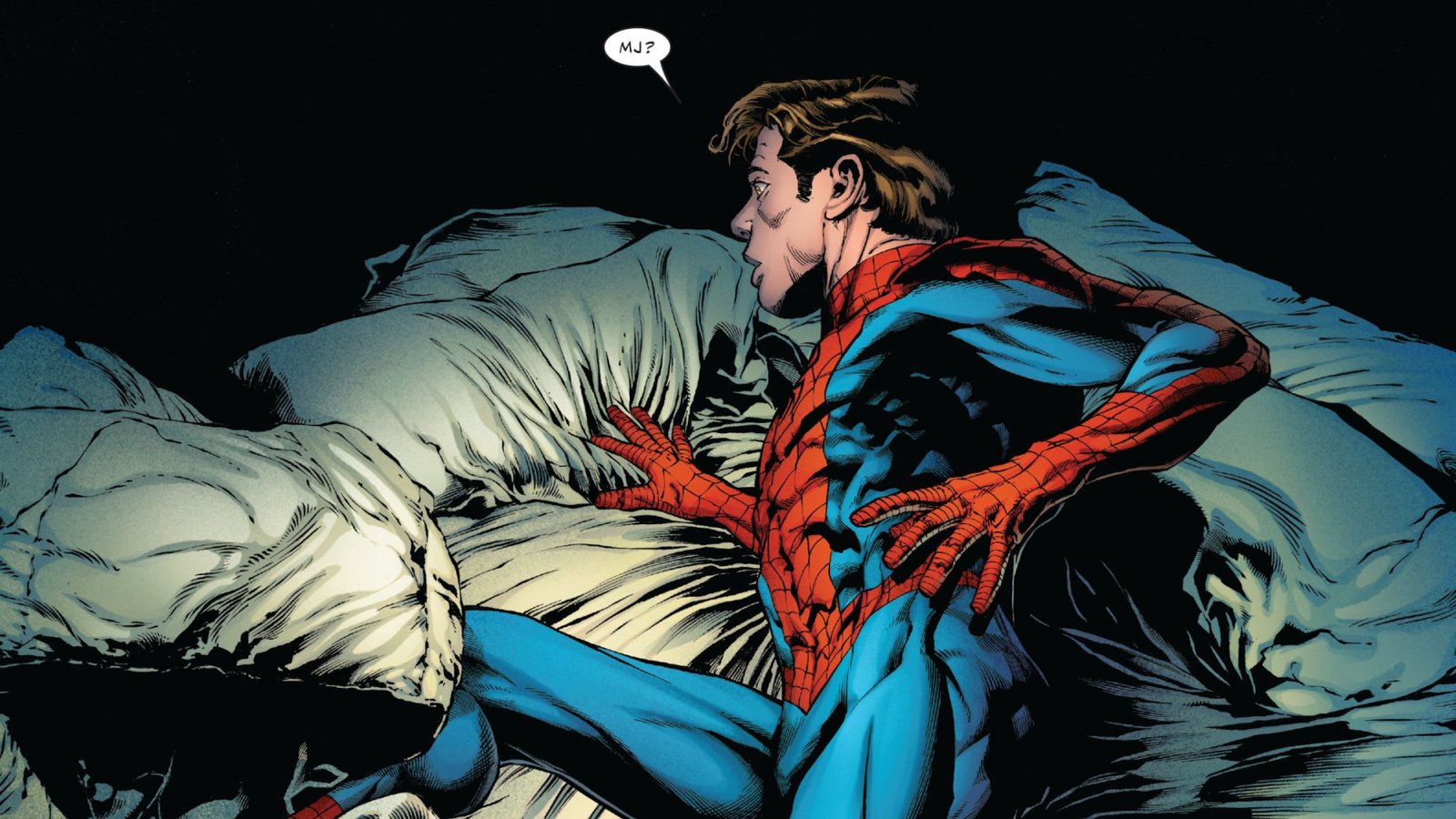
Spider-Man is globally recognized as one of the most enduring and beloved superheroes, a status earned not just through Peter Parker's compelling journey but also significantly amplified by his extraordinary supporting cast. Characters like Aunt May, Flash Thompson, and particularly Mary Jane Watson have profoundly anchored Spider-Man's fantastical life in relatable human struggles, elevating his narratives beyond mere super-powered clashes. Mary Jane, in particular, has long been revered as one of comics' finest supporting characters, her relationship with Peter often cited as Marvel's most iconic. However, for a considerable and controversial period, their legendary romance has been tragically severed, sparking widespread debate and dissatisfaction among the fanbase.
The infamous 'One More Day' storyline infamously tore Peter and Mary Jane apart, fundamentally altering their shared history. Just as fans observed potential signs of reconciliation, their paths were again forcibly diverged, largely due to the introduction of Paul Rabin—a character widely perceived as Marvel's most hated. Paul functioned as an editorial construct, seemingly designed to be the living embodiment of the narrative's insistence on Peter and MJ's separation, a perpetual barrier to their happiness. Years of fan pleas for his removal finally culminated in <i>Venom #256</i>, where Paul met his demise at the hands of the villain Torment. This event, while celebrated by readers, carries deeper implications, aligning with other subtle narrative clues and upcoming solicitations to strongly suggest a monumental shift: the impending undoing of 'One More Day' in the landmark <i>Amazing Spider-Man #1000</i>.
The Enduring Controversy of 'One More Day'
To fully appreciate the significance of Paul Rabin's death and the potential future of Spider-Man's narrative, it is crucial to understand the profound and lasting impact of 'One More Day.' This storyline, published in 2007-2008, depicted Peter Parker and Mary Jane Watson making a desperate pact with the demon Mephisto: their marriage, and all collective memory of it, in exchange for Aunt May's life. This editorial decision was met with widespread fan outrage, viewed by many as a fundamental betrayal of Spider-Man's character development and a dismissal of years of reader investment in his personal life. Critics argued that the story erased organic character growth and sacrificed long-term narrative integrity for a perceived mandate to keep Spider-Man perpetually young and unattached, creating a deep rift between Marvel Comics and a significant portion of its dedicated readership.
Paul Rabin's Demise and the Road to Issue #1000
Reaching one thousand issues is a monumental achievement in comic book publishing, signifying a character's enduring cultural footprint and narrative longevity. While <i>Amazing Spider-Man</i> has historically utilized a more complex numbering system compared to consistently sequential titles, its upcoming legacy issue #1000 carries immense symbolic weight. Such a landmark event is typically reserved for major narrative shifts or celebratory moments, and few actions would generate more positive fan engagement and publicity for Marvel than reuniting Peter Parker and Mary Jane Watson. Paul Rabin's role was explicitly that of an obstacle, a physical representation of the editorial decision to keep Peter and MJ apart. His definitive death, therefore, functions as a powerful metaphorical cleansing, eradicating the symbol of their forced separation and clearing the path for a new era in Spider-Man's storied history.
Converging Clues: Crucial Conversations and Aunt May's Fate
Several narrative threads are converging to suggest an impending shift. Crucially, <i>Venom #258</i> is slated to feature a long-awaited conversation between Peter Parker and Mary Jane Watson. This dialogue is not merely a casual interaction but a vital first step towards healing the emotional wounds and unresolved tensions that have lingered between them since 'One More Day.' It represents a necessary foundation for any future reconciliation. Furthermore, subtle but persistent clues regarding Aunt May's declining health have been strategically woven throughout Joe Kelly's current run. Given May's advanced age and documented history with cancer, her vulnerability is a potent narrative device. <i>Amazing Spider-Man (2025) #31</i>, legacy issue #995, specifically promises a pivotal conversation between Peter and May. Her potential demise, especially as it aligns with the approach of issue #1000, holds profound poetic significance. Her life was the price of the original Mephisto deal, suggesting her death could serve as the catalyst to unravel the demonic bargain, restore Peter and MJ's memories, and rectify the long-standing narrative fracture.
The Strategic Implications of a Narrative Reset
Undoing 'One More Day' presents a multitude of strategic advantages for Marvel Comics. Such an event would undoubtedly generate massive publicity, likely catapulting the issue to become Marvel's best-selling comic of the year. It offers a compelling opportunity to re-engage disillusioned fans who felt alienated by the original storyline, inviting them back into the adventures of Spider-Man and Mary Jane. This move would also realign Peter and MJ with their widely held public perception, as many outside the core comic readership still instinctively associate them as a married couple. After two decades without stories featuring a married Peter and Mary Jane, the creative landscape becomes fertile with unexplored possibilities, allowing writers and artists to craft truly fresh narratives that delve into the complexities and joys of a mature, committed relationship. While any significant retcon carries the potential for criticism, the overwhelming sentiment leans towards this being a positive course correction, provided it is executed with narrative grace and establishes a stable, compelling future for the characters that feels earned and lasting.
Considering the decisive removal of Paul Rabin, the scheduled pivotal conversation between Peter and Mary Jane, and the narratively potent hints regarding Aunt May's health, the pieces are undeniably falling into place. The stage is being meticulously set for <i>Amazing Spider-Man #1000</i> to serve as the historic moment when the controversial legacy of 'One More Day' is finally addressed and potentially reversed. This would transcend a mere continuity correction; it would be a powerful act of narrative healing, capable of mending the rift between Marvel and a significant portion of its dedicated fanbase, thereby ushering in a new era for Spider-Man that honors his past while boldly embracing his future. For more in-depth analyses of iconic comic book storylines, character developments, and industry news, be sure to explore the extensive archives and latest articles here on ComicVerse Chronicles, your definitive source for all things comics.
Fonte: https://comicbook.com