
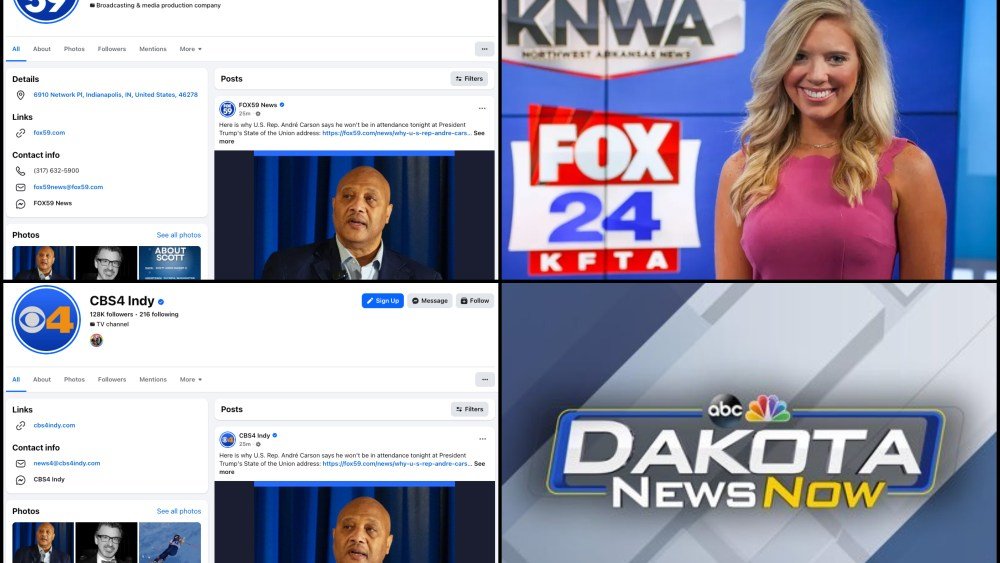
The landscape of local television broadcasting is undergoing a profound transformation, driven largely by an accelerating trend of station group consolidation. This shift, often championed by industry players seeking greater economies of scale, is now facing increased scrutiny following a significant new report commissioned by DirecTV and filed with the Federal Communications Commission (FCC). The study presents compelling evidence that markets experiencing heightened levels of ownership concentration – specifically those with duopolies, triopolies, or even quadropolies among the 'Big Four' networks – are left with a demonstrably reduced number of newsrooms and a critical lack of diverse journalistic voices. This revelation emerges as the FCC actively considers proposals to relax long-standing station ownership caps, a move that could further intensify the consolidation wave, potentially reshaping the very nature of local news delivery across the United States.
The Evolving Regulatory Framework and the Push for Consolidation
For decades, the FCC has maintained a complex set of regulations designed to promote localism, competition, and diversity in broadcast media. A cornerstone of this framework has been the national television ownership cap, which limits the percentage of households a single entity can reach nationwide. Currently, this cap stands at 39 percent. However, influential broadcast groups and industry lobbyists have persistently advocated for raising or even eliminating these limits, arguing that such deregulation is essential for broadcasters to compete effectively against digital platforms and other media giants. Proponents suggest that larger station groups can achieve greater efficiencies, invest more in content, and offer more robust services. The DirecTV-commissioned study directly challenges this narrative, providing data that suggests the opposite effect on local news environments, raising critical questions about the balance between market efficiencies and public interest.
DirecTV's Alarming Findings: A Threat to Localism and Diversity
The core of DirecTV's filing with the FCC focuses on the tangible, negative consequences of increased media concentration at the local level. The study meticulously analyzes markets where single companies own multiple stations affiliated with the 'Big Four' networks (ABC, CBS, Fox, and NBC), creating what are known as duopolies (two stations), triopolies (three), or quadropolies (four). These ownership structures, particularly prevalent in smaller and mid-sized markets, lead to a stark reduction in independent newsgathering operations. Instead of distinct newsrooms competing to cover local events, consolidated ownership often results in shared resources, merged operations, or even the outright closure of one station's news department. This leads to a homogenized news product, lacking the depth and varied perspectives essential for comprehensive local coverage.
The Erosion of Diverse Voices
Beyond the sheer number of newsrooms, the study also highlights a critical decline in the diversity of voices. When multiple stations in a market are controlled by a single entity, the editorial decision-making process becomes centralized, narrowing the range of perspectives presented to the public. This can lead to a less critical examination of local government, fewer investigative reports, and a diminished ability for different community viewpoints to be aired. The impact extends to staffing, with consolidation often leading to layoffs and a less experienced or smaller pool of journalists, further compromising the quality and breadth of local reporting. The risk is not merely an absence of news but a skewed or incomplete narrative, leaving residents less informed about issues directly affecting their lives and communities.
Mega-Mergers Under Scrutiny: The Nexstar-Tegna Case Study
The implications of these findings are particularly pertinent given ongoing industry developments, such as Nexstar's proposed acquisition of Tegna. This potential merger, if approved, would create an even larger broadcast entity, expanding Nexstar's reach into numerous new markets. Proponents of such mergers often cite benefits like increased advertising revenue, enhanced bargaining power with content distributors (like DirecTV), and the ability to invest in new technologies. However, critics, supported by DirecTV's study, argue that such consolidation prioritizes corporate profits over public service. They fear that the drive for efficiency will inevitably lead to further cuts in local news operations, exacerbating the issues of reduced newsrooms and diminished diversity that the study identifies as already problematic.
Why DirecTV Cares: Unpacking the Motivations
DirecTV's proactive engagement in this regulatory debate is multifaceted. As a major satellite television provider, DirecTV acts as a distributor of broadcast signals, negotiating retransmission consent fees with station groups. Larger, more consolidated broadcast groups wield greater leverage in these negotiations, often leading to higher fees for DirecTV, which can then be passed on to consumers. By highlighting the negative impact of consolidation on local news, DirecTV positions itself as an advocate for the public interest, while also subtly undermining the justifications for further mergers that could increase its own operational costs. This strategic filing underscores the complex interplay between competitive interests, regulatory policy, and the crucial role of local journalism.
Broader Implications for Communities and Democracy
The decline of local news has far-reaching consequences that extend beyond the media industry itself. Local journalism serves as a vital pillar of democratic society, providing essential information on local government decisions, school board activities, public safety concerns, and community events. When local news outlets diminish in number and quality, there is a measurable decline in civic engagement, voter turnout, and government accountability. Without robust local reporting, corruption can go unchecked, important public health information can be missed, and the unique identity of communities can erode. The DirecTV study therefore presents not just a commercial concern, but a significant challenge to the health and vitality of American communities.
The FCC's Mandate and the Path Forward
The findings of this report place the FCC at a critical juncture. The agency is statutorily mandated to serve the public interest, convenience, and necessity. This includes fostering competition, promoting diversity of ownership and viewpoints, and ensuring localism. The study's data provides concrete evidence that current consolidation trends are working against these foundational principles. As the FCC deliberates on future ownership rules, it must carefully weigh the arguments for deregulation against the documented decline in local news resources and the subsequent impact on the communities it is charged to protect. The debate calls for a nuanced approach that safeguards the future of essential local journalism in an increasingly consolidated media environment.
The future of local news, and by extension, the vibrancy of our communities, hangs in the balance. Understanding the intricate dynamics of media consolidation and its far-reaching effects is more critical now than ever before. We encourage you to delve deeper into these crucial issues and explore more expert analyses and discussions. For further insights into media trends, regulatory developments, and their societal impact, continue browsing NAME OF SITE, where we provide comprehensive coverage and thought-provoking content to keep you informed.
Fonte: https://variety.com