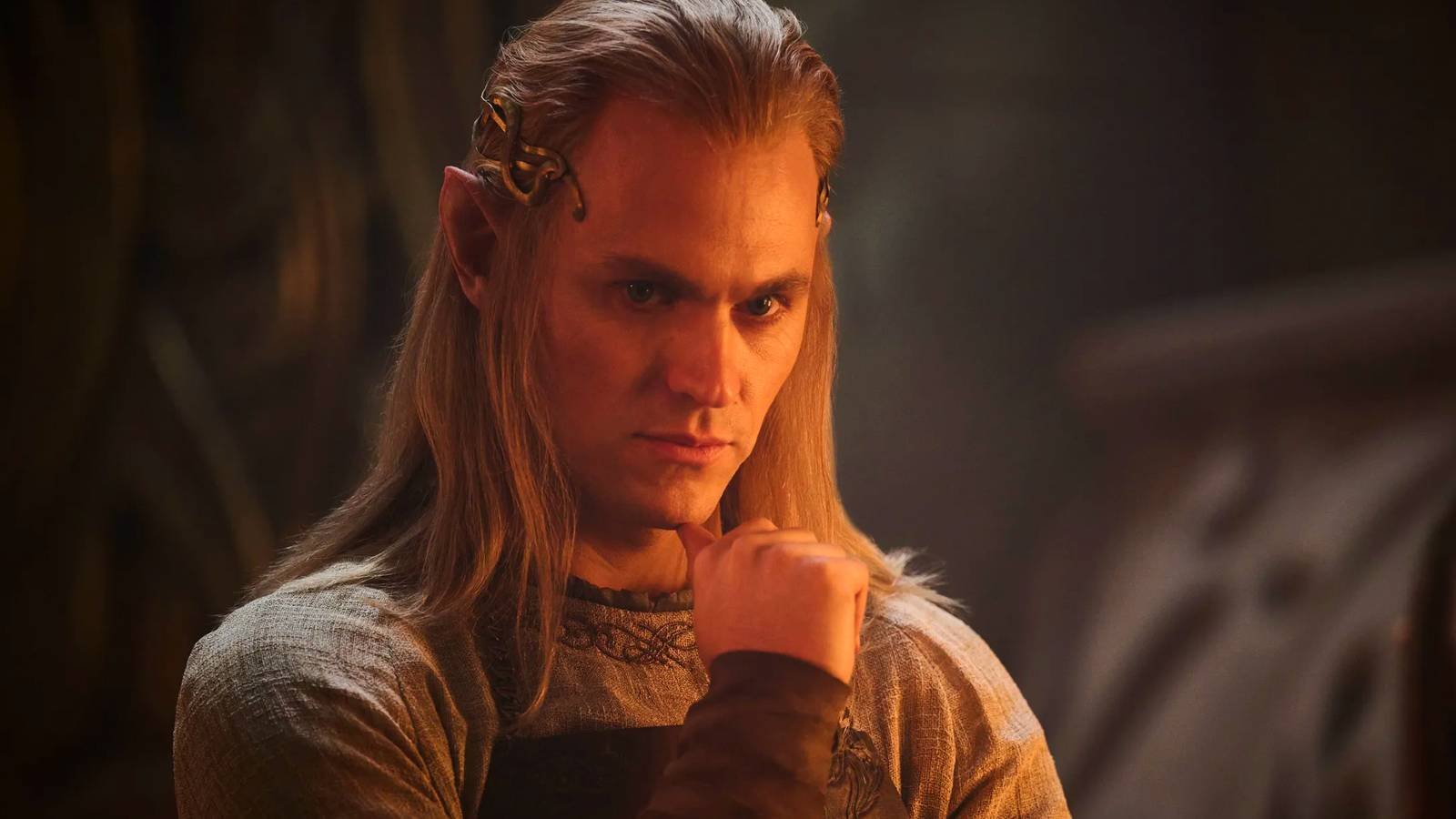
In the vast and intricate tapestry of J.R.R. Tolkien’s Middle-earth, the Dark Lord Sauron stands as an antagonist of monumental power and malice. His shadow loomed large over millennia, orchestrating wars, forging rings of power, and seeking dominion over all free peoples. While his ultimate downfall at the hands of the Last Alliance of Elves and Men, and later by a hobbit's selfless act, are widely recognized, there exists a lesser-known, yet infinitely more profound, defeat. This encounter involved not armies or grand alliances, but a singular, direct confrontation with a being of unparalleled power among the Children of Ilúvatar, a battle fought and won against Sauron in his prime, a solitary triumph that highlights the unique strength of one exceptional character.
The Many Falls of the Dark Lord
Sauron, a Maia spirit corrupted by Morgoth, was a formidable adversary whose long history is punctuated by various setbacks. Perhaps his most famous defeat occurred at the end of the Second Age, when the Last Alliance, led by the High King of the Noldor, Gil-galad, and Elendil, High King of the Dúnedain, faced him on the plains of Dagorlad and later laid siege to Barad-dûr. Though Gil-galad and Elendil perished in direct combat with Sauron, it was Isildur, Elendil's son, who famously severed the One Ring from Sauron's hand, causing the Dark Lord's spirit to flee and his physical form to dissipate. This was a monumental victory, but one born from the combined might of armies and the ultimate sacrifice of great kings.
Before this, in the First Age, Sauron faced another significant, albeit indirect, challenge from the Hounds of Valinor. Specifically, the great wolf Huan, a hound imbued with unique gifts, compelled Sauron to retreat after a shapeshifting duel. In the Third Age, Sauron’s final, and perhaps most complete, defeat was orchestrated not by warriors or wizards, but by the unassuming hobbit Frodo Baggins and his steadfast companion Samwise Gamgee. Their arduous quest to Mount Doom, culminating in the destruction of the One Ring, severed Sauron's power base and rendered him utterly powerless. Each of these defeats, while significant, involved either a vast coalition of forces, an indirect confrontation through a champion, or the manipulation of an artifact. None saw Sauron directly and personally overwhelmed by a single individual's raw power and will—except for one instance.
Lúthien Tinúviel: A Confluence of Divine and Elven Power
The character in question is Lúthien Tinúviel, an Elf-maiden of singular beauty and immense power, whose lineage alone set her apart. She was the daughter of Thingol, King of Doriath, one of the greatest and wisest of the Sindar Elves, and Melian, a Maia —a spirit of the same order as Sauron himself, though uncorrupted and of far greater inherent benevolence and power. This unique heritage granted Lúthien abilities unmatched by any other Child of Ilúvatar. Her power was not derived from weapons, magical artifacts, or military might, but from her very being: a profound connection to the living world, an indomitable will, and a voice imbued with enchanting, almost divine, potency. Her songs could move the hearts of Elves and Men, lull potent evils into slumber, and even shake the foundations of fortified strongholds.
A Legacy Forged in Song and Spirit
Lúthien’s power was deeply rooted in her ancestry. Her mother, Melian, was a powerful Maia who had chosen to dwell in Middle-earth and whose wisdom and magic protected the realm of Doriath for centuries. This divine heritage manifested in Lúthien not as raw destructive force, but as an extraordinary capacity for enchantment, healing, and a spiritual strength that could bend reality and challenge darkness itself. She embodied the beauty and resilience of the Elves, combined with the ancient, cosmic power of the Valar's kin. It was this potent blend of spirit, will, and inherent magic that made her truly exceptional, capable of feats that even the most formidable Elven lords or human heroes could only dream of.
The Desperate Quest and the Fortress of Tol-in-Gaurhoth
The stage for Lúthien’s unprecedented confrontation with Sauron was set during the First Age, amidst the tragic tale of Beren and Lúthien. Beren, a mortal man, was tasked by Thingol to retrieve a Silmaril—one of the three sacred jewels crafted by Fëanor—from the crown of Morgoth, the original Dark Lord. During his perilous quest, Beren was captured and imprisoned in Tol-in-Gaurhoth, also known as the Isle of Werewolves. This fortress, once Minas Tirith of Finrod Felagund, had been conquered and corrupted by Sauron, becoming his stronghold and a place of terror. Sauron, then Morgoth’s chief lieutenant, wielded immense power, orchestrating the breeding of werewolves and tormenting those who dared to defy his master. His dominion over this strategic island was absolute, and few dared to approach it, let alone challenge its master.
The Battle of Wills: Lúthien vs. Sauron
Driven by her love for Beren, Lúthien, accompanied by the great hound Huan, journeyed to Tol-in-Gaurhoth. Upon their arrival, Sauron, in his cunning, sent forth his most fearsome werewolves to dispatch them. However, Huan, foretold to only be defeated by the greatest wolf, easily overcame them. Intrigued and vexed, Sauron himself engaged in a battle of wills with Lúthien. He transformed into the greatest and most terrible werewolf, Draugluin, hoping to intimidate and destroy her. Yet, Lúthien, undaunted, stood firm. With a voice imbued with power from her Maia ancestry and the very essence of creation, she sang a song of such potency and enchantment that it cast a spell over Sauron. Her music was a force of light and life, exposing the dark lord's true nature and stripping away his power.
In this singular duel of spirit, Lúthien's song was not merely a performance; it was an act of profound magic. It compelled Sauron to reveal his true form, weakening his resolve and binding him with threads of enchantment. Trapped and unable to move, Sauron then faced Huan, who finally grappled with him. Lúthien, seeing Sauron’s spirit about to flee his body, gave him a choice: surrender his fortress and its power to her, or be stripped naked of his flesh and sent fleeing back to Morgoth as a disembodied, shamed spirit. Faced with utter humiliation and the loss of his physical form, Sauron relented. He surrendered the tower, allowing Lúthien to rescue Beren and dismantle his stronghold, turning it into a green and healthy isle once more.
A Humiliation Unlike Any Other
This direct confrontation with Sauron, resulting in his personal and complete humiliation, stands unparalleled in the annals of Middle-earth. Unlike later defeats that involved armies or the indirect destruction of an artifact, Lúthien single-handedly overpowered Sauron through a direct clash of wills and inherent power. She did not merely repel him; she dominated him, forcing him to cede his dominion and flee in terror and shame. Sauron, a powerful Maia who commanded dread and allegiance, was utterly broken by the song and spirit of an Elf-maiden, a testament to Lúthien's extraordinary nature and her place as arguably the most powerful individual among the Children of Ilúvatar ever to walk the earth.
Echoes Through the Ages: The Enduring Significance
Lúthien’s victory over Sauron at Tol-in-Gaurhoth remains a cornerstone of Tolkien's legendarium, not just as a heroic deed, but as a demonstration of a unique form of power. It underscores that true strength in Middle-earth is not always found in physical might or military prowess, but often in inherent grace, unbreakable will, and a deep connection to the spiritual essence of the world. Her triumph profoundly impacted the First Age, allowing Beren and Lúthien to continue their seemingly impossible quest for the Silmaril. More broadly, it showcased the potential of the Children of Ilúvatar, when embodying purity and fierce determination, to challenge even the mightiest of the corrupted Ainur. Her legacy inspired countless tales and became a symbol of love, courage, and potent enchantment throughout Middle-earth’s history, solidifying her status as a figure of unrivaled personal power and resilience.
Explore more untold stories and deep dives into the lore of Middle-earth and beyond. Continue your journey through the rich narratives and intricate details of fantasy worlds right here on NAME OF SITE, where every click uncovers a new adventure in knowledge.
Fonte: https://screenrant.com