For decades, the X-Men stood as a cornerstone of Marvel Comics, their narratives of social commentary and superhuman struggle resonating deeply with millions. Throughout the 1980s and 1990s, the mutant team consistently topped sales charts, defining an era of comic book storytelling. The turn of the millennium saw them begin to share the spotlight with other titans like Spider-Man and the Avengers, as Marvel Comics strategically broadened its narrative scope. However, the seismic shift truly began in 2008 with the theatrical release of *Iron Man*, which ignited the Marvel Cinematic Universe (MCU) and irrevocably altered Marvel's editorial priorities. This era marked a conscious decision by the House of Ideas to gradually marginalize its mutant characters, a strategy arguably initiated as early as 2005 with the impactful *House of M* storyline, signaling Marvel’s increasing awareness of its cinematic future and the complex issue of film rights.
The 2010s proved to be a particularly turbulent and, for many fans, disappointing period for the X-Men. While the decade certainly delivered a handful of standout stories that demonstrated the enduring potential of the franchise, the overarching sentiment among long-time readers and critics is that it was one of the most challenging, if not the absolute worst, decades for the team and their mutant brethren. This challenging period can be attributed to a series of strategic missteps and creative decisions, largely driven by corporate mandates tied to film rights and the burgeoning MCU, which collectively threatened to irrevocably damage the beloved X-Men brand.
Corporate Shifts and Creative Constraints: The 2010s Backdrop
The fundamental tension underlying the X-Men's struggles in the 2010s stemmed from Marvel Studios' lack of film rights to the characters, which were held by 20th Century Fox. As the MCU rapidly expanded into a global phenomenon, Marvel Comics, under the purview of Disney, reportedly sought to elevate properties it fully controlled across all media. This corporate directive led to a strategic de-emphasis of the X-Men and the Fantastic Four in the comics, often to the benefit of other franchises like the Inhumans, whose cinematic potential was under Marvel Studios' direct control. This era saw creators who might previously have been assigned to flagship X-titles instead channeled towards Avengers-centric or new properties, further diluting the talent pool dedicated to mutants. This overarching corporate strategy created an environment ripe for creative missteps and a perceived marginalization of the X-Men, setting the stage for the specific errors that would nearly derail the franchise.
The Seven Major Blunders
1. The Undermining of Cyclops's Legacy
Scott Summers, a.k.a. Cyclops, had long been the definitive leader of the X-Men, evolving from Professor Xavier's stoic protégé to a militant, pragmatic commander after events like *House of M*. In the 2010s, his character arc grew increasingly controversial, culminating in his apparent death after 2016's *Secret Wars*. Readers were not only shocked by his demise but also by the narrative implication that he had died committing heinous acts against the Inhumans. Marvel's editorial direction saw Cyclops's reputation systematically slandered across various titles, painting him as a villainous extremist. The true circumstances of his death were only revealed in *Death of X*, where it was shown he succumbed to M-Pox, a fatal disease caused by the Terrigen Mist clouds, which were also lethal to mutants. Emma Frost then used a psychic construct of Cyclops to destroy one of these deadly clouds, effectively using his image for a heroic act misrepresented as villainous. This retrospective justification felt contrived and unsatisfying to fans, who saw it as an egregious attempt to malign a core X-Men character and diminish his heroic legacy, solely to bolster the Inhumans' narrative importance.
2. The Publication of X-Men Gold #1 with Anti-Semitic Artwork
Following the culmination of the Inhumans push in 2017, Marvel launched a new wave of X-Men titles, including *X-Men Gold*. While many of these books struggled creatively, the most damaging incident involved the artwork in *X-Men Gold #1*. Penciler Ardian Syaf subtly embedded anti-Semitic and anti-Christian messages within the comic's panels. These hidden messages, which included references to the 2016 Jakarta protests and a verse from the Quran interpreted as a call against certain religious groups, went unnoticed by Marvel's editorial team and were published. Fans quickly discovered and exposed the offensive imagery, leading to widespread outrage and accusations of gross negligence on Marvel's part. Syaf was promptly fired, and Marvel issued an apology and digitally altered the artwork in subsequent printings. However, the damage to Marvel's reputation and the X-Men brand, which has historically championed diversity and challenged prejudice, was significant and immediate, serving as a stark reminder of the importance of rigorous editorial oversight.
3. The Ill-Fated Revival of Astonishing X-Men (Vol. 4)
The *Astonishing X-Men* title held a revered place in X-Men lore, particularly due to its critically acclaimed runs by Joss Whedon and Warren Ellis. However, the 2017 revival, *Astonishing X-Men (Vol. 4) #1-12*, written by Charles Soule, proved to be a profound disappointment. The series attempted to capitalize on a unique creative approach, featuring a different A-list artist for each issue, which often resulted in visually stunning individual chapters. Yet, this artistic strength was overshadowed by a convoluted and poorly executed narrative. The central plot revolved around the return of Professor X, but this significant development was handled with little lasting impact or meaningful exploration. The series failed to capture the innovative spirit or character depth that defined its predecessors, leaving fans with a sense that a once-distinguished title had been sullied by a run that lacked purpose and narrative cohesion, ultimately eroding the goodwill associated with the *Astonishing* name.
4. The Uninspired "Age of X-Man" Event
While 2019 eventually brought a resurgence of quality for the X-Men, the preceding year and early 2019 saw the team mired in events like "X-Men Disassembled" and the subsequent "Age of X-Man." Kicked off by a relaunched *Uncanny X-Men* in late 2018, "X-Men Disassembled" was perceived as a mediocre setup for the even less compelling "Age of X-Man." This event saw the powerful mutant X-Man (Nate Grey) create an alternate reality where mutants lived in a utopian society free from human prejudice and violence, but also free from love and family, in a misguided attempt to protect his people. The story was widely criticized for being an uninspired echo of the iconic "Age of Apocalypse" storyline, lacking its predecessor's dramatic stakes, innovative character redesigns, or creative energy. The various tie-in books featured few prominent creators, and the entire event felt like a narrative holding pattern, a transparent filler meant to occupy shelf space before the true relaunch with *House of X* and *Powers of X*. Fans largely dismissed and actively tried to forget this forgettable chapter in X-Men history, viewing it as a creative nadir.
5. The Controversial Death and Return of Wolverine
The mid-2010s saw Marvel engage in a controversial strategy of replacing its iconic, long-standing A-list characters with new or younger versions. Wolverine, arguably the most popular X-Man and a major Marvel figure, became a casualty of this trend with his death in 2014's *Death of Wolverine* mini-series by Charles Soule and Steve McNiven. While it underscored his status as a flagship character, the timing of his death, coinciding with the aggressive push for the Inhumans, was seen by many as a calculated move to diminish the X-Men's visibility and popularity. Wolverine was, for many, the primary gateway into the X-Men universe, and his removal felt like an attack on the team's commercial viability. His eventual return, particularly in the poorly received *Return of Wolverine*, further solidified the perception that his death was less about meaningful storytelling and more about corporate maneuvering that ultimately served to alienate a significant portion of the X-Men fanbase.
6. The Time-Displaced Original Five X-Men Conundrum
In the aftermath of *Avengers vs. X-Men*, which saw Cyclops descend further into militancy and momentarily embody the Dark Phoenix, Brian Michael Bendis took the reins of the core X-books. In *All-New X-Men #1* (2012), Beast, regretting Cyclops's path, traveled back in time to bring the original five X-Men (Cyclops, Jean Grey, Beast, Iceman, and Angel) to the present day. His intention was for their younger, more idealistic selves to confront and inspire their future counterparts, particularly Cyclops, to return to their heroic roots. This seemingly innocent temporal displacement quickly spiraled into a prolonged and complicated narrative. The presence of the younger O5 created numerous paradoxes, overshadowed the development of existing contemporary X-Men characters, and stagnated narrative progression. Their prolonged stay in the present prevented significant character evolution for both the past and present versions, leaving many readers frustrated by the repetitive storylines and the lack of permanent consequences for this significant timeline alteration.
7. The Inhumans Push and Mutant Marginalization
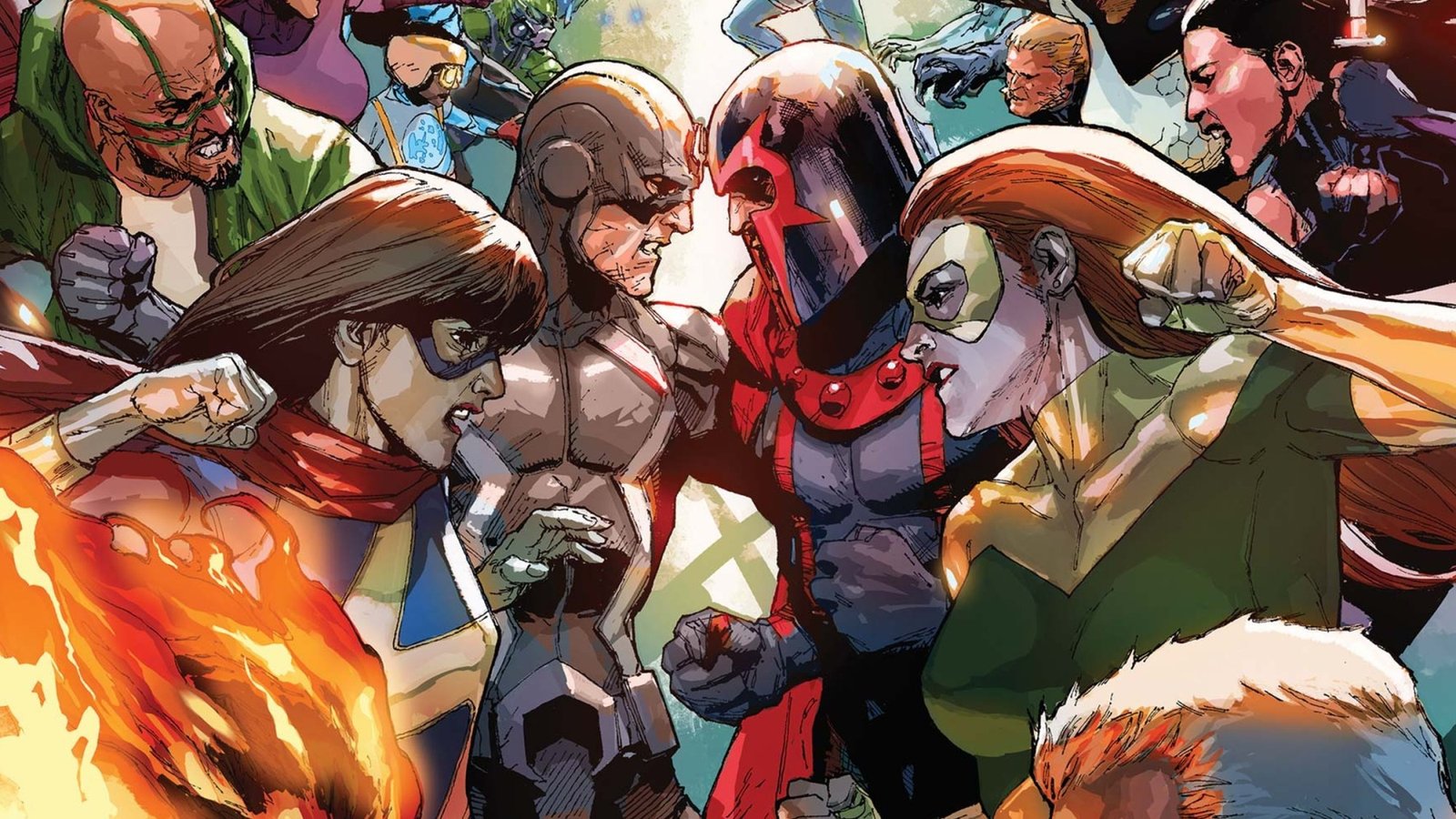
Perhaps the most pervasive and ultimately detrimental 'mistake' of the 2010s for the X-Men was Marvel's sustained and aggressive corporate push for the Inhumans at the expense of its mutant properties. Driven by the strategic imperative to promote characters whose film rights were fully owned by Marvel Studios, the Inhumans were elevated to a prominence in the comics that many felt was unearned and artificial. Major comic events like *Infinity*, *Death of X*, and *Inhumans vs. X-Men* directly pitted mutants against Inhumans, with the Terrigen Mists – the source of Inhuman powers – simultaneously acting as a deadly mutagenic agent for mutants. This editorial mandate often portrayed mutants as endangered and beleaguered, struggling for survival against a threat that was being actively championed as the next big thing. This corporate favoritism not only diluted the X-Men's narrative focus but also alienated a significant portion of their long-standing fanbase, who perceived the Inhumans push as a cynical attempt to replace beloved characters with less established ones for purely corporate reasons, ultimately diminishing the brand's creative integrity and commercial appeal for nearly a decade.
The 2010s, therefore, represent a complex and often regrettable chapter in the X-Men's storied history. The decade was characterized by corporate maneuvering, questionable creative decisions, and a palpable sense of struggle for a franchise that once dominated the comic book landscape. While the mutants have since experienced a renaissance with the groundbreaking *House of X* and *Powers of X* era, the scars of the 2010s serve as a stark reminder of how close the X-Men came to being irrevocably damaged by a combination of internal and external pressures. For more in-depth analyses of comic book history, character evolutions, and the ever-changing landscape of the superhero genre, be sure to continue exploring the vast archives and latest features right here on NAME OF SITE.
Fonte: https://comicbook.com