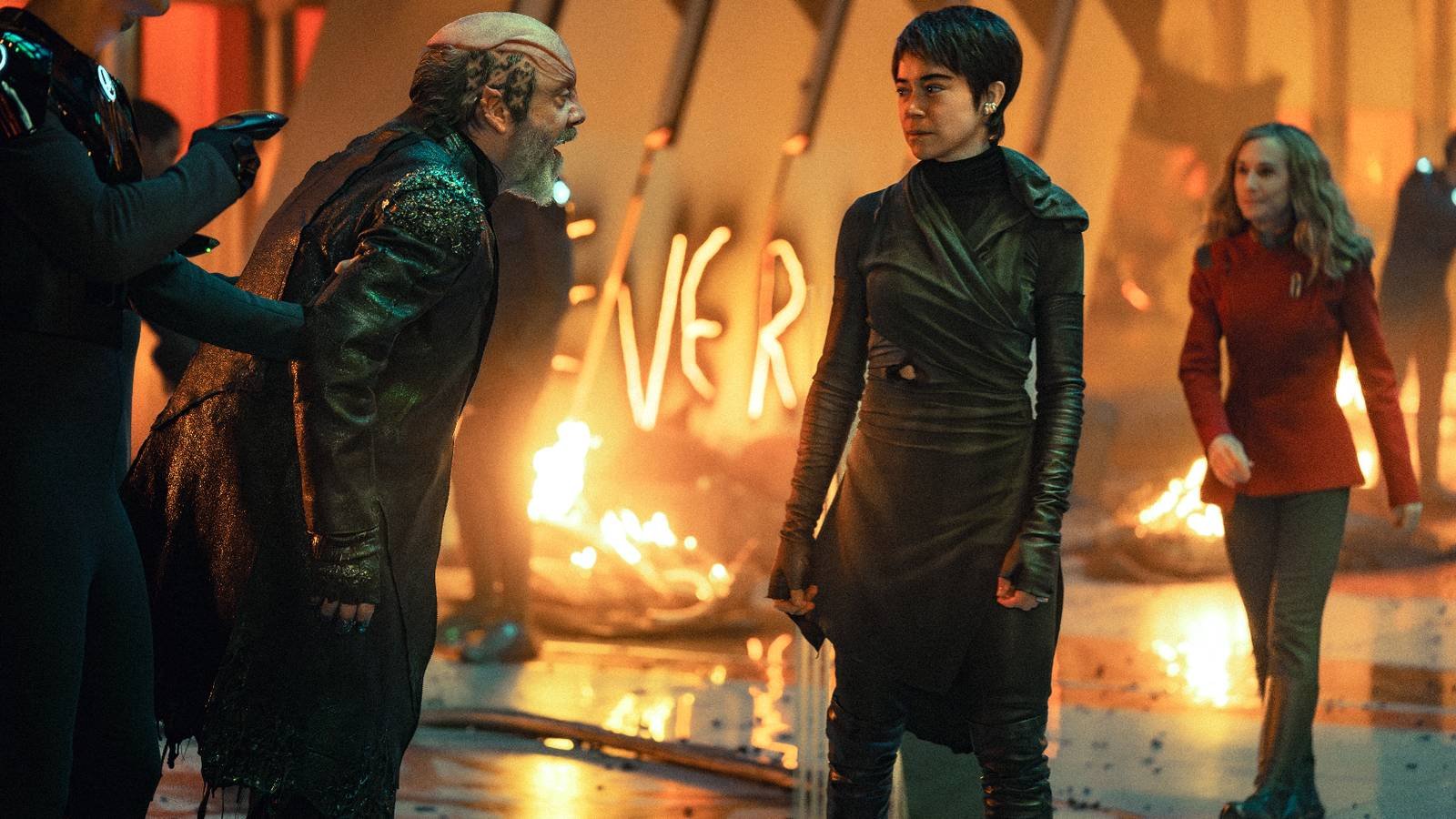
The highly anticipated first season finale of *Star Trek: Starfleet Academy*, titled "Rubincon," has resonated deeply with fans and critics alike, not only for its dramatic narrative but also for its masterful continuation of a beloved, decades-old Star Trek tradition. Under the skilled direction of Olatunde Osunsanmi, with a teleplay by industry veterans Alex Kurtzman and Kirsten Beyer, and a compelling story crafted by Noga Landau and Gaia Violo, the episode plunges the nascent Starfleet cadets into a high-stakes legal battle. "Rubincon" is poised to be a pivotal moment, as it unveils the intricate master plan orchestrated by Nus Braka, portrayed by the formidable Paul Giamatti, directly challenging Captain Nahla Ake, brought to life by the esteemed Holly Hunter, and, by extension, the fundamental principles of the United Federation of Planets itself. This dramatic confrontation solidifies *Starfleet Academy*'s place within the franchise's rich tapestry, particularly its enduring commitment to exploring complex ethical and legal quandaries through the lens of a courtroom.
The Enduring Legacy of Star Trek's Courtroom Drama
For over six decades, Star Trek has consistently utilized the courtroom as a powerful stage for intellectual and moral combat, providing some of its most memorable and thought-provoking narratives. These episodes transcend mere legal proceedings; they serve as a critical crucible where Starfleet's highest ideals – justice, equality, and the prime directive – are rigorously tested and affirmed. By placing its characters in situations where they must defend their actions, question the law, or grapple with the very definition of sentient life, Star Trek's courtroom dramas delve into the core philosophical underpinnings of the Federation, challenging both its heroes and its audience to consider complex ethical dilemmas without the reliance on phaser fire or warp speed chases. They offer a unique avenue for character development, revealing the moral compass and intellectual fortitude of Starfleet officers under immense pressure, often forcing them to confront personal biases and societal prejudices that transcend their futuristic setting.
A Historical Precedent: From TOS to Discovery
The tradition of the Star Trek courtroom episode dates back to the original series. One of the earliest and most iconic examples is "Court Martial" from *Star Trek: The Original Series* (TOS), where Captain Kirk faces charges of negligence, highlighting themes of integrity and the burden of command. Later, in *Star Trek: The Next Generation* (TNG), "The Measure of a Man" stands as a monumental entry, where Captain Picard passionately argues for Commander Data's right to self-determination, essentially defining what it means to be alive and sentient in the Federation. This particular episode is often cited as a pinnacle of Star Trek's philosophical storytelling, establishing a benchmark for all subsequent legal dramas within the franchise. These narratives are not merely about legal precedent, but about challenging the very definitions of personhood, morality, and justice within a utopian society.
Subsequent series have continued this powerful narrative device. *Star Trek: Deep Space Nine* (DS9) offered a more nuanced exploration of justice, particularly in episodes like "Dax," which questioned the legal identity of a Trill host, and "Rules of Engagement," where Worf faced a Klingon tribunal for his actions in battle, further exploring military ethics and inter-species legal systems. *Star Trek: Voyager*'s "Author, Author" examined intellectual property rights for a holographic being, while *Star Trek: Enterprise*'s "Judgment" saw Captain Archer put on trial by the Klingons, highlighting cultural clashes and political intrigue. Even *Star Trek: Discovery* brought the format into its narrative with episodes that featured legalistic proceedings. This consistent thread underscores the timeless relevance of legal and ethical debates, proving that even in a galaxy spanning future, the pursuit of justice and the interpretation of law remain central to the human—and alien—experience.
"Rubincon": Starfleet Academy's Modern Interpretation
With "Rubincon," *Star Trek: Starfleet Academy* not only revives but recontextualizes this cherished tradition for a new generation. The episode's premise, revolving around Nus Braka's intricate master plan, sets up a compelling confrontation that goes beyond simple legal wrangling. It's a direct challenge to the authority and ethical framework of the United Federation of Planets, forcing its representatives, particularly Captain Nahla Ake, to defend not just an individual, but the very ideals upon which the Federation was founded. The involvement of acclaimed actors Paul Giamatti as Nus Braka and Holly Hunter as Captain Nahla Ake elevates the stakes considerably, promising performances rich with gravitas and emotional depth. Their interplay in the courtroom setting will undoubtedly serve as the narrative's central engine, driving home the episode's thematic weight and intellectual arguments. The Starfleet Academy setting adds another layer, as cadets witness firsthand the complexities and moral ambiguities that even the most advanced society must confront, preparing them for future leadership roles where such decisions are paramount.
Beyond the Verdict: Ethical and Philosophical Stakes
The decision by the creative team – Osunsanmi, Kurtzman, Beyer, Landau, and Violo – to conclude the inaugural season with a courtroom drama signals a deep understanding of Star Trek's narrative strengths. This choice allows "Rubincon" to explore profound ethical and philosophical questions pertinent to both the Star Trek universe and contemporary society. What constitutes justice when dealing with a plan that threatens the Federation's stability? How far can individual rights be pushed when national security is at stake? And how do these dilemmas shape the next generation of Starfleet officers observing these proceedings? The episode is poised to challenge the seemingly utopian ideals of the Federation, exposing the complex grey areas that exist even in a society striving for perfection. Through this lens, "Rubincon" has the potential to become a definitive modern Star Trek courtroom classic, sparking discourse on governance, ethics, and the responsibility of power.
Why This Tradition Persists: A Deep Dive into Narrative Utility
The persistent appeal of the courtroom episode in Star Trek is multifaceted, stemming from its exceptional narrative utility. From a production standpoint, these episodes can often be more contained, frequently utilizing standing sets or requiring fewer elaborate visual effects, making them a cost-effective yet dramatically potent option. More importantly, they offer a unique stage for character development and thematic exploration. Stripped of phaser battles and complex sci-fi gadgetry, characters are forced to rely on their intellect, their convictions, and their rhetorical skills. This intense focus on dialogue and moral debate allows for a deeper examination of individual motivations, institutional biases, and the philosophical underpinnings of the Star Trek universe. It provides a direct conduit for allegorical storytelling, enabling the writers to address real-world social and political issues through a futuristic, science fiction lens, fostering critical thinking among its audience.
Ultimately, the courtroom setting serves as a microcosm for the larger struggles within Star Trek: the ongoing quest for justice, the definition of sapience, and the constant balancing act between individual freedom and collective responsibility. These episodes invite viewers to become jurors, weighing the evidence and considering the arguments, thereby engaging them on a profound intellectual and emotional level. The timeless nature of these debates ensures that Star Trek's courtroom tradition will continue to thrive, providing fertile ground for new stories that challenge, enlighten, and inspire across generations.
The "Rubincon" finale of *Star Trek: Starfleet Academy* not only delivers a gripping conclusion to its first season but also boldly upholds a narrative tradition that has defined Star Trek's intellectual depth for decades. By placing its characters and its core principles under intense legal scrutiny, the series reinforces the franchise's commitment to profound storytelling. We encourage you to delve deeper into the rich history and future of Star Trek, explore detailed episode analyses, and discover exclusive interviews with the creators and stars. Continue your journey through the cosmos and beyond by exploring more insightful content right here on NAME OF SITE.
Fonte: https://screenrant.com