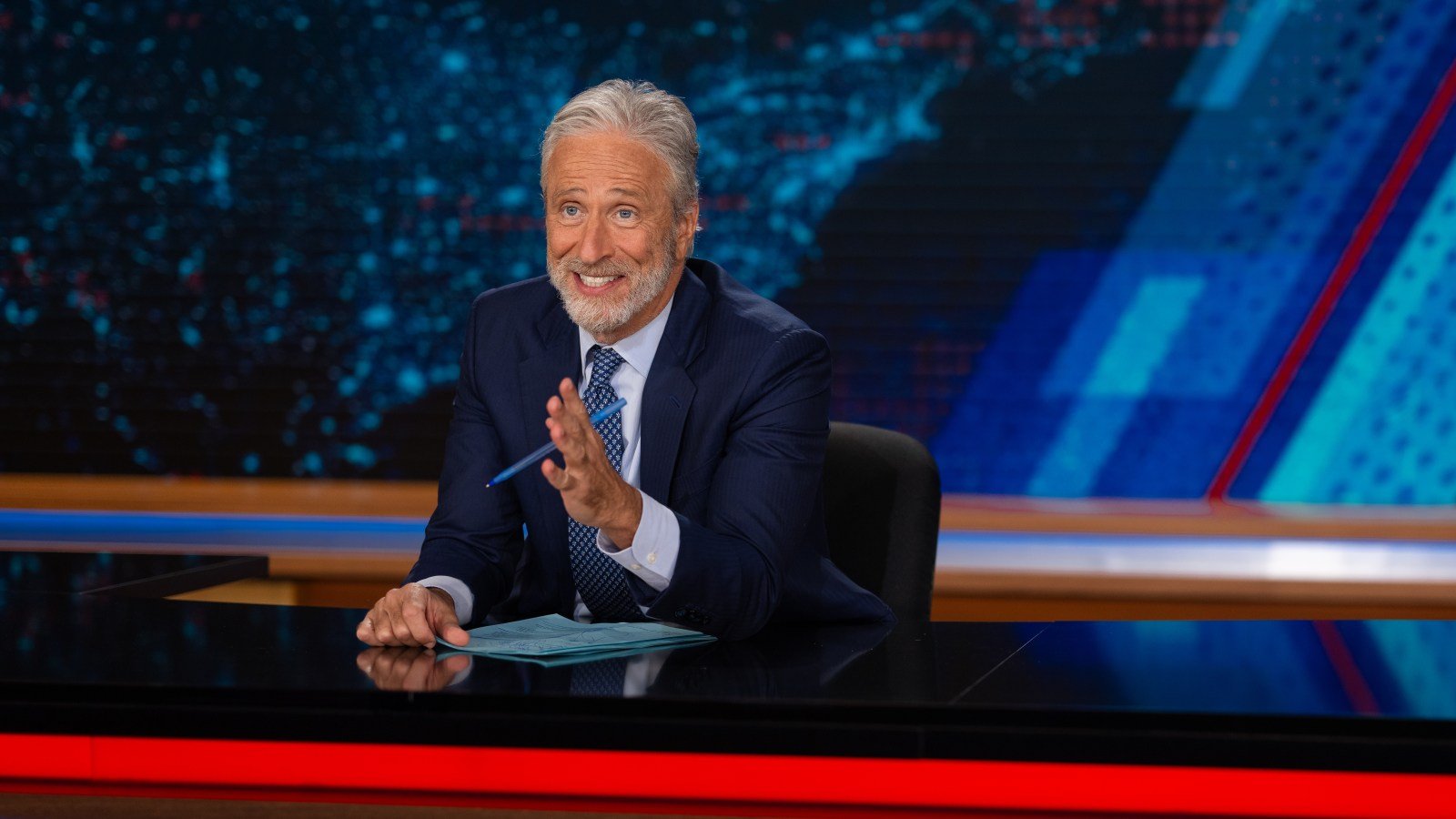
In a moment that sharply encapsulated the political tensions of the Trump administration, revered satirist Jon Stewart re-emerged from his semi-retirement to deliver a poignant and characteristically cutting critique of U.S. foreign policy. His commentary, delivered with the biting wit that made him a household name, targeted former President Donald Trump’s actions concerning Iran, specifically coining the term 'Operation Epic Fury.' Stewart's pointed observation – questioning whether the situation was 'a war or did the Paul brothers launch another energy drink?' – resonated deeply, highlighting the perceived absurdity and gravity of the escalating conflict. This memorable jab, culminating in the provocative declaration that 'our bombs are now smarter than our president,' served as more than just a comedic punchline; it was a profound reflection on leadership, strategic decision-making, and the perilous intersection of power and perceived recklessness on the global stage.
The Geopolitical Crucible: U.S.-Iran Relations Under Trump
To fully grasp the impact of Stewart’s remarks, it is essential to contextualize the tumultuous relationship between the United States and Iran during the Trump presidency. This period was marked by a dramatic shift from the Obama administration's approach, which had culminated in the 2015 Joint Comprehensive Plan of Action (JCPOA), commonly known as the Iran nuclear deal. President Trump, fulfilling a campaign promise, unilaterally withdrew the U.S. from the JCPOA in May 2018, deeming it a 'terrible deal' that did not adequately curb Iran's regional influence or missile program. This withdrawal was followed by the re-imposition and escalation of severe economic sanctions against Iran, targeting its oil exports, banking sector, and other vital industries. The stated goal was to exert 'maximum pressure' to force Iran back to the negotiating table for a new, more comprehensive agreement.
The 'maximum pressure' campaign, however, led to a dangerous cycle of escalation rather than de-escalation. Iran responded by gradually reducing its commitments under the JCPOA and by engaging in actions perceived as provocative by the U.S. and its allies. These incidents included attacks on oil tankers in the Gulf of Oman, drone strikes on Saudi Arabian oil facilities attributed to Iranian proxies, and the downing of a U.S. surveillance drone. Each event heightened regional tensions, drawing the world’s attention to the potential for a larger military confrontation. It was against this volatile backdrop that specific U.S. military actions or threats of action against Iran, such as those related to the killing of Iranian General Qassem Soleimani in early 2020, became flashpoints for intense debate and criticism. Stewart’s 'Operation Epic Fury' moniker, while satirical, captured the perceived theatricality and high-stakes drama surrounding these geopolitical maneuvers, hinting at a lack of clear strategic direction.
Jon Stewart's Enduring Legacy of Political Satire
Jon Stewart carved out an indelible niche in American media as the host of Comedy Central's 'The Daily Show' from 1999 to 2015. During his tenure, the program evolved from a comedic news recap into a powerful platform for political commentary and investigative satire. Stewart masterfully blended humor with serious journalistic critique, often exposing hypocrisy, dissecting political rhetoric, and holding public figures accountable. His sharp intellect, genuine passion, and ability to articulate complex issues in an accessible and often hilarious manner earned him immense popularity and influence. He became a trusted, albeit comedic, voice for many Americans disillusioned with traditional news outlets and the political establishment. His return to the public eye, even if brief, to comment on Trump's Iran policy demonstrated that his critical lens remained as incisive as ever, reinforcing his status as a significant cultural and political commentator.
The Art of the Punchline: Deconstructing Stewart's Critique
Stewart’s seemingly flippant comparison of a military operation to the launch of an energy drink by the 'Paul brothers' (referencing social media personalities Jake and Logan Paul, notorious for their often controversial and attention-seeking ventures) was deeply strategic. It served to underscore the perceived trivialization of potentially catastrophic geopolitical events. By juxtaposing the gravity of war with the often-frivolous antics of internet celebrities, Stewart highlighted a profound disconnect: the world stage was being treated, in his view, with a similar level of thoughtlessness or sensationalism as a celebrity endorsement. This rhetorical device amplified his core message – that the decisions being made were lacking appropriate gravitas and strategic depth.
The statement, 'Our bombs are now smarter than our president,' is a quintessential example of Stewart's pointed satire. On one level, it's a darkly humorous observation about the precision and technological advancement of modern weaponry. On another, and more critically, it's a scathing indictment of leadership. It implies a profound lack of judgment, foresight, or strategic acumen on the part of the commander-in-chief, suggesting that the instruments of war themselves possess a more rational or predictable nature than the individual wielding them. This particular phrase resonated because it captured a widespread public anxiety about the unpredictable nature of foreign policy decisions and the potential for devastating, unintended consequences when leadership is perceived as erratic or driven by impulse rather than careful calculation.
Public Reception and the Power of Satire in a Disinformation Age
Stewart's comments, typical of his style, ignited immediate reactions across the political spectrum. Supporters lauded his courage and clarity in speaking truth to power, seeing his satire as a necessary antidote to what they perceived as misleading narratives and jingoistic rhetoric. Critics, conversely, might have dismissed his remarks as unpatriotic, overly simplistic, or partisan. Regardless of reception, the exchange underscored the vital role of political satire, especially in an era increasingly grappling with misinformation and polarized narratives. Satirists like Stewart often provide an alternative framework for understanding complex issues, using humor to cut through political jargon and expose underlying truths that might otherwise be overlooked or downplayed by traditional media.
His return to commentary during this fraught period served as a reminder that satire is not merely entertainment; it is a critical form of civic engagement. It challenges audiences to think critically about power, authority, and the narratives presented by those in leadership. By using humor to tackle serious topics, Stewart invited audiences to consider the human cost and strategic implications of geopolitical decisions that might otherwise feel distant or overwhelming. This particular critique of Trump’s Iran policy served as a potent example of how comedy can hold a mirror up to society, prompting reflection and debate on matters of national and international significance.
The Enduring Echo of a Satirist's Warning
Jon Stewart’s assessment of Trump’s Iran policy and his 'Operation Epic Fury' jab remain salient not just as a historical footnote but as a testament to the power of sharp, analytical satire. His critique highlighted widespread concerns about the strategic coherence of U.S. foreign policy, the dangers of escalating international tensions, and the profound responsibilities of leadership in an increasingly interconnected and volatile world. The comedic framing belied a serious underlying message: decisions of war and peace demand the utmost sobriety, foresight, and a clear understanding of consequences, rather than appearing as impulsive or ill-conceived ventures. The period of U.S.-Iran confrontation under the Trump administration ultimately showcased the delicate balance of diplomacy and deterrence, and the significant risks inherent in miscalculation, a reality Stewart's commentary shrewdly illuminated.
Dive deeper into the critical analyses of global affairs and media commentary. Explore more in-depth articles on international relations, political satire, and public policy by continuing to browse [NAME OF SITE]. Your journey into informed perspectives starts here.
Fonte: https://www.rollingstone.com