One year after Brazil astonished the film world with I’m Still Here, the country returns to the
global awards race with fresh ambition. The nation’s official submission to the 2026
Academy Awards, The Secret Agent (O Agente Secreto), is already gaining critical
momentum and drawing parallels to the political and cultural resonance that surrounded last
year’s Oscar triumph.
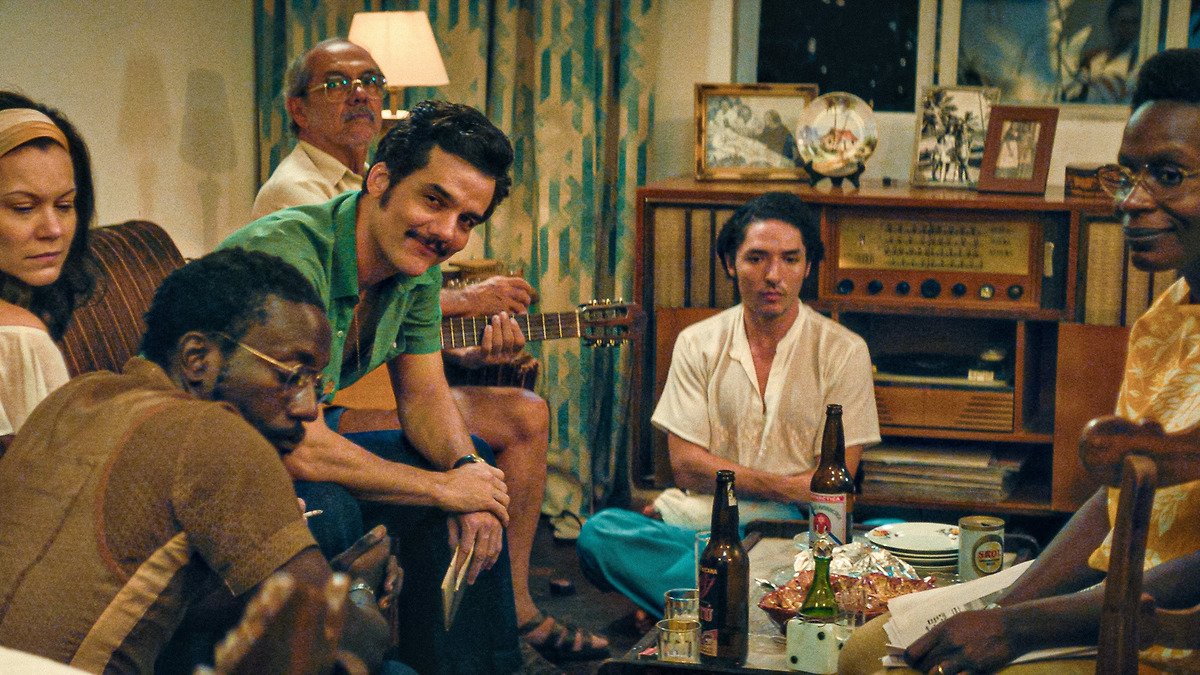
At the heart of this new contender is Wagner Moura, the internationally known actor
celebrated for his roles in Narcos and Marighella. In this film, he delivers a deeply internal
performance as a former tech analyst who returns to his native Recife in 1977 after years of
exile. What he finds is a homeland still gripped by authoritarianism, where the hope of
change has been dimmed and memory itself is under siege.
Directed by Kleber Mendonça Filho, one of Brazil’s most daring and socially conscious
filmmakers, The Secret Agent unfolds with quiet intensity. Mendonça Filho has always
gravitated toward stories where the personal and political are inseparable, and here he crafts
a psychological thriller that never lets its characters or its viewers feel at ease. The film
premiered at Cannes to standing ovations and left with two major prizes, including Best
Director and Best Actor for Moura. That debut marked not only a successful artistic moment,
but a signal that Brazil’s cinema is entering a new, confident phase on the global stage.
For many observers, the shadow of I’m Still Here still looms large. Walter Salles’ harrowing
portrait of Eunice Paiva, and her family’s trauma under Brazil’s dictatorship, was more than a
historical drama. It became a cultural phenomenon that brought the conversation about
memory, repression and resistance into living rooms across Brazil and beyond. That film’s
Oscar win was not just a milestone for Brazilian cinema, but a moment of recognition that
stories from Latin America, when told with truth and cinematic force, can resonate
universally.
What followed was a shift in perception. No longer were films from the region seen only as
powerful local stories. They were acknowledged as masterworks with emotional and artistic
depth equal to any in the world. The Academy, often criticized for its Eurocentric bias,
seemed to pause and listen. Now, with The Secret Agent, Brazil returns to that same stage,
not with nostalgia, but with conviction.
The new film does not attempt to recreate the tone or structure of its predecessor. Where I’m
Still Here moved through time with a broad emotional sweep, The Secret Agent compresses
everything into a single historical moment, a single haunted city, a single man caught
between betrayal and purpose. Recife is shot with both intimacy and menace. Long
corridors, empty lots, flickering street lamps, all carry the tension of a country watching itself
and being watched.
What makes the film so timely is not just its depiction of dictatorship, but its exploration of
silence. It speaks to the ways trauma is buried beneath bureaucracy and how resistance
often takes the form of quiet survival. Moura’s performance is restrained but magnetic. His
eyes carry the weight of unsaid truths, of coded conversations and unspoken threats. His
return is not triumphant. It is complicated, as all returns to home often are.
Behind the camera, Mendonça Filho offers a vision of Brazil that is unflinching but never
cynical. He understands that historical trauma does not disappear with time. It lingers,
disguised in new uniforms and spoken through updated slogans. Yet he also shows that
memory can be a form of resistance. The film does not lecture. It reveals.
Campaigning for an Oscar requires more than excellence. It requires timing, visibility, and
the ability to shape a compelling narrative for voters. In this regard, the team behind The
Secret Agent appears well-prepared. The same international press agencies and distribution
partners who helped I’m Still Here cross into broader Oscar categories are now steering this
campaign. Early screenings in Los Angeles and New York are drawing strong reviews, and
several critics have already predicted a second consecutive nomination for Brazil.
What’s different this time is the atmosphere. Brazil is no longer an outsider pleading for
attention. It is now a proven storyteller in the eyes of the Academy. This shift carries its own
pressures. Expectations are higher. The competition is fiercer. But it also means the world is
listening in a way it wasn’t before.