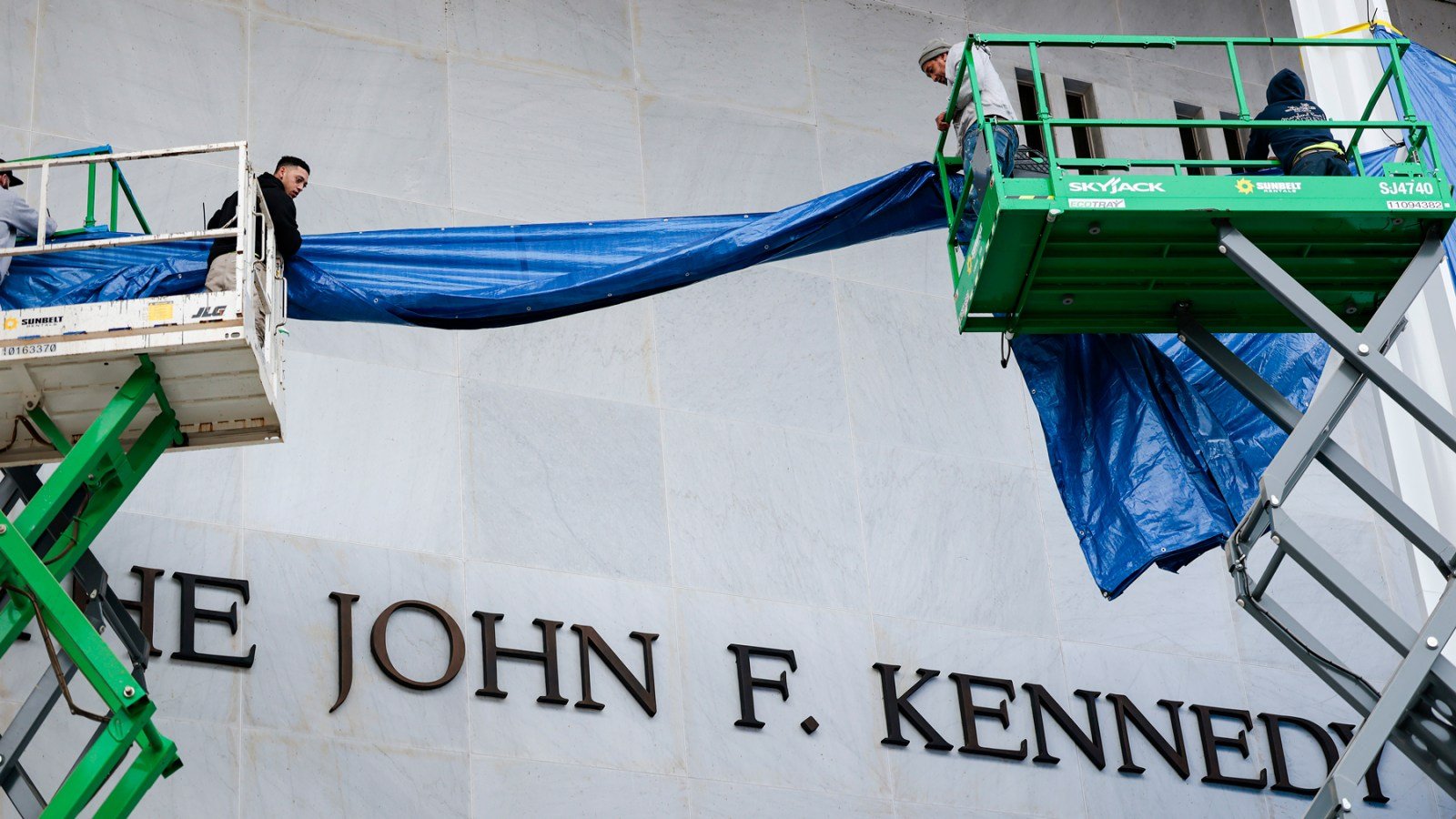
A U.S. District Judge has delivered a decisive ruling that prevents former President Donald Trump’s name from being added to the John F. Kennedy Center for the Performing Arts. In a significant legal development, Judge Casey Cooper affirmed that such a change cannot be made solely at the discretion of the Center's Board, emphasizing the specific federal statutes governing the revered national institution. This decision underscores the intricate legal framework protecting the identity and legacy of America's national memorials and cultural landmarks, setting a clear precedent against unilateral alterations to their official designations.
The Core of the Judicial Decision
Judge Casey Cooper’s ruling centered on a crucial interpretation of the statutory provisions that govern the John F. Kennedy Center. His explicit statement, “it cannot bear any other formal name or public memorial based on the Board’s unilateral say-so,” directly challenges the notion that the Center’s governing body possesses absolute authority over its foundational identity. The judgment highlights that while the Board holds significant administrative and operational power, the very name of the institution is safeguarded by specific legislative acts, which mandate a more comprehensive and formal process for any significant alterations. This legal stance serves as a bulwark against potential politicization or arbitrary renaming, ensuring that national symbols maintain their intended historical and cultural integrity.
The court's decision was not a judgment on the merit or suitability of adding Trump's name but rather a strict adherence to the letter of the law. It clarifies that even with a board's potential consensus, the power to fundamentally rename a federally chartered institution like the Kennedy Center does not reside within its internal governance structure. This legal interpretation emphasizes the separation of powers and the necessity of legislative action for changes of such national magnitude, reinforcing the principle that national treasures are protected by specific congressional directives.
The John F. Kennedy Center for the Performing Arts: A National Icon
The John F. Kennedy Center for the Performing Arts stands as a living memorial to the 35th President of the United States, John F. Kennedy. Conceived in the late 1950s and formally established by Congress in 1964 as the National Cultural Center, it was renamed in 1964 following President Kennedy's assassination. This federal monument and performing arts complex is not merely a venue; it is a vital national institution dedicated to showcasing and promoting the performing arts, fostering cultural understanding, and serving as a beacon of artistic excellence in the nation's capital. Its official name, enshrined in federal law, reflects its profound historical significance and its enduring connection to President Kennedy’s vision for American arts and culture.
Operating under a unique federal charter, the Kennedy Center receives both federal funding and private donations, blurring the lines between a government entity and a private non-profit. This dual nature, however, does not diminish its status as a federally designated memorial. Its governance by a Board of Trustees, often including presidential appointees, operates within the strictures of its founding legislation, the John F. Kennedy Center Act. This Act outlines not only its purpose and operational structure but also implicitly, or explicitly, its naming conventions, making any proposed alteration a matter requiring federal legislative review rather than a simple board resolution.
The Proposal to Honor Former President Trump
The proposal to append former President Donald Trump's name to the Kennedy Center emerged from various discussions, primarily initiated by political allies and supporters who sought to establish a lasting public memorial to his presidency. While the exact timeline and formal submission process of such a proposal remain somewhat obscured, the general sentiment was to recognize his time in office through a prominent national institution. The idea, often floated in political circles, was met with a spectrum of reactions, from fervent support among his base to strong opposition from those who argued against politicizing a cultural institution or altering a memorial dedicated to a previous president.
Such proposals for renaming or adding names to national monuments are not uncommon in American political history, yet they frequently ignite heated debates. Critics of the Trump proposal highlighted the existing dedication to John F. Kennedy and the potential for perceived partisan motives to overshadow the Center’s artistic mission. They also emphasized the distinct historical context surrounding the Center’s original naming. The legal challenge, ultimately addressed by Judge Cooper, underscored that the mechanism for such changes must adhere to established legal protocols, moving beyond political desires or internal board preferences to a process rooted in federal law.
Legal Precedents and the Role of Congress
The naming and renaming of federal buildings, national monuments, and cultural institutions in the United States typically falls under the purview of Congress. Unlike private entities, which may change names at will, federally chartered or owned properties are subject to public law. Historical precedents demonstrate that significant changes, such as renaming airports, federal courthouses, or national parks, almost invariably require an act of Congress. This legislative process involves public debate, committee hearings, and votes in both the House of Representatives and the Senate, ensuring a broad consensus and adherence to national interest rather than individual or partisan will.
The reason for this congressional oversight is multifaceted: it ensures accountability, prevents capricious decisions, and protects the integrity of national symbols. The “Board’s unilateral say-so” argument, as dismissed by Judge Cooper, directly contravenes this established norm. Even if a board has some autonomy in operational matters, the fundamental identity of a national memorial is considered a matter of federal statute, reflecting the will of the people through their elected representatives. This system is designed to provide stability and historical continuity to institutions that transcend individual administrations or board memberships.
The Kennedy Center Act and its Protections
The John F. Kennedy Center Act, passed by Congress, defines the scope and powers of the institution. While specific language prohibiting renaming might not be explicitly stated in every clause, the Act's foundational purpose and specific designation of the Center as a memorial to John F. Kennedy carry significant legal weight. Any attempt to alter this designation would require an amendment to the original Act, a process that necessitates congressional legislation. This legislative safeguard ensures that institutions like the Kennedy Center remain enduring tributes, protected from casual or politically motivated rebranding attempts. The ruling reinforces that the spirit and letter of this Act safeguard the Center's name and its dedicated purpose, affirming Congress as the ultimate authority in preserving its identity.
Broader Implications for Public Memorials
Judge Cooper's ruling carries substantial broader implications for the governance and preservation of public memorials and national institutions across the United States. It sets a crucial precedent, affirming that the official names and designations of federally chartered entities are not subject to the sole discretion of their governing boards. This decision reinforces the principle that such institutions are public trusts, their identities often established and protected by congressional acts, which necessitates legislative intervention for any fundamental changes. This provides an important legal bulwark against potential future attempts by boards, political figures, or special interest groups to unilaterally alter the historical identity or dedicated purpose of national monuments, ensuring their longevity and stability against fluctuating political tides. It upholds the sanctity of legislative intent over administrative convenience or political maneuvering.
The preservation of original intent is paramount in the context of national memorials. The Kennedy Center was specifically named to honor President John F. Kennedy, and that dedication is embedded in its very legal foundation. This ruling sends a clear message that such dedications are not merely symbolic but are legally binding, requiring the full force of the legislative process to modify. It protects the historical narrative and the public's understanding of these institutions, preventing a patchwork of politically driven renamings that could diminish their significance and create confusion. For other federal institutions and public trusts, this judgment underscores the importance of scrutinizing their founding charters and understanding that their names are often as protected as their physical structures and missions.
This judicial affirmation of legislative supremacy in naming federally designated institutions solidifies a vital aspect of American governance. It ensures that decisions of national significance, particularly those impacting permanent memorials and cultural landmarks, are deliberated and approved by the representatives of the American people, rather than through narrower administrative channels. This adds an essential layer of democratic process to the stewardship of our nation's most cherished public assets, fostering greater accountability and transparency in how their legacies are maintained for future generations.
For an in-depth understanding of the intricate legal challenges facing national institutions and the ongoing debates surrounding historical preservation, continue exploring the comprehensive articles and analyses on NAME OF SITE. Our dedicated team of journalists provides unparalleled coverage and expert insights into the stories shaping our nation's cultural and political landscape.
Fonte: https://www.rollingstone.com