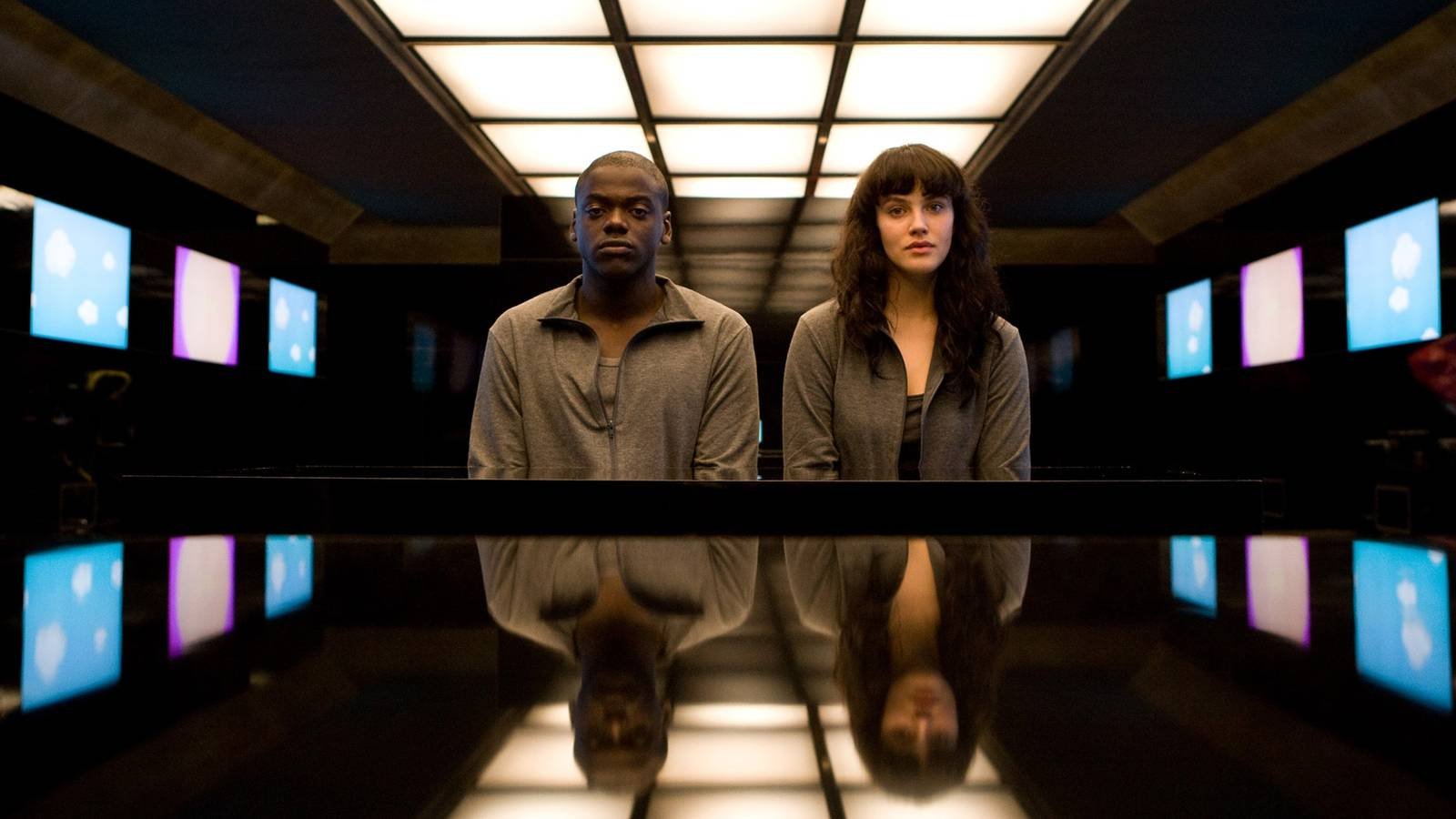
In an era increasingly shaped by technological advancements and the omnipresent influence of digital platforms, the concept of dystopia has never felt more relevant. Netflix, a global streaming behemoth, stands as a fascinating paradox in this landscape. While often critiqued for its monopolistic tendencies and its role in fundamentally altering traditional entertainment consumption, thereby arguably pushing society towards a more isolated, algorithm-driven existence, it simultaneously offers some of the most compelling explorations of dystopian futures. Among its vast library, Charlie Brooker's anthology series, <i>Black Mirror</i>, shines as a chilling, thought-provoking examination of technology's potential dark side, offering cautionary tales that resonate deeply with contemporary anxieties and often rival the prophetic power of cinematic classics like <i>Blade Runner</i>.
Netflix: A Modern Media Monolith and Its Paradoxical Role
Netflix's journey from a DVD rental service to a streaming titan is a testament to its aggressive market strategy and innovative content production. With over 270 million subscribers worldwide, the company has irrevocably reshaped how audiences consume media, favoring on-demand access over scheduled broadcasts and cinematic releases. This dominance, however, has not been without its critics. Concerns range from its impact on the communal experience of cinema, its vast data collection practices, and the consolidation of media power in the hands of a few corporations. Some argue that Netflix, alongside other tech giants, contributes to a 'capitalistic monolith' that dictates cultural trends and consumer behavior, subtly nudging the real world closer to the very societal structures that fictional dystopias often warn against.
Yet, the irony is profound. This same platform, often seen as a symptom of a potentially dystopian future, has become a fertile ground for stories that critically examine such futures. Netflix's substantial investment in original content has provided a platform for creators to explore complex themes, including the ethical quandaries posed by unchecked technological progress and the potential erosion of human connection in an increasingly digital world. This duality makes Netflix a particularly potent lens through which to examine modern anxieties surrounding technology and society.
Black Mirror: Reflecting Our Digital Anxieties
<i>Black Mirror</i>, a British science fiction anthology series, delves into the unexpected consequences of new technologies. Each standalone episode presents a speculative future, often just a few steps removed from our present, where a new piece of technology or social platform has taken root and subtly—or not so subtly—perverted human nature, relationships, or societal structures. The title itself refers to the dark, reflective surface of our omnipresent screens, suggesting that the horrors depicted are not far-fetched alien invasions, but rather reflections of our own desires, fears, and technological dependencies.
The series brilliantly dissects various facets of the digital age: from the perils of social media approval (as seen in 'Nosedive') and the ethical dilemmas of artificial intelligence ('Be Right Back,' 'USS Callister'), to the invasion of privacy through surveillance tech ('The Entire History of You') and the implications of virtual reality ('Striking Vipers'). What makes <i>Black Mirror</i> so compelling, and often unsettling, is its uncanny ability to predict or parallel real-world technological developments. Episodes have mirrored discussions around deepfakes, social credit systems, brain-computer interfaces, and sophisticated digital afterlife simulations, giving the show a reputation for chilling prescience rather than mere science fiction.
The Prescience and Impact of Black Mirror's Vision
The enduring appeal and cultural impact of <i>Black Mirror</i> stem from its capacity to act as a mirror to our collective technological aspirations and anxieties. It doesn't merely present fantastical gadgets; it meticulously explores the human element, asking fundamental questions about identity, morality, and what it means to be human in an increasingly mediated world. The show often serves as a cautionary tale, prompting viewers to critically assess their own relationship with technology, from the mundane scrolling of social feeds to the broader societal implications of emerging artificial intelligence and data-driven governance. Its narratives are not just entertainment; they are thought experiments designed to provoke introspection and dialogue about the path humanity is currently treading.
Blade Runner vs. Black Mirror: Two Visions of Dystopia
When comparing <i>Black Mirror</i> to established dystopian narratives, Ridley Scott's <i>Blade Runner</i> (1982) often comes to mind. While both offer profound critiques of technology's influence, their approaches to dystopia differ significantly. <i>Blade Runner</i> presents a physically decaying, rain-soaked, neon-drenched future Los Angeles, a classic cyberpunk setting where corporate power reigns supreme and artificial beings (replicants) struggle for existence amidst urban decay. Its dystopia is tangible, environmental, and rooted in the exploitation of synthetic life and a class divide exacerbated by advanced robotics.
<i>Black Mirror</i>, in contrast, typically depicts futures that are aesthetically cleaner, often resembling our present, but with a psychological or social degradation caused by ubiquitous, invasive, or manipulative technologies. The dystopia is less about crumbling infrastructure and more about the crumbling of the human spirit, authentic connection, and individual autonomy. While <i>Blade Runner</i> asks 'What does it mean to be human when machines are indistinguishable from us?', <i>Black Mirror</i> often asks 'What does it mean to be human when our very consciousness and interactions are mediated, quantified, and controlled by technology we invited into our lives?' Both narratives, however, converge on the central theme of humanity's struggle to define itself in the shadow of its own creations, making them crucial cultural touchstones in understanding our technological destiny.
The Societal Mirror: From Fiction to Our Reality
The power of dystopian fiction, especially that of <i>Black Mirror</i>, lies in its ability to highlight the slippery slope from innovation to ethical quandary. Many of its seemingly outlandish scenarios have found unsettling parallels in real-world developments. The rise of sophisticated AI chatbots, the proliferation of facial recognition technology, debates over digital immortality, and the pervasive nature of social media's influence on self-worth and societal standing all echo themes explored within the series. This constant interplay between fiction and reality serves as a powerful reminder that technology is a tool, and its impact is fundamentally shaped by human choices, societal values, and regulatory frameworks.
By presenting these scenarios, <i>Black Mirror</i> urges audiences to move beyond passive consumption of technology to active, critical engagement. It encourages us to question the narratives surrounding innovation, to scrutinize the ethical implications of every new app and gadget, and to consider the long-term societal costs of convenience and connectivity. In an age where digital interfaces are increasingly blurring the lines between the virtual and the real, understanding these potential futures is not merely an intellectual exercise but a vital necessity for navigating our increasingly complex world.
From its inception as a critique of technology's potential for societal corruption to its evolution into a series renowned for its predictive accuracy, <i>Black Mirror</i> remains a pivotal cultural commentary. Its presence on a platform like Netflix, itself a symbol of modern technological power, creates a compelling dialogue about the very forces shaping our future. As we continue to accelerate into an age defined by artificial intelligence, virtual realities, and unprecedented connectivity, the cautionary tales of <i>Black Mirror</i> serve as an invaluable guide, urging us to consider the ethical frameworks necessary to prevent fiction from becoming reality. Explore more insightful analyses of technology, culture, and their intricate intersections right here on NAME OF SITE.
Fonte: https://screenrant.com