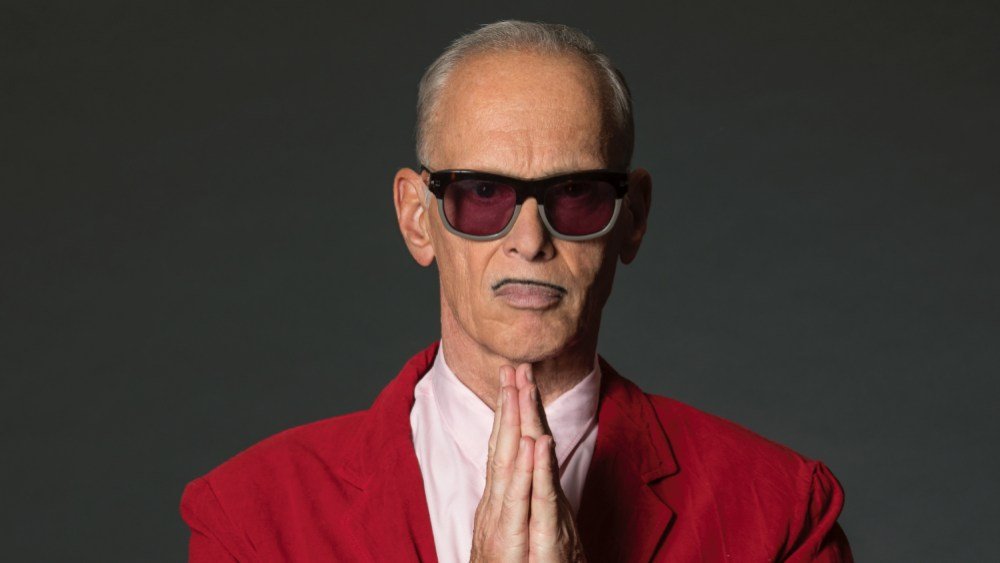
Known for his distinctive and often shocking contributions to independent cinema, legendary filmmaker John Waters has candidly expressed a lifelong connection to the Academy Awards, a sentiment many aspiring artists share. While winning an Oscar might be the quintessential dream for most, Waters, with his characteristic subversion, articulates a different ambition: to host the prestigious ceremony. "What gay kid hasn't done an Oscar acceptance speech?" he playfully queries, immediately pivoting to his true aspiration. He substantiates his readiness for the role by referencing his extensive experience hosting the Spirit Awards, suggesting he has, in essence, already 'auditioned' for the bigger stage. This revelation sparks a fascinating discussion, not just about Waters' suitability as a host, but about the potential radical transformation he could bring to an event often criticized for its staid predictability.
The Unconventional Appeal of John Waters as an Oscar Host
John Waters, affectionately dubbed the 'Pope of Trash,' has carved out a unique niche in film history with his transgressive, camp, and often hilarious movies like "Pink Flamingos," "Hairspray," and "Cry-Baby." His films consistently challenge societal norms, celebrate the fringe, and inject a distinct brand of dark humor into the cinematic landscape. To imagine Waters at the helm of the Academy Awards is to envision a ceremony vastly different from its traditional polished, mainstream presentation. His career is a testament to authenticity and an unwavering commitment to his artistic vision, even when it pushes boundaries. This very quality makes him a polarizing, yet undeniably intriguing, candidate for a hosting gig that has struggled in recent years to maintain relevance and viewership.
Waters' prior experience hosting the Independent Spirit Awards on multiple occasions provides crucial insight into his capabilities. The Spirit Awards, by nature, are a more relaxed and irreverent affair, catering to an audience that appreciates the unconventional. Waters thrived in this environment, delivering sharp wit, observational humor, and a genuine appreciation for independent filmmaking. His ability to command a stage, engage an audience, and deliver memorable monologues without resorting to conventional Hollywood niceties suggests he possesses the fundamental skills required for hosting, albeit through a highly personalized and iconoclastic lens. The question then becomes whether the Academy, and its diverse global audience, are ready for such an unvarnished approach.
Addressing the Elephant in the Room: The Chris Rock and Will Smith Incident
The 2022 Academy Awards were indelibly marked by the infamous incident where Will Smith slapped Chris Rock on stage, an event that sent shockwaves across the entertainment industry and beyond. The moment overshadowed the entire ceremony, sparking widespread debate about conduct, celebrity culture, and the future of live awards shows. The Academy, still grappling with the fallout, has since implemented new protocols and faced ongoing scrutiny regarding its handling of the situation. It remains a sensitive and unresolved topic, casting a long shadow over subsequent awards seasons.
Waters' Provocative Pitch: Reunion and Reconciliation
In true John Waters fashion, his proposed solution for tackling the lingering tension from the slap incident is nothing short of audacious. He suggests bringing Chris Rock and Will Smith back to the Oscars stage, not as separate presenters, but as a duo. His vision is not merely about reconciliation but about confronting the discomfort head-on with a dose of his signature subversive humor. Waters imagines a scenario where the two artists would emerge to introduce a clip from a film, specifically his darkly comedic and provocative fictional title, "Sissy Boy Slap Party." This concept is profoundly Watersian: it's confrontational, intentionally discomforting, yet laced with an underlying commentary on the absurdities of public spectacle and the human condition. It’s a move designed not just to acknowledge the past but to transform it into a moment of collective, albeit uneasy, laughter and reflection.
The genius of Waters' pitch lies in its multifaceted implications. On one hand, it directly addresses the most talked-about Oscar moment in recent memory, leveraging its notoriety rather than attempting to bury it. On the other, it forces both participants and the audience to engage with the incident through the lens of satire, potentially defusing its seriousness through artifice. The fictional film title, "Sissy Boy Slap Party," is emblematic of Waters' aesthetic—it's crude, sensational, and deeply ironic, serving as a meta-commentary on the sensationalism that engulfed the real-life event. Such a segment would undoubtedly generate immense media attention and viewership, but it would also test the boundaries of what a mainstream awards show is willing to broadcast, aligning perfectly with Waters' career-long mission to push societal envelopes.
The Academy's Dilemma: Mainstream Appeal vs. Daring Reinvention
The Academy Awards have long walked a tightrope between honoring cinematic excellence and appealing to a broad, global audience. In recent years, declining viewership has prompted a continuous search for new ways to make the ceremony more engaging and relevant. This has led to experiments with different hosting formats, from multiple hosts to no host at all, with mixed results. The challenge is to maintain the prestige and gravitas of the awards while injecting enough entertainment value to capture and retain modern audiences, particularly younger demographics who consume media differently.
Enter John Waters. His proposal represents a radical departure from the traditional Oscar playbook. His hosting tenure would guarantee unpredictability, sharp social commentary, and a dose of the delightfully macabre. It would undoubtedly alienate some viewers accustomed to a more conventional program, but it would just as certainly captivate others who crave something fresh, bold, and genuinely artistic in its subversion. His vision for the Chris Rock and Will Smith reunion is a microcosm of his larger philosophy: turn scandal into art, discomfort into dialogue, and the predictable into the extraordinary. For an institution striving for renewed relevance, a figure like Waters, with his unwavering authenticity and willingness to challenge, presents a compelling, albeit high-stakes, opportunity for daring reinvention.
Ultimately, the decision to embrace a host like John Waters, with his specific, boundary-pushing ideas, would be a clear statement from the Academy. It would signal a willingness to move beyond safe choices and engage with contemporary cultural discussions in a way that is both provocative and deeply informed by a unique artistic sensibility. While the likelihood of such a bold move remains speculative, Waters' pitch for the Oscars serves as a potent reminder that innovation, even in the most hallowed of institutions, often comes from those who dare to look at tradition with a completely different, and sometimes delightfully skewed, perspective.
John Waters' imaginative, no-holds-barred approach to the Oscars isn't just a fantasy; it's a critical commentary on the state of entertainment and the potential for an awards show to transcend its own conventions. His ideas force us to consider what true relevance looks like in an era saturated with media. For more insightful analysis on cinematic trends, industry news, and provocative cultural commentary, be sure to explore the extensive content available right here on NAME OF SITE.
Fonte: https://variety.com