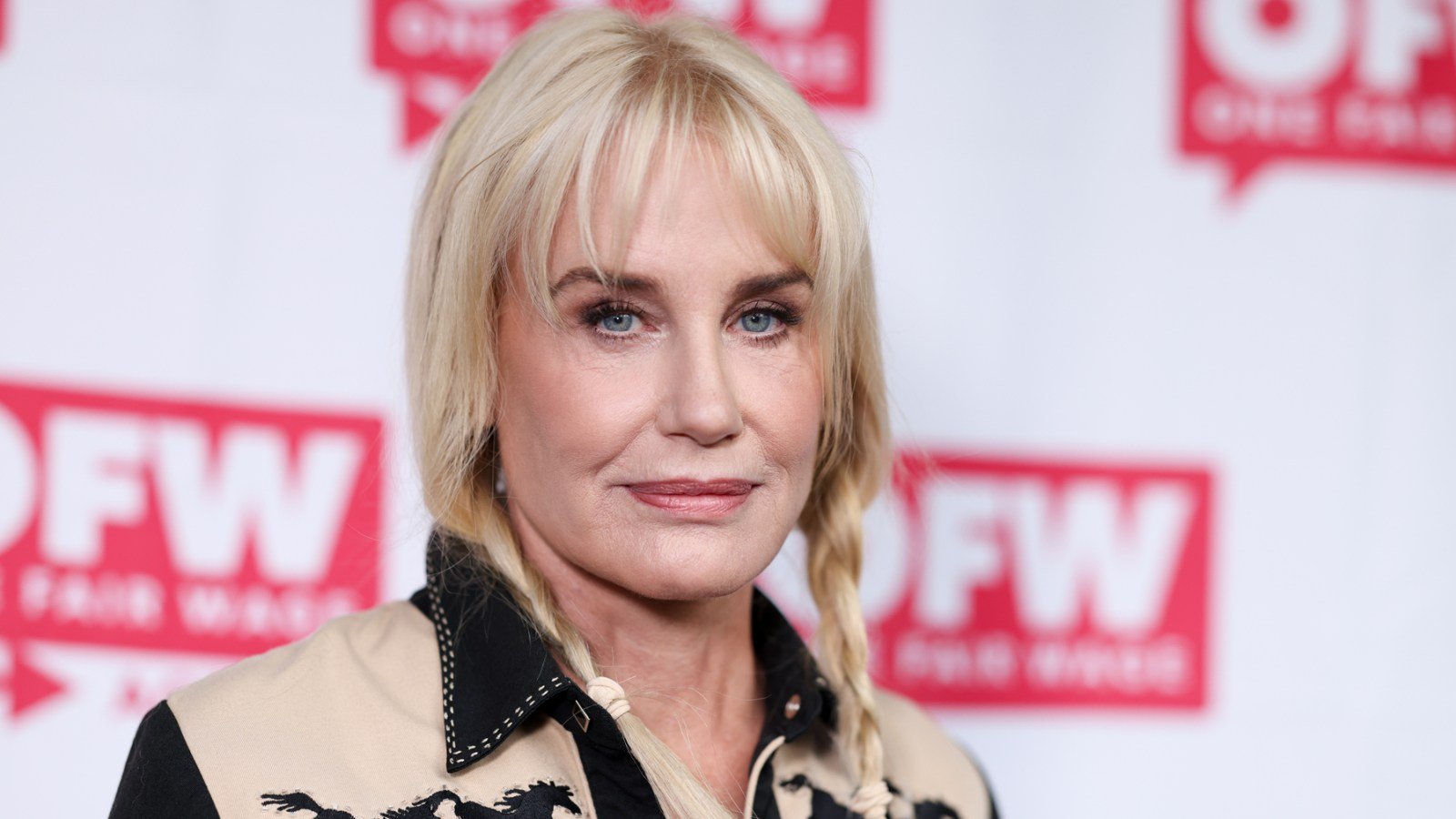
In a candid and powerful statement, acclaimed actress Daryl Hannah has publicly addressed what she describes as "untrue" and "textbook misogyny" within prevailing narratives surrounding her past relationship with John F. Kennedy Jr. Hannah, known for her distinctive roles across film and television, including in classics like 'Splash' and 'Blade Runner', dated the prominent American figure in the late 1980s and early 1990s. Her recent op-ed serves not only as a personal reclamation of her story but also as a broader critique of how media frequently frames women, particularly those in the public eye, through a biased and often demeaning lens. This intervention prompts a crucial re-examination of media ethics, celebrity journalism, and the enduring challenge of misogyny in public discourse.
The Enduring Fascination with a High-Profile Romance
The relationship between Daryl Hannah and John F. Kennedy Jr. was, by all accounts, one of the most talked-about romances of its era. Both individuals occupied unique positions in the public consciousness: Hannah as a captivating screen presence and burgeoning environmental activist, and Kennedy Jr. as American royalty, perpetually under the microscope due to his iconic lineage. Their connection sparked immense media interest, leading to constant scrutiny, speculation, and often, an intrusive invasion of privacy. This relentless focus laid the groundwork for narratives that, as Hannah now asserts, veered significantly from reality, shaping public perception in ways that were both inaccurate and damaging.
Daryl Hannah: A Career Defined Beyond Romance
Daryl Hannah, a prominent actress since the 1980s, established a formidable career with iconic roles in films like 'Splash' and 'Blade Runner'. Her versatile filmography often featured independent characters, yet her identity was frequently reduced to "JFK Jr.'s girlfriend" by media. This overshadowing of her professional achievements by a high-profile romance is a recurring issue for women in the public eye.
John F. Kennedy Jr.: An Inherited Legacy and Public Persona
As the son of President John F. Kennedy, John F. Kennedy Jr. lived a life under constant public scrutiny, embodying both political legacy and celebrity allure. His professional endeavors, including a law career and the launch of 'George' magazine, were often overshadowed by public fascination with his personal life, especially his relationships. This intense media gaze created a sensationalized environment that, while not explicitly misogynistic in his own portrayal, certainly impacted how Hannah, as his partner, was perceived.
Unpacking the 'Untrue' Narratives and 'Textbook Misogyny'
Hannah's op-ed pointedly critiques specific falsehoods embedded in the "love story" portrayal, asserting that these narratives were not just inaccurate but inherently demeaning. Her accusation of "textbook misogyny" implies a reliance on common tropes: portraying women as overly emotional, manipulative, or solely defined by their male partners. Such biased narratives strip women of agency and reduce them to one-dimensional figures, suggesting Hannah was unfairly cast in a negative or subservient light. Historically, celebrity journalism frequently applies gendered double standards, subjecting women to intense scrutiny over appearance, relationships, and personal lives, often with far harsher judgments than men. Their ambition is misconstrued as ruthlessness, independence as coldness, and emotions as instability. By calling out "textbook misogyny," Hannah highlights that these are not isolated misreports but systemic issues rooted in deeply ingrained societal biases.
The Power of Reclaiming One's Narrative
Daryl Hannah's op-ed, published decades later, marks a significant act of defiance and self-empowerment. It reflects a growing trend of public figures, especially women, challenging long-standing media misrepresentations. In the digital age, individuals gain greater control over their narratives, making such challenges powerful tools for truth and accountability. This public reclamation transcends merely correcting a personal history; it advocates for a more ethical media landscape. When figures like Hannah speak out, they expose how gender bias subtly and overtly permeates storytelling, influencing public perception for decades. It prompts both audiences and journalists to critically question the narratives they consume and produce, fostering a more discerning approach to celebrity culture and biographical accounts.
Beyond the Headlines: A Call for Media Accountability
Hannah's op-ed powerfully reminds us that media portrayals, particularly of women, profoundly impact lives and legacies. Her courageous stance against 'textbook misogyny' challenges not only historical inaccuracies but also the cultural norms perpetuating biased narratives. It underscores the urgent need for journalistic accountability, urging writers and editors to approach stories with integrity, nuance, and awareness of implicit biases. This conversation extends beyond celebrity romance, initiating a crucial dialogue on fairness, representation, and ethical media responsibilities.
Dive deeper into critical analyses of media trends, celebrity insights, and discussions on gender representation by exploring more articles on NAME OF SITE. We continuously strive to bring you comprehensive, in-depth content that informs and sparks meaningful conversations.
Fonte: https://www.rollingstone.com