
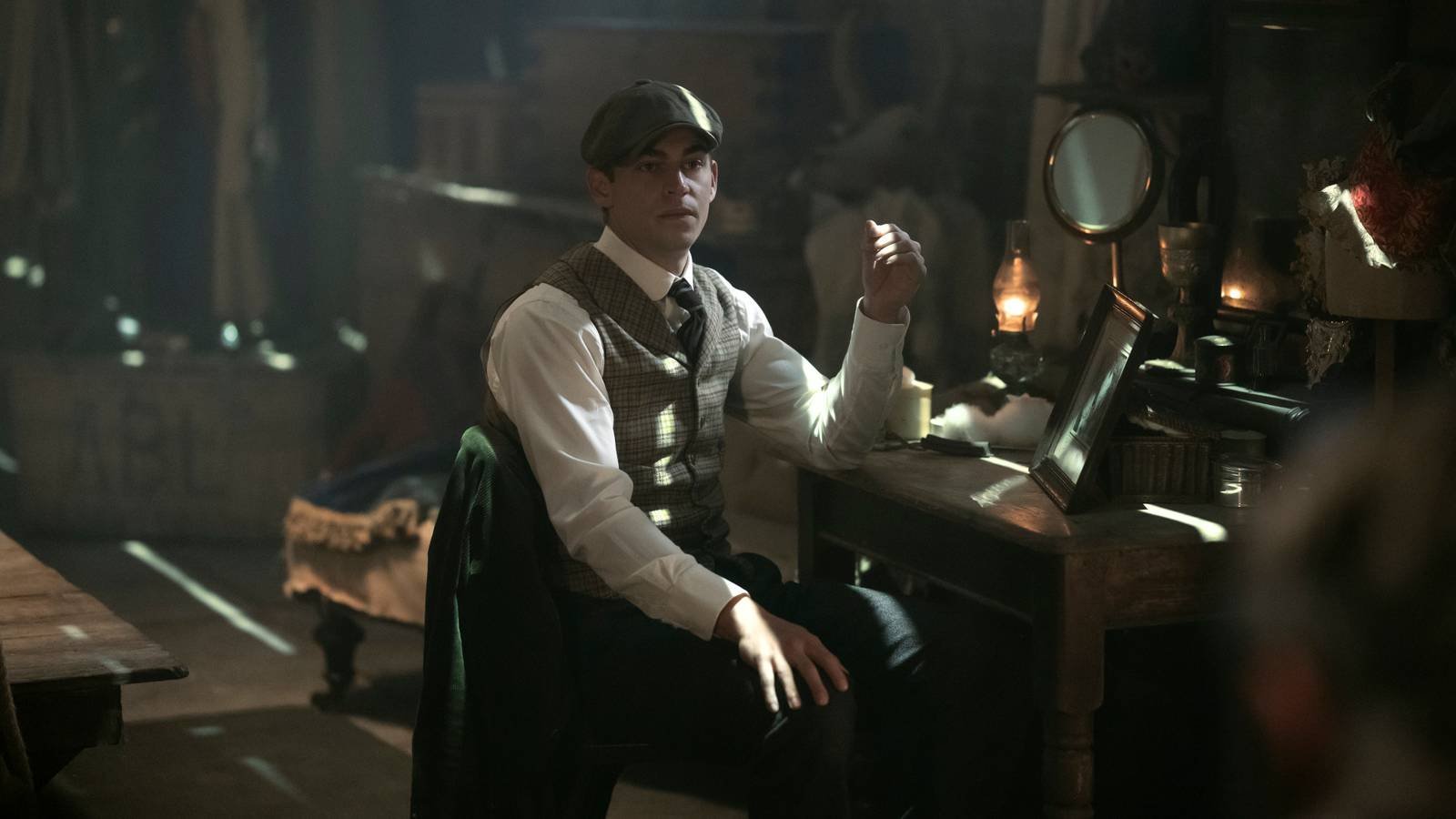
The vast and intricate world of Sherlock Holmes continues to captivate audiences across generations, inspiring countless adaptations, reimaginings, and prequels. One of the latest ventures into the early life of the famed consulting detective is the series <i>Young Sherlock</i>, which aims to explore the formative years of a character renowned for his unparalleled intellect and deductive prowess. As fans eagerly anticipate news regarding a potential second season, a recent statement from the showrunner has brought a significant detail into focus, particularly concerning the potential absence of one of the most iconic figures in the Holmesian universe: Dr. John Watson.
Initial discussions and hints from the creative team behind <i>Young Sherlock</i> suggest that viewers should temper their expectations regarding Watson's early introduction. The showrunner indicated that, even if the series is greenlit for a second season, the beloved chronicler and companion to Holmes is unlikely to make an appearance. This revelation offers a compelling insight into the creative direction of the show, emphasizing a deliberate choice to meticulously build Holmes's world and character before introducing the pivotal partnership that defines much of his legend.
The Canonical Significance of Dr. John Watson
To fully appreciate the weight of this decision, it is crucial to understand Dr. John Watson's foundational role in the Sherlock Holmes canon. First introduced in Arthur Conan Doyle’s 1887 novel <i>A Study in Scarlet</i>, Watson is not merely Holmes’s flatmate and chronicler; he is the essential humanizing element to the brilliant but often aloof detective. Watson serves as the reader’s surrogate, providing an emotional anchor and a moral compass that balances Holmes's cold rationality. His narrative perspective shapes our understanding of Holmes, filtering the detective's eccentricities and genius through a lens of loyalty, admiration, and occasional exasperation.
Beyond his narrative function, Watson is Holmes’s confidant, his sounding board, and at times, his only friend. Their dynamic is central to the enduring appeal of the stories, illustrating how two vastly different individuals can form an unbreakable bond forged through shared experiences of danger, intellect, and profound mutual respect. The absence of Watson in an early-life portrayal of Holmes thus raises questions about how the series will navigate the detective’s emotional and personal development without this crucial counterpoint, highlighting the creative team’s commitment to forging an independent path for the young Holmes.
Showrunner's Creative Vision and Rationale
The showrunner's decision to potentially defer Watson's introduction stems from a considered creative strategy. The primary objective of <i>Young Sherlock</i> appears to be a deep dive into the nascent stages of Holmes's genius, portraying his intellectual awakening and the gradual honing of his unique observational and deductive skills. By focusing solely on Holmes in his formative years, the series can thoroughly explore his solitary nature, his struggles with social norms, and the influences that shaped him into the extraordinary individual he would become.
Fostering Holmes's Solo Development
One key reason for this approach is to allow Holmes's character to develop independently, free from the immediate influence of his future partner. Introducing Watson too early might dilute the narrative focus on Holmes's individual journey of self-discovery. The showrunners likely want viewers to witness Holmes evolve, perhaps grappling with the social isolation that often accompanies prodigious intellect, before he finds the one person who truly understands and complements him. This allows for a more detailed exploration of his early relationships, academic experiences, and nascent investigative endeavors.
Distinguishing the Series from Other Adaptations
Furthermore, this choice serves to distinguish <i>Young Sherlock</i> from myriad other adaptations. Many Sherlock Holmes stories begin with or quickly feature the iconic duo. By withholding Watson, the series carves out its own unique niche, signaling to audiences that this is not merely a retelling but an exploration of uncharted narrative territory within the Holmesian universe. This bold move allows the series to establish its own identity, develop its own supporting cast, and build a distinct narrative world before integrating such a monumental character.
Narrative Implications and Fan Expectations
The prospect of a Watson-less second season undoubtedly generates a range of reactions among fans. For purists, the delay might be unsettling, as Watson is inextricably linked to Holmes's identity. However, for those open to innovative storytelling, it presents an exciting opportunity to explore aspects of Holmes's life that are less documented in the traditional canon. The narrative challenges lie in maintaining audience engagement and providing sufficient emotional depth without the familiar comfort of Holmes and Watson’s camaraderie.
The series will need to introduce compelling new characters and dynamics to fill the void, perhaps focusing on Holmes's family, school acquaintances, or early mentors who contribute to his intellectual and social maturation. This allows for the creation of unique mysteries and character arcs that might not be possible if Watson were already a central figure, giving the showrunners more creative freedom to define what a 'young' Sherlock Holmes truly entails outside the confines of his most famous partnership. It could also set the stage for a more impactful eventual meeting, building anticipation for the moment these two fated individuals finally cross paths.
The Broader Trend of Origin Stories
<i>Young Sherlock</i> fits into a broader trend in contemporary media: the exploration of origin stories for iconic characters. From superhero prequels to villain backstories, audiences are increasingly drawn to narratives that delve into the making of legends. This approach allows creators to expand existing mythologies, offer fresh perspectives, and attract new viewers while still satisfying long-time fans with deeper insights into beloved figures. By carefully controlling the introduction of key canonical elements like Watson, <i>Young Sherlock</i> can ensure that each significant milestone in Holmes’s life feels earned and impactful.
This deliberate pacing is crucial for an origin story. Rushing into the well-known partnership might undermine the very purpose of a prequel, which is to show the journey rather than just the destination. By focusing on Holmes as a developing individual, the series has the potential to add layers of complexity and nuance to a character often seen as fully formed from the outset, providing a rich tapestry of experiences that shape his future interactions, including the eventual, much-anticipated meeting with Dr. Watson.
The showrunner's decision regarding Watson's potential absence in a second season of <i>Young Sherlock</i> underscores a thoughtful and strategic approach to adapting such a revered literary figure. It speaks to a commitment to crafting a unique narrative that prioritizes the solitary development of Sherlock Holmes, distinguishing the series in a crowded landscape of adaptations. While fans might yearn for the immediate presence of the iconic duo, this measured introduction promises a deeper, more nuanced exploration of the detective's formative years. To stay informed on all the latest developments, behind-the-scenes insights, and critical analyses of <i>Young Sherlock</i> and other compelling series, be sure to continue browsing NAME OF SITE for exclusive content and in-depth articles.
Fonte: https://screenrant.com