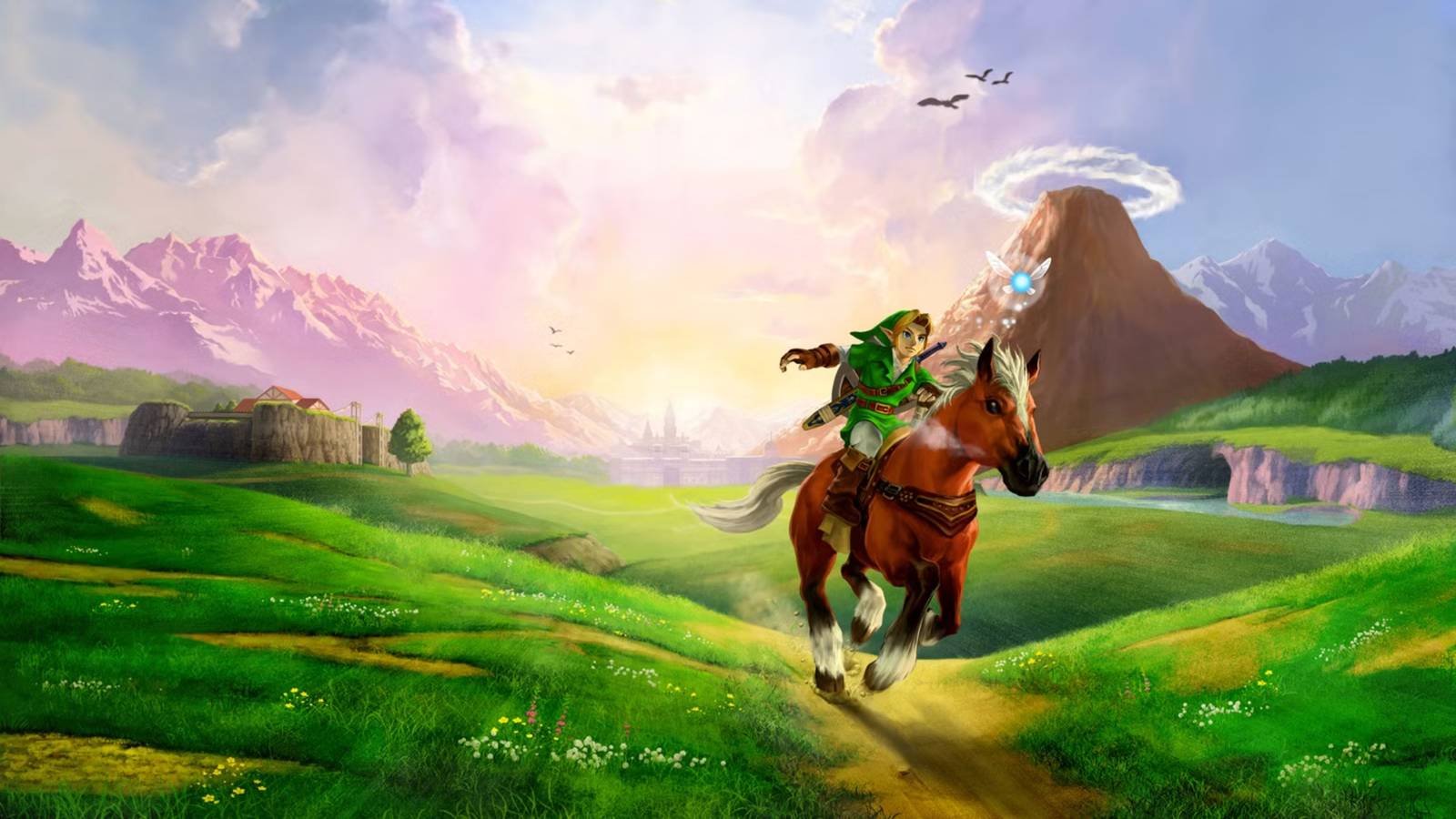
As the esteemed <strong>The Legend of Zelda</strong> franchise celebrates its momentous 40th anniversary this month, fans globally are reminiscing about the series' profound impact on the video game landscape. While many eagerly anticipated announcements of new flagship titles or groundbreaking projects to commemorate this milestone, Nintendo has opted for a different, yet equally significant, celebration: the official return of one of its most revered masterpieces, <strong>Zelda: Ocarina of Time</strong>, to modern platforms next week. This re-release offers a golden opportunity for both seasoned adventurers and a new generation of players to experience a cornerstone of gaming history, reinforcing its enduring legacy and groundbreaking design.
A Legacy Forged in Time: The Legend of Zelda's Enduring Influence
For four decades, <strong>The Legend of Zelda</strong> has captivated audiences with its innovative gameplay, intricate narratives, and expansive worlds. From the pixelated dungeons of the original NES title, which laid the groundwork for action-adventure games, to the sprawling open-world exploration of contemporary entries like <em>Breath of the Wild</em>, the series has consistently pushed the boundaries of interactive entertainment. It introduced concepts like non-linear progression, deep character development, and immersive environmental puzzles, setting benchmarks that countless other games would strive to emulate. This consistent innovation, coupled with a commitment to storytelling and a memorable cast of characters, has cemented Zelda's status as one of the most influential and beloved franchises in video game history, continually shaping player expectations for adventure and discovery.
Zelda: Ocarina of Time's Revolutionary Impact on Gaming
Released in 1998 for the Nintendo 64, <strong>Zelda: Ocarina of Time</strong> wasn't just a game; it was a paradigm shift. It didn't merely adapt the classic Zelda formula to a new dimension; it fundamentally redefined what a 3D adventure game could be. Its meticulous design, compelling narrative, and revolutionary mechanics earned it critical acclaim, with many hailing it as one of the greatest video games ever created. Its influence reverberated throughout the industry, setting a new standard for immersion and interactive storytelling that continues to inspire developers today.
A Leap into 3D Gaming: Redefining Interaction
Prior to <strong>Ocarina of Time</strong>, transitioning popular 2D franchises into a 3D environment often proved challenging. However, Nintendo's visionary approach with this title provided definitive solutions. The introduction of the iconic <strong>Z-targeting system</strong> revolutionized 3D combat, allowing players to lock onto enemies with precision and engage in tactical encounters. Context-sensitive actions, where Link's movements and interactions changed based on his environment, created a seamless and intuitive player experience. Furthermore, the innovative camera control and the fluid movement of Link within a vast 3D landscape showcased the potential of the Nintendo 64 hardware, influencing character control and environmental design in countless subsequent action and adventure titles across all platforms.
Masterful Storytelling and World-Building
At its heart, <strong>Ocarina of Time</strong> weaves an epic tale of heroism, destiny, and the struggle between good and evil. The narrative masterfully blends elements of fantasy and time travel, allowing Link to journey between his child and adult forms, witnessing the devastating consequences of Ganondorf's reign. This unique mechanic not only drove the plot forward but also introduced complex thematic elements, exploring themes of growth, responsibility, and the passage of time. The richly detailed world of Hyrule, populated by memorable characters and diverse regions, felt alive and brimming with secrets, drawing players deeper into its lore and fostering a profound sense of connection to its inhabitants and their plight.
The Iconic Score and Immersive Sound Design
The auditory experience of <strong>Ocarina of Time</strong> is as unforgettable as its visuals and gameplay. Koji Kondo's masterful musical score is an integral part of the game's identity, featuring iconic melodies like 'Zelda's Lullaby' and 'Saria's Song' that are woven directly into the gameplay through the titular Ocarina. Players learn and perform these tunes to trigger various in-game effects, from changing the time of day to warping across Hyrule. Beyond the music, the game's sound design effectively conveyed the atmospheric nuances of each environment, from the bustling marketplace to the eerie silence of a dungeon, significantly enhancing immersion and emotional resonance throughout Link's epic journey.
What This 'Return' Means for Modern Players
The official return of <strong>Zelda: Ocarina of Time</strong> next week signifies its imminent availability as part of the <strong>Nintendo Switch Online + Expansion Pack</strong> service. This re-release is a significant moment for several reasons. For those who grew up playing the game, it offers a powerful dose of nostalgia, allowing them to relive cherished memories on a modern console, complete with convenient features like save states. For a new generation of players who may have only heard legends of its greatness, this is an accessible entry point to experience a foundational piece of gaming history without needing vintage hardware. It democratizes access to a classic, ensuring that its lessons in game design and storytelling can continue to be appreciated and studied. While emulation quality on NSO can sometimes be debated, the core experience of <strong>Ocarina of Time</strong> remains intact, providing an invaluable opportunity to engage with a timeless adventure.
A Timeless Classic for a New Generation
Even over two decades after its initial release, <strong>Ocarina of Time</strong> continues to hold immense relevance. Its core design philosophies – intelligent dungeon puzzles, rewarding exploration, compelling character progression, and an evocative world – are principles that modern game developers still strive to achieve. The game's narrative structure, which perfectly balances epic scope with personal stakes, serves as a masterclass in interactive storytelling. This return to the forefront ensures that <strong>Ocarina of Time</strong> remains not just a relic of the past, but a living testament to outstanding game design, demonstrating how truly great games transcend technological limitations and generational divides. Its ability to engage, challenge, and inspire endures, solidifying its place as an eternal classic.
As <strong>Zelda: Ocarina of Time</strong> makes its highly anticipated return next week via Nintendo Switch Online + Expansion Pack, the gaming world once again has the chance to celebrate a true masterpiece. Whether you're revisiting Hyrule for the hundredth time or embarking on this grand adventure for the very first, this is an unmissable event. Prepare your Nintendo Switch and immerse yourself in the saga that defined a generation. For more in-depth analyses of classic games, the latest industry news, and comprehensive guides, be sure to keep browsing <strong>NAME OF SITE</strong> for all your gaming content needs!
Fonte: https://screenrant.com