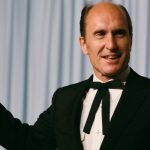

Robert Duvall, the iconic American actor whose formidable talent and distinctive presence graced the screen for over seven decades, has passed away at the age of 95. A revered figure of the New Hollywood era, Duvall's death marks the end of an extraordinary career characterized by unparalleled range and a profound commitment to his craft. From his indelible portrayal of Tom Hagen in 'The Godfather' saga to his Oscar-winning performance in 'Tender Mercies,' Duvall consistently delivered nuanced and powerful characters, cementing his status as one of cinema's most respected and enduring artists. His passing resonates deeply within the film community and among countless admirers who witnessed his transformative abilities across a myriad of genres.
A Foundation in Method Acting: Early Life and Training
Born in San Diego in 1931, Robert Duvall's journey into acting was rooted in serious dedication. After serving in the United States Army during the Korean War, he pursued his passion at New York City's Neighborhood Playhouse School of the Theatre. There, he studied under the esteemed Sanford Meisner, alongside future titans like Dustin Hoffman and Gene Hackman. This immersion in Method acting provided Duvall with a foundational understanding of character development and emotional truth, which would define his career. His early work on the stage, particularly Off-Broadway, honed his skills before he transitioned to the silver screen, preparing him for the complex roles that awaited.
The New Hollywood Era: Breakthrough Roles
Duvall's ascent coincided with the seismic shifts of the New Hollywood era, a period when American cinema embraced grittier realism and more complex narratives. He quickly became a favored actor for visionary directors, notably in his breakthrough screen role as the reclusive Boo Radley in 'To Kill a Mockingbird' (1962). Though he had no spoken lines, his subtle performance conveyed profound depth, hinting at the immense potential that would soon fully blossom. However, it was his collaboration with Francis Ford Coppola on 'The Godfather' (1972) that truly solidified his place in cinematic history.
As consigliere Tom Hagen in 'The Godfather,' Duvall embodied quiet authority, unwavering loyalty, and a chillingly composed intelligence. He portrayed a character who navigated the morally complex, often brutal, world of the Corleone crime family with an almost unsettling calm, providing a stark contrast to the volatile personalities around him. This masterclass in understated power earned him his first Academy Award nomination for Best Supporting Actor, establishing him as an actor capable of commanding the screen with minimal histrionics. His role in the subsequent 'The Godfather Part II' further cemented the character's enduring legacy.
His versatility was further evident as Major Frank Burns in Robert Altman's satirical war comedy 'M*A*S*H' (1970). Duvall transformed into the sanctimonious and incompetent surgeon, providing essential comic relief while also highlighting the absurdities and psychological toll of war. This performance demonstrated his ability to pivot seamlessly between intense drama and sharp-witted satire, a hallmark of his enduring appeal and his capacity to infuse even seemingly one-dimensional characters with memorable quirks and hidden depths.
A Pantheon of Memorable Characters: From Kilgore to Santini
The late 1970s and early 1980s yielded some of Duvall's most iconic and critically acclaimed performances, securing his place in the pantheon of Hollywood legends. His portrayal of Lieutenant Colonel Bill Kilgore in Francis Ford Coppola's surreal war epic 'Apocalypse Now' (1979) is among the most memorable in film history. With the unforgettable line, 'I love the smell of napalm in the morning,' Kilgore became a symbol of the terrifying charisma and moral ambiguity of war, embodying a character who found exhilaration amidst chaos. This audacious performance earned Duvall another Oscar nomination for Best Supporting Actor, capturing the disturbing zeitgeist of the Vietnam War and underscoring his reputation for bringing complex, often unsettling, antagonists to vivid life.
In 1979, Duvall delivered another powerful performance as Lieutenant Colonel Wilbur 'Bull' Meechum in 'The Great Santini,' a poignant drama about a volatile Marine aviator struggling with his family life. Duvall perfectly captured Meechum's proud, often tyrannical, yet ultimately vulnerable nature, showcasing his profound ability to delve into deeply flawed human psychology. This role earned him a Best Actor Oscar nomination, lauded for its raw emotional honesty. Four years later, he finally secured his Academy Award for Best Actor for his role as Mac Sledge, a down-on-his-luck country singer, in 'Tender Mercies' (1983). This understated and authentic performance, in which Duvall not only acted but also sang his own songs, was a true testament to his immersive approach and dedication to character.
Directing, Producing, and Enduring Legacy
Beyond his celebrated acting career, Duvall also ventured into directing and producing, showcasing a holistic passion for storytelling. His directorial credits include 'Angelo My Love' (1986), a semi-documentary exploring the lives of New York City's Romani community, and 'The Apostle' (1997), a powerful independent film in which he also starred as a charismatic but troubled Pentecostal preacher. 'The Apostle,' a passion project Duvall personally financed, earned him another Best Actor Oscar nomination and exemplified his profound artistic integrity and commitment to narratives he deeply believed in. Throughout his later career, Duvall continued to deliver compelling performances in films such as 'Lonesome Dove' (for which he won a Golden Globe), 'Falling Down,' 'Colors,' 'Get Low,' and 'Open Range,' consistently choosing projects that offered rich character studies rather than seeking commercial blockbusters.
Robert Duvall's legacy extends far beyond his awards and iconic roles. He was an actor's actor, admired by peers and critics alike for his unwavering honesty, intense preparation, and ability to elevate any material. He championed authenticity, refusing to be typecast and consistently seeking challenging roles that allowed him to explore the full spectrum of the human condition. His contributions to American cinema are immeasurable, inspiring generations of performers to approach their craft with the same dedication and depth. He leaves behind a filmography that serves as a masterclass in acting, a testament to a life devoted to art and the relentless pursuit of truth in performance.
As we reflect on the remarkable life and career of Robert Duvall, we are reminded of the profound impact one artist can have on an entire industry and on the cultural landscape. His performances were not merely portrayals; they were transformative experiences that invited audiences to understand the complexities of life through his characters' eyes, leaving an indelible mark on cinematic history. To explore more insightful analyses of cinematic legends and their lasting influence, continue browsing Our Site. We invite you to delve into our extensive archives of film reviews, actor profiles, and industry news, ensuring you stay connected with the fascinating world of cinema.
Fonte: https://www.rollingstone.com