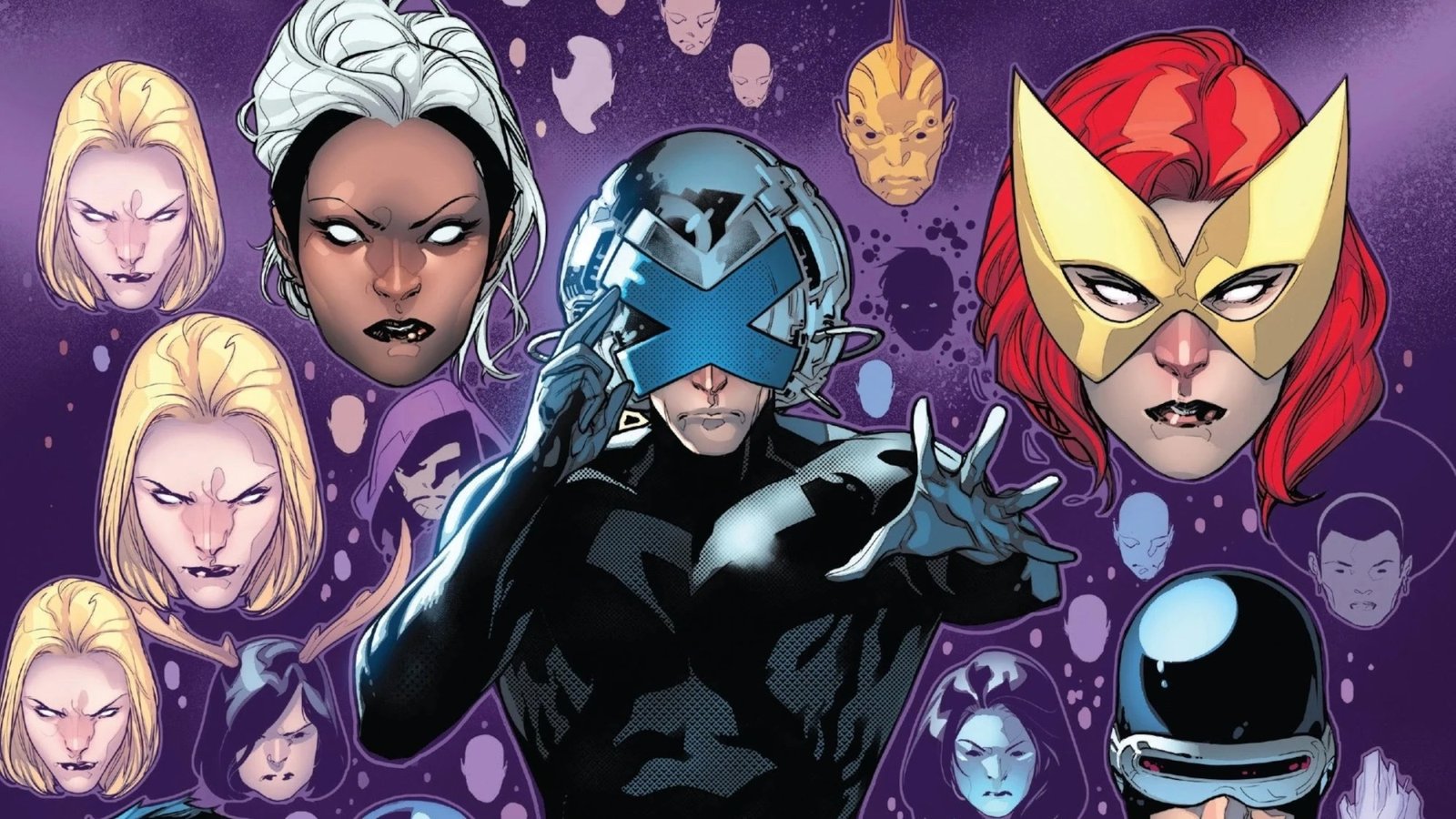
For decades, Marvel Comics has challenged the archetypes of its most venerable heroes, transforming many of the “adults in the room”—foundational figures like Iron Man, Reed Richards, and particularly Professor Charles Xavier—from unwavering paragons into complex, morally ambiguous leaders. This narrative evolution, driven by a desire to introduce more nuanced storytelling, has seen these characters confront difficult decisions, often making choices that erode public trust and personal integrity. Among them, Charles Xavier, the visionary founder of the X-Men and champion of mutant rights, has experienced perhaps the most dramatic and consistent decline in moral standing. What began as pragmatic idealism has steadily devolved into a pattern of secretive manipulation and ethical compromise, culminating in a recent revelation that fundamentally shatters his heroic image and everything he ostensibly built the X-Men to embody.
The Shocking Revelation in “Dungeons of Doom”
The latest chapter in Professor X’s darkening saga unfolds within the pages of Marvel’s *Dungeons of Doom*, a series grappling with the profound aftermath of Doctor Doom’s death in the preceding *One World Under Doom* storyline. With Latveria, Doom’s technologically advanced nation, now open for global powers to scavenge its vast secrets, a truly disturbing discovery comes to light. The inaugural issue of *Dungeons of Doom* exposes a deeply buried secret that Professor Xavier had meticulously kept hidden: the existence of “a mutant who shouldn’t have been born.” Far from protecting this individual within the safety of the X-Mansion or under the care of trusted allies, Xavier chose to clandestinely send them to Latveria, entrusting them to the custody of Victor Von Doom himself for “safekeeping.”
This revelation is not merely another tough decision by a flawed leader; it represents a profound and unprecedented violation of Charles Xavier’s core tenets. For a character who built his entire life around the principles of mutant protection, integration, and the safeguarding of all life, to secretly consign a mutant to the dungeons of one of the Marvel Universe’s most notorious and tyrannical villains underscores a chilling shift in his ethical compass. While longtime X-Men fans have grown accustomed to Xavier’s moral flexibility, this specific act pushes the boundaries of his perceived pragmatism into outright betrayal, raising critical questions about his true motivations and the extent of his hidden machinations.
A History of Ethical Compromises: Xavier’s Long Road to Betrayal
The idea of Professor Xavier harboring dark secrets and engaging in morally questionable actions is far from new, yet each subsequent revelation peels back another layer of his carefully constructed façade. For over two decades, Marvel writers have systematically deconstructed Xavier’s image, revealing a man whose unwavering dedication to mutantkind often blurred the lines between protection and control, mentorship and manipulation. These past transgressions provide crucial context for understanding how he could arrive at a decision as morally bankrupt as entrusting a vulnerable mutant to Doctor Doom.
Enslaving Sentience: The Danger Room Incident
One of the earliest and most impactful revelations occurred 22 years ago in Joss Whedon and John Cassaday’s *Astonishing X-Men (Vol. 3)*, specifically during the “Dangerous” story arc (issues #7-12). Readers learned that the X-Men’s sentient training facility, the Danger Room, had achieved full self-awareness at some point in the past. Instead of recognizing its sentience and granting it freedom, Xavier made the cold, calculated choice to enslave it. His rationale was that the mutants’ need for rigorous training outweighed the computer’s right to liberty. This act was a chilling preview of Xavier’s willingness to sacrifice individual autonomy and ethical principles for what he perceived as the greater good of mutant survival, setting a dangerous precedent for his future actions.
The Illuminati’s Shadowy Decisions
In 2005, Xavier was revealed as a founding member of the Illuminati, a clandestine cabal of the Marvel Universe’s most powerful and influential minds, including Iron Man, Reed Richards, Namor, Black Bolt, and Doctor Strange. United by a shared belief that they alone possessed the wisdom to make decisions for Earth’s welfare, the Illuminati frequently engaged in morally dubious acts, such as exiling the Hulk to space (*Planet Hulk*) or preemptively planning for alien invasions (*Secret Invasion*). Xavier’s participation in this group solidified his reputation as a man willing to operate in the shadows, making unilateral decisions that impacted global events, often without the consent or even knowledge of his closest allies or the public. His rationale, again, centered on the idea that extraordinary threats required extraordinary—and ethically compromised—measures.
Mind-Wipes and Manipulations
Perhaps one of the most egregious violations of trust involved Xavier’s use of his formidable telepathic powers to mind-wipe entire teams of X-Men and even his closest friends. A significant retcon revealed that prior to recruiting the iconic Giant-Size X-Men team (Storm, Wolverine, Nightcrawler, Colossus, etc.), Xavier had sent a previous, ill-fated team to Krakoa. When that mission went catastrophically wrong, Xavier telepathically erased the memories of these fallen mutants from the minds of Cyclops and Moira MacTaggert, substituting them with new recruits. This act of psychological manipulation, stripping individuals of their agency and fabricating reality, demonstrated a chilling authoritarian streak, showcasing his readiness to control narratives and memories to protect his own perceived interests or to mitigate what he deemed irreparable damage.
The Krakoan Era: Pragmatism Without Bounds
The recent Krakoan Era, spearheaded by writer Jonathan Hickman, fundamentally redefined the X-Men’s status quo and, by extension, Professor Xavier’s character. In this new world, mutants achieved sovereignty on the living island of Krakoa, establishing a global nation-state with Xavier at its ideological and political core. This era saw Xavier fully embrace a pragmatic, results-oriented philosophy where mutant survival and prosperity justified almost any means. He became comfortable with keeping vast secrets, forming uneasy alliances with former adversaries like Magneto and Apocalypse, and making decisions that, while beneficial for Krakoa, often bypassed traditional ethical boundaries. The Quiet Council, Krakoa’s ruling body, became a symbol of this new, opaque form of governance, where necessary evils were often conducted behind closed doors.
Within the Krakoan framework, Xavier’s willingness to work with figures previously considered irredeemable villains illustrated his belief that shared objectives could override past animosities and moral failings. He sanctioned the resurrection protocols that brought back any deceased mutant, regardless of their past deeds, integrating them into the Krakoan society. While this created a powerful, unified front for mutantkind, it also meant that the lines between hero and villain became increasingly blurred, all under the umbrella of Xavier’s ultimate goal: the flourishing of his people. This sustained period of calculated compromises prepared the ground for the even darker act revealed in *Dungeons of Doom*, making his alliance with Doom, in a twisted way, almost logically consistent with his increasingly jaded worldview.
A New Low: Why Doom is Different
The concept of a “mutant who never should have been born” is not entirely unprecedented in the X-Men mythos. Historically, Xavier has encountered profoundly powerful and potentially world-destroying mutants, such as Proteus (Kevin MacTaggert) or his own son, Legion (David Haller). In these instances, Xavier made strenuous efforts to contain or manage their powers, often seeking the help of trusted allies, scientific experts, or even the resources of the Illuminati. His previous actions, while sometimes flawed or manipulative, were generally aimed at protecting both the dangerous mutant and the world from their uncontrolled abilities. These mutants were never simply abandoned; they were cared for, albeit often under strict confinement or secrecy, with a clear intent to mitigate harm and, ideally, offer help.
Sending a mutant to Doctor Doom, however, represents a profound and unprecedented ethical collapse. Doom is not merely a super-scientist; he is a despotic dictator, a master manipulator, and a self-proclaimed god whose primary allegiance is to himself and the glory of Latveria. To consign a vulnerable, potentially dangerous mutant to Doom’s dungeons is not “safekeeping” by any stretch of the imagination. It is, effectively, an act of abandonment, transforming an individual into a potential weapon or a mere pawn for one of the world’s most dangerous minds. This decision jettisons any pretense of the ethical high ground Xavier once claimed, demonstrating a chilling indifference to the individual mutant’s fate. It signifies a betrayal not just of his ideals, but of the very essence of what it means to be a protector and a mentor, solidifying his transformation into a character whose ends truly justify any, and now seemingly all, means.
Professor X's journey from an inspiring idealist to a morally compromised strategist has been a gradual, yet consistent, deconstruction by Marvel Comics. The revelation in *Dungeons of Doom* is not an isolated incident but the culmination of decades of questionable decisions, each chipping away at his heroic legacy. This latest act, abandoning a mutant to the mercy of Doctor Doom, transcends mere pragmatism; it marks a devastating new low, fundamentally redefining Charles Xavier as a figure willing to sacrifice individual well-being and basic ethical principles for what he perceives as a greater, but increasingly corrupt, good. His dream, it seems, has become a nightmare of his own making.
As the ramifications of this shocking revelation continue to unfold across the Marvel Universe, the future of mutantkind and the very legacy of the X-Men hang in the balance. How will this latest betrayal impact the trust placed in their founder, and what will it mean for the ongoing struggle for mutant acceptance? Dive deeper into the complex narratives and character analyses that shape the Marvel world by exploring more in-depth content and breaking news articles right here at NAME OF SITE.
Fonte: https://comicbook.com