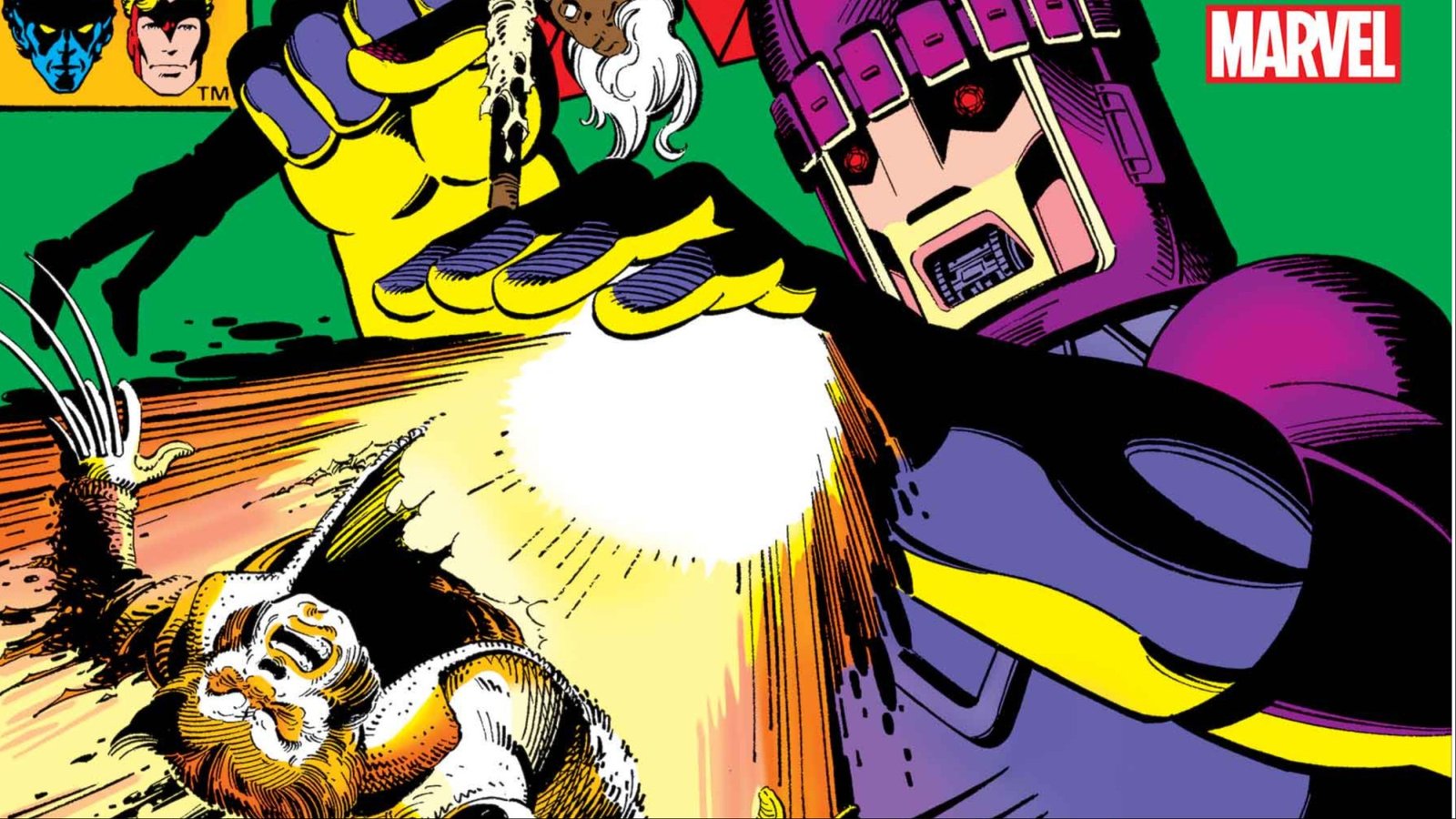
The sprawling narrative of the X-Men universe is renowned for its intricate continuity, often a source of both fascination and confusion for readers. At the heart of this complexity lies the pervasive and often paradoxical element of time travel. Superhero comics, in general, frequently leverage time manipulation as a plot device, but the X-Men have arguably embraced it with unparalleled enthusiasm, forging some of the most daring and impactful chronal adventures in the medium's history. These temporal excursions have not only introduced fan-favorite characters and redefined established lore but have also profoundly influenced the broader comic industry. The concept of a dystopian future survivor traveling back in time to avert catastrophe, for instance, became a reliable narrative trope, popularized by stories like those of the X-Men years before cinematic masterpieces like <i>The Terminator</i> brought it to mainstream audiences. Throughout their extensive publication history, the X-Men's engagements with time have yielded a spectrum of results, from groundbreaking masterpieces to less memorable missteps.
The Labyrinthine Legacy of X-Men Time Travel
Time travel presents unique narrative opportunities and formidable challenges, particularly for a franchise as character-driven and continuity-heavy as the X-Men. For mutants, whose very existence often hinges on the promise or peril of future evolution, the ability to peek into or directly manipulate timelines adds layers of profound philosophical and ethical dilemmas. This narrative device frequently serves multiple purposes: it can introduce compelling new characters like Cable, Bishop, or Rachel Summers, whose origins are intrinsically tied to alternate futures; it can be used to resolve seemingly intractable paradoxes; or, most commonly, it functions as a dire warning about potential futures shaped by present-day conflicts. The inherent 'timey-wimey' nature, as some fans affectionately refer to it, has undeniably contributed to the density of X-Men continuity, influencing major eras from the foundational 'Days of Future Past' to the more recent Krakoan Age, where even the present is constantly in conversation with possible pasts and futures. Understanding these temporal mechanics is crucial to appreciating the full scope of the X-Men's enduring appeal and their significant impact on superhero storytelling.
Navigating the Chronal Continuum: A Ranked Exploration
While many of the X-Men's time travel tales have achieved legendary status, both for their brilliance and their occasional misfires, they collectively form a cornerstone of the mutant mythos. This comprehensive ranking delves into ten of the most notable X-Men time travel stories, evaluating them based on their narrative impact, thematic depth, artistic execution, and overall fan reception. From ambitious crossovers to character-defining sagas, these stories exemplify the best—and sometimes the challenging—aspects of temporal manipulation in comic book storytelling, providing a critical lens through which to appreciate the X-Men's enduring legacy.
10) "Age of Revelation"
Published in 2025, "Age of Revelation" emerged during a period of significant transition for the X-Men, following the conclusion of the groundbreaking Krakoan Era and coinciding with the 30th anniversary of the acclaimed "Age of Apocalypse." This ambitious story saw key characters Cyclops and Beast transported into a bleak future dominated by Revelation, the self-proclaimed heir of the formidable Apocalypse. Despite its pedigree and the intriguing premise of returning to a familiar, yet twisted, dystopian future, "Age of Revelation" largely failed to resonate with the fanbase. Critics and readers alike found the narrative lacking in emotional depth and the fresh perspective needed to justify its existence as a spiritual successor. The story struggled to forge a unique identity, often feeling like a derivative echo rather than a compelling new chapter. While some post-publication analyses suggest that its long-term aftermath <i>might</i> eventually integrate more successfully into the broader X-Men lore, offering a potential silver lining, its initial reception marked it as one of the less impactful entries in the X-Men's extensive catalogue of time travel sagas. Its inability to carve out a distinct niche or deliver on the weight of its thematic inspirations placed it at the lower end of the spectrum.
9) "Battle of the Atom"
Following the polarizing events of <i>Avengers vs. X-Men</i>, the original five (O5) X-Men were controversially brought from their past into the present, setting the stage for the sprawling 2013 crossover event, "Battle of the Atom." This storyline intricately wove through multiple titles, including <i>Wolverine and the X-Men</i>, <i>All-New X-Men</i>, <i>Uncanny X-Men</i>, and <i>X-Men</i>, bookended by dedicated issues. The core premise involved various factions of future X-Men — each with conflicting agendas — traveling to the present to convince the O5 to return to their own time. What began as a seemingly straightforward directive quickly devolved into a convoluted web of temporal paradoxes, hidden identities, and shifting allegiances. While the event boasted a structurally sound framework and was not inherently confusing on a panel-by-panel basis, its ultimate impact suffered from the inherent challenges of managing four distinct creative teams simultaneously. The differing narrative priorities and tonal inconsistencies across the various titles prevented the overarching story from coalescing into a truly cohesive and memorable experience. Despite its potential, "Battle of the Atom" is often cited as a story that, while not terrible, simply never quite reached its full potential, leaving many readers with a sense of narrative fragmentation rather than a singular, impactful statement on time travel and destiny.
8) "Days of Future Present"
The iconic "Days of Future Past" stands as arguably the most important X-Men time travel story, leaving an indelible mark on the entire comic industry. Its vision of a dark, sentinel-dominated future became almost canonical, with characters like Rachel Summers emerging directly from its grim timeline. In 1990, Marvel revisited this influential concept with "Days of Future Present," an event that, despite its name, struggled to capture the same magic. This story primarily revolved around Franklin Richards, the powerful son of Mister Fantastic and the Invisible Woman, whose journey involved both his present-day self and a future incarnation. The plot was propelled by the menacing Ahab, a villainous mutant hunter from a potential future, who travels to the present to target members of the X-Men, New Mutants, and the Fantastic Four. Crucially, "Days of Future Present" unfolded during a tumultuous transitional period for Marvel, as foundational writers Chris Claremont and Louise Simonson were gradually being phased out. This shift in creative leadership often resulted in a narrative that felt more like a stylistic showcase than a substantive development. Critics frequently characterize it as an "all style, no substance" affair, highlighting its visually engaging but ultimately hollow storytelling, which lacked the deep character work and thematic resonance that defined its illustrious predecessor. Its legacy, therefore, remains largely overshadowed, serving more as a footnote than a significant chapter in the X-Men's time travel chronicles.
7) <i>X-Factor (Vol. 1) #65-68</i>
Apocalypse, one of the X-Men's most enduring and formidable foes, initially made his indelible mark as the primary antagonist in <i>X-Factor (Vol. 1)</i>. His climactic confrontation with the team culminated in issues #65-68, a pivotal storyline crafted by the legendary team of Chris Claremont, Jim Lee, and Whilce Portacio. This saga introduced a mysterious figure from the future, whose arrival coincided with Apocalypse's nefarious kidnapping of Nathan Summers, the infant son of Cyclops and Jean Grey's clone, Madelyne Pryor. In a dramatic turn, this confrontation led to Apocalypse's supposed first—and arguably coolest—death. More importantly, to save him from a deadly techno-organic virus inflicted by En Sabah Nur, young Nathan Summers was sent into the distant future. This narrative arc was instrumental in establishing the complex origin of Cable, one of the X-Men's most popular time-displaced characters. While the storytelling aesthetic of these issues is unmistakably steeped in the energetic, often over-the-top "'90s cheese" sensibility that defined the era, it's undeniable that the artwork by Jim Lee and Whilce Portacio was exceptional, contributing to some truly awesome and visually dynamic moments. In 2026, some of the narrative conventions might feel dated, but the story's foundational importance for Cable's mythology and its sheer '90s spectacle ensure its status as a significant, if imperfect, entry in the X-Men's time travel lexicon.
6) <i>The Adventures of Cyclops and Phoenix</i>
Published in 1994, <i>The Adventures of Cyclops and Phoenix</i> by Scott Lobdell and Gene Ha served as a crucial sequel to the events of <i>X-Factor (Vol. 1) #65-68</i> and directly followed the landmark wedding of Cyclops and Jean Grey in <i>X-Men (Vol. 2) #30</i>. This four-issue limited series saw the newlywed couple abruptly pulled into a distant future by Mother Askani, a mysterious matriarch who was, in fact, an older Rachel Summers – the "Days of Future Past" daughter of Cyclops and Jean Grey, who had previously returned to the past as Phoenix II before embarking on her own journey into the future. Their mission: to raise and protect the infant Nathan Summers, who would one day become the formidable Cable, from the omnipresent threat of Apocalypse. The series is often characterized as occupying the middle ground of quality for writer Scott Lobdell, whose extensive work on the X-Men spectrum ranged from highly acclaimed to critically panned. While the story was enjoyable and pivotal for establishing Cable's upbringing and the profound, time-spanning familial bonds of the Summers-Grey clan, it didn't quite achieve the narrative brilliance of other X-Men epics. Gene Ha's artwork was commendable and distinctive, though it predated some of his later, more refined and celebrated works. Ultimately, <i>The Adventures of Cyclops and Phoenix</i> is a compelling read that significantly fleshes out the complex mythology of one of the X-Men's most iconic time travelers, making it an essential, if not groundbreaking, piece of the chronal puzzle.
The X-Men's enduring fascination with time travel continues to shape their universe, proving that while these stories can be intricate and occasionally divisive, they are undeniably central to the mutant saga. From pivotal origin stories to ambitious crossover events, each temporal excursion adds another layer to the rich tapestry of mutant history, demonstrating the inherent risks and profound rewards of tampering with the continuum. As we've explored these notable entries, it's clear that the X-Men's journey through time is far from over, promising more chronal chaos and compelling narratives in the years to come. For more in-depth analyses of your favorite Marvel characters, comic book histories, and the latest news from the world of digital journalism, continue browsing NAME OF SITE and discover new insights into the stories you love.
Fonte: https://comicbook.com